Our governments ability to waste our money knows no bounds.
Under the CfD scheme, renewable energy projects are guaranteed a fixed price for the electricity they generate over a 15-year period. In 2024, subsidies under this program reached a record high of £2.362 billion, surpassing the previous record set in 2020.
This increase reflects the government’s commitment to supporting low-carbon electricity generation by guaranteeing fixed prices for producers over a 15-year period.
In 2024, the UK’s Contracts for Difference (CfD) scheme disbursed a record £2.362 billion in subsidies to renewable energy projects. This cost is typically passed on to consumers through their energy bills.
To estimate the cost per household, we can divide the total subsidy by the number of households in the UK. As of 2024, there are approximately 28 million households in the UK.
Calculation:
Total CfD Subsidy: £2,362,000,000
Number of Households: 28,000,000
Cost per Household: £2,362,000,000 ÷ 28,000,000 = £84.36
Therefore, the CfD scheme added an estimated £84.36 to the average household’s annual energy bill in 2024.
The CfD scheme supported 30.2 terawatt-hours (TWh) of electricity production in 2024, with the government paying an average of £78 per megawatt-hour (MWh). This rate is approximately double the typical market price, highlighting the substantial investment in renewable energy.
While specific subsidy allocations per energy source in 2024 are not detailed in the available data, it’s known that the CfD scheme encompasses various renewable technologies, including offshore wind, onshore wind, solar photovoltaics, and biomass. For instance, offshore wind projects have historically received significant support due to their large-scale capacity and role in meeting the UK’s renewable energy targets.
In the UK, homeowners’ energy bills include certain taxes and levies:
Value Added Tax (VAT):
Domestic Energy: A reduced VAT rate of 5% is applied to gas and electricity supplied for domestic use.
Non-Domestic Use: Energy supplied for business or non-domestic purposes is typically subject to the standard VAT rate of 20%.
Green Levies:
These are charges added to energy bills to fund environmental and social initiatives, such as supporting renewable energy projects and assisting vulnerable consumers. As of recent data, green levies constitute approximately 8% of an average household’s energy bill, equating to about £155 annually.
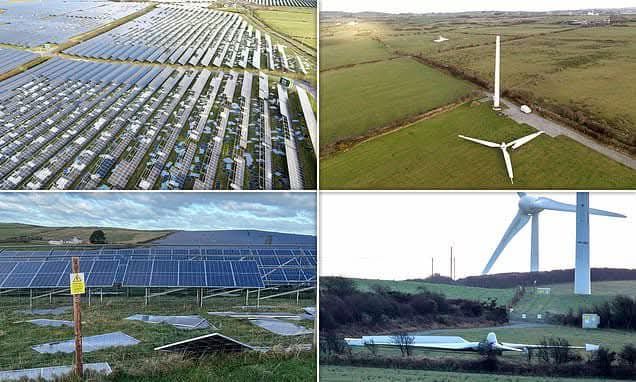
 SAY NO TO THE DESTRUCTION OF OUR LAND
Leave a comment