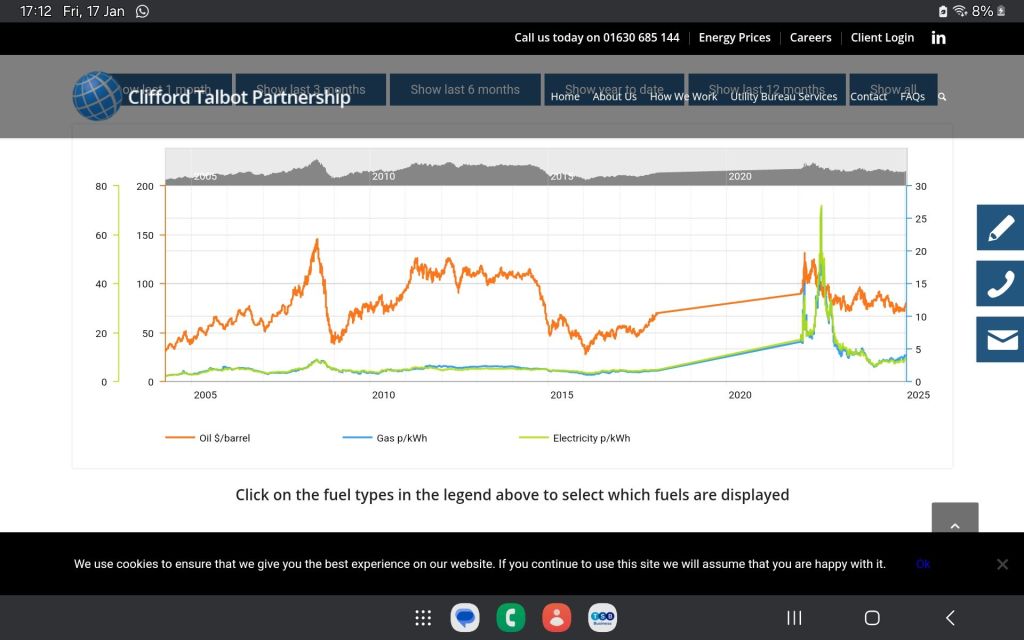
British energy prices are projected to rise by approximately 5% starting in April. This increase is expected to elevate the average annual gas and electricity bill for a typical household by £85, bringing it to £1,823 under the energy regulator Ofgem’s price cap. This marks the third consecutive quarterly rise in energy prices.
Contracts for Difference (CfD) and Grid Infrastructure: Their Role in Rising UK Energy Prices
Contracts for Difference (CfD) – How They Impact Energy Prices
Contracts for Difference (CfD) is a UK government scheme designed to support investment in low-carbon electricity generation. While CfD has been crucial for expanding renewables, it also contributes to rising energy costs for consumers.
1. Guaranteed Pricing for Renewables – Under CfD, renewable energy generators receive a fixed price (the “strike price”) for the electricity they produce. If the market price of electricity falls below this level, consumers effectively subsidize the difference through energy bills.
2. Long-Term Financial Commitments – CfD contracts typically last 15 years, meaning consumers remain locked into paying a set price even if cheaper energy options emerge later.
3. Fluctuations in Market Prices – When market prices are high, generators must return excess revenue, which can lower bills. However, during lower price periods, consumers pay extra to cover the shortfall. Recent volatility in the energy market has resulted in more frequent payments from consumers to support CfD contracts.
4. Expansion of CfD – As the UK government pushes for more offshore wind and solar projects, more CfD contracts are being issued. While this will help long-term energy security, the short-term effect is higher costs due to ongoing subsidy payments.
Grid Infrastructure Costs – A Major Driver of Higher Bills
The UK’s energy grid was historically built around large fossil-fuel power stations. The shift to renewables has created significant challenges that require costly upgrades:
1. Connecting Remote Renewable Projects – Offshore wind farms, in particular, require expensive new transmission infrastructure to connect them to the national grid. These costs are passed down to consumers.
2. Grid Modernization – The shift to decentralized energy (e.g., solar and wind farms scattered across the country) requires smart grid technology, energy storage, and flexible demand systems, all of which increase infrastructure costs.
3. Capacity Challenges & Reinforcement – Renewables are intermittent, meaning the grid must be reinforced to ensure stability. More investment is needed in battery storage, pumped hydro, and nuclear backup to maintain a reliable supply when renewables generate less power.
4. Higher Transmission Charges – The cost of maintaining and expanding the grid is reflected in network charges added to consumer bills. As more infrastructure upgrades occur, these charges are increasing.
Conclusion
While CfD and grid upgrades are essential for achieving a renewable energy future, they are also key contributors to rising energy prices. The challenge lies in balancing investment with affordability, ensuring that long-term savings from renewables eventually outweigh the short-term financial burden on consumers.
 SAY NO TO THE DESTRUCTION OF OUR LAND
Leave a comment