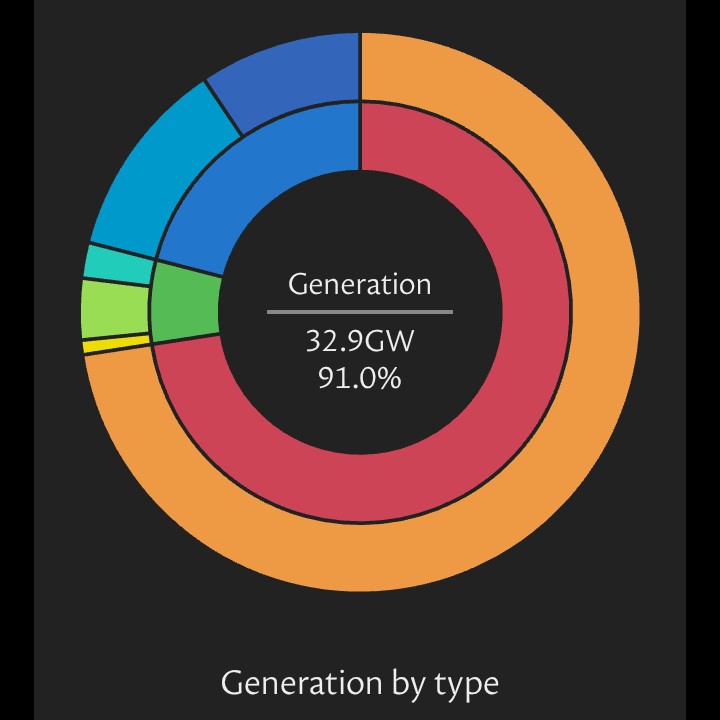
Building on the precarious state of the UK’s power grid, let’s dive deeper into why blackouts remain a looming threat and what this means specifically for the UK moving forward. The nation’s aging infrastructure, unpredictable weather, surging electricity demand, and reliance on intermittent renewables like solar paint a troubling picture. Here’s how these factors continue to unfold in the UK context and why solutions like solar fall short.
Without gas and nuclear it would have been catastrophic
Why the UK’s Grid Remains VulnerableThe UK’s power system is under mounting pressure, and the cracks are starting to show. Let’s break it down:Aging Infrastructure Woes
Much of the UK’s grid—think transformers, substations, and power lines—dates back to the 1960s or earlier. This outdated network struggles to handle modern demands, and failures are becoming more common. A single breakdown, like the 2019 London blackout caused by a lightning strike and equipment failure, can plunge millions into darkness. With limited funding for upgrades, the grid remains a fragile backbone for the nation’s energy needs.Weather: A Relentless Foe
The UK’s weather is famously erratic—storms lash the coasts, floods swamp lowlands, and heatwaves strain summer supplies. Take the 2018 Beast from the East: a brutal cold snap that spiked demand and exposed the grid’s limits. Climate change is dialing up these extremes, and the grid’s old bones can’t keep up. A single storm felling power lines can take days to repair, leaving homes and businesses powerless.Demand on the Rise
The UK is electrifying at breakneck speed. Electric vehicles (EVs) are flooding roads, and heat pumps are replacing gas boilers to meet net-zero goals. National Grid forecasts peak demand could hit 100 gigawatts by 2050—double today’s levels. Without major grid expansion, this surge will overload circuits, making blackouts more frequent.
Renewables’ Achilles’ Heel
The UK is leaning heavily on wind and solar to decarbonize, but their intermittency is a glaring flaw. Wind farms grind to a halt on still days, and solar panels falter under the UK’s grey skies. In January 2025, low wind forced reliance on Gas and nuclear to be at its maximum and we were within hours of a blackout —a stark reminder of renewables’ limits. Without a robust backup, these gaps in supply spell trouble.
Solar in the UK: A Dim ProspectSolar power is often hailed as a green savior, but in the UK, it’s more of a misfit. Here’s why it can’t carry the load:Sunlight Scarcity
At the UK’s northern latitude (51-58°N), winter days are short and feeble. London sees just 8 hours of daylight in December, often dimmed by clouds. Solar output can drop to 10% of summer levels—useless when heating demands soar. Compare this to Spain or California, where sunshine is a given, and the UK’s solar handicap is clear.Clouds Over Efficiency
The UK averages 1,500 hours of sunshine annually—far less than Spain’s 2,500 or Australia’s 3,000+. Overcast skies slash solar efficiency by up to 70%, leaving panels underperforming. The capacity factor (actual output vs. potential) hovers at a measly 10-11%, compared to 20-25% in sunnier climes. It’s a losing battle against the weather.Seasonal Disconnect
The UK needs power most in winter, but that’s when solar delivers least. Summer’s surplus energy goes to waste because demand dips, and there’s no way to store it long-term. This mismatch undermines solar’s role as a reliable pillar of the grid.Cost vs. Reward
Solar installations aren’t cheap—panels, inverters, and maintenance add up. In the UK, the payoff is slim due to low sunlight and frequent repairs (rain and snow take a toll). It’s a tough sell when every pound spent yields less power than in sunnier nations.Storage Stumbling Block
To bridge solar’s gaps, the UK would need vast battery storage—think gigawatt-scale facilities to hoard summer power for winter. Current tech can’t handle months-long storage, and the cost would be staggering. Without this, solar remains a fair-weather friend.
Where Does the UK Go From Here?
The UK’s energy system is teetering, and blackouts aren’t just possible—they’re probable unless drastic action is taken. Solar, while part of the mix, can’t be the cornerstone in a land of clouds and short days. So, what’s next?Nuclear Power: The Steady Hand
Small modular reactors or new plants like Hinkley Point C could provide consistent, carbon-free energy. Unlike solar, nuclear doesn’t flinch at a cloudy day or a windless night.Grid Overhaul
Billions must pour into modernizing the grid—new lines, smarter systems, and resilient tech. It’s a hefty price tag, but cheaper than the chaos of widespread outages.Storage and Backup
Expanding battery capacity and keeping gas plants on standby can smooth out renewable dips. It’s not ideal for net-zero, but it beats the lights going out.Policy Push
Government delays or half-measures won’t cut it. Clear, bold investment in infrastructure and reliable energy is the only way to dodge the blackout bullet.
The UK’s Dark Reality
The UK’s power grid is a house of cards waiting for a gust—or a storm—to topple it. Aging systems, wild weather, soaring demand, and solar’s shortcomings are a perfect storm of risk. Without a major rethink, the nation’s energy future looks dim—literally. Solar can’t save the day, but a mix of nuclear, grid upgrades, and practical backups might just keep the lights on. The clock’s ticking.
 SAY NO TO THE DESTRUCTION OF OUR LAND
Leave a comment