What’s BESS?
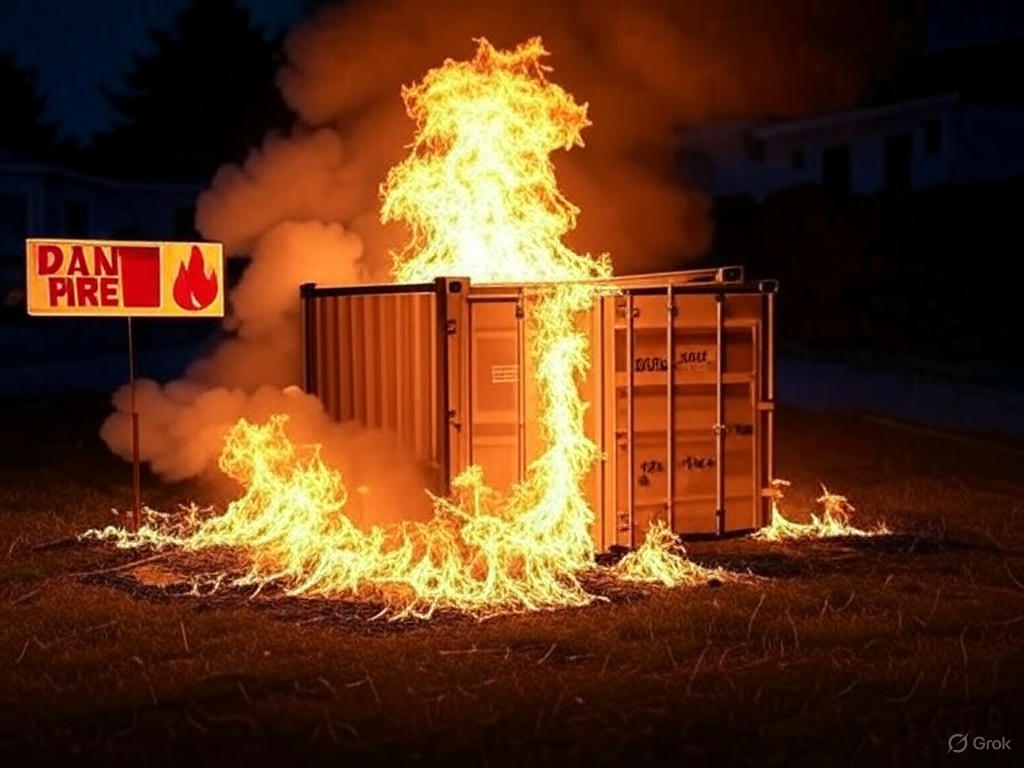
BESS is a big metal box, like a shipping container, packed with lithium-ion batteries.
It saves electricity from wind or solar to use later, helping power homes when it’s not sunny or windy.
They’re popping up across the UK to support green energy.
Why Are They Dangerous?
Fires That Won’t Stop:
The batteries in BESS can catch fire if they get too hot, damaged, or wet. These fires make their own air (oxygen), so they keep burning even when firefighters try to put them out. It’s like a fire that feeds itself, lasting hours or days.
Poisonous Smoke:
The fires give off toxic smoke with chemicals like hydrogen fluoride. Breathing this can make you sick or hurt your lungs, especially kids or older folks.
Hard to Control:
Firefighters can’t easily stop these fires. They often have to let them burn out, which risks nearby homes, schools, or nature.Companies
Ignoring Safety:
Some companies build BESS near houses, schools, or rivers without proper safety, like fire alarms or water tanks for firefighting. There aren’t enough strict UK laws to make them follow rules, so they cut corners to save money.
http://petition.parliament.uk/petitions/723869
Examples of BESS Dangers in the UK
Liverpool Fire (2020):
A BESS in Carnegie Road caught fire and burned for days.
The cause was a battery failure that went into “thermal runaway” (when a battery gets too hot and can’t stop). Toxic smoke spread, and firefighters struggled to control it.
Leeds Concerns (2023): In Allerton Bywater, people fought plans for two BESS sites near homes, schools, and a nature reserve.
Locals worried a fire could be “catastrophic” with toxic smoke harming kids and wildlife. They said the sites were too close to people.
Basingstoke Risk (2022): A BESS was approved near a hospital and river. If a fire started, toxic water from firefighting could pollute the River Loddon. Locals only noticed because they were paying attention—showing how companies sneak plans through.
Why Did Parliament Ban EV Charging in Their Car Park?
Even the Houses of Parliament are worried about lithium-ion battery fires.
In 2025, they stopped allowing electric cars to charge in the underground car park at New Palace Yard for “health and safety” reasons after a review by their Safety and Fire teams.
Why?
Fire Risk: Lithium-ion batteries in EVs (like those in BESS) can catch fire in tight spaces like car parks, and the fires are hard to stop because they make their own oxygen.
Trapped Smoke:
Underground, toxic smoke from a battery fire could trap people or workers, making it hard to escape.
Setting an Example:
If Parliament thinks these batteries are too risky to charge in their car park, it shows everyone—especially regular folks—needs to be careful with BESS and similar tech.This ban shows how serious the fire risk is, yet some companies still build BESS near homes without enough safety measures.
Why Aren’t There Stronger UK Laws?
Weak Rules:
The UK has some guidelines, like asking companies to talk to fire services before building BESS, but these aren’t strict laws. Companies can ignore them with no penalty.
No Fire Service Power:
Fire services aren’t automatically asked to check BESS plans, so risky sites get built without their input. A 2022 bill tried to fix this but hasn’t become law yet.
Companies Skipping Safety:
In places like Basingstoke and Leeds, companies proposed BESS near sensitive areas (hospitals, schools) without proper fire plans, like tanks to hold toxic firefighting water.
New Tech, Old Laws:
BESS are new, but UK laws haven’t caught up. A politician in 2022 said ignoring safety is “dangerous and negligent” because there’s no clear rulebook.
 SAY NO TO THE DESTRUCTION OF OUR LAND
Leave a comment