Battery Energy Storage Systems (BESS) are hailed as a cornerstone of the UK’s renewable energy transition, storing surplus power from wind and solar to balance the grid.
Yet, their limitations in winter—when renewable generation often plummets—reveal a critical flaw. With most BESS offering just a two-hour discharge duration and costing millions of pounds, they risk sitting empty for weeks, undermining the value of substantial renewable energy subsidies.
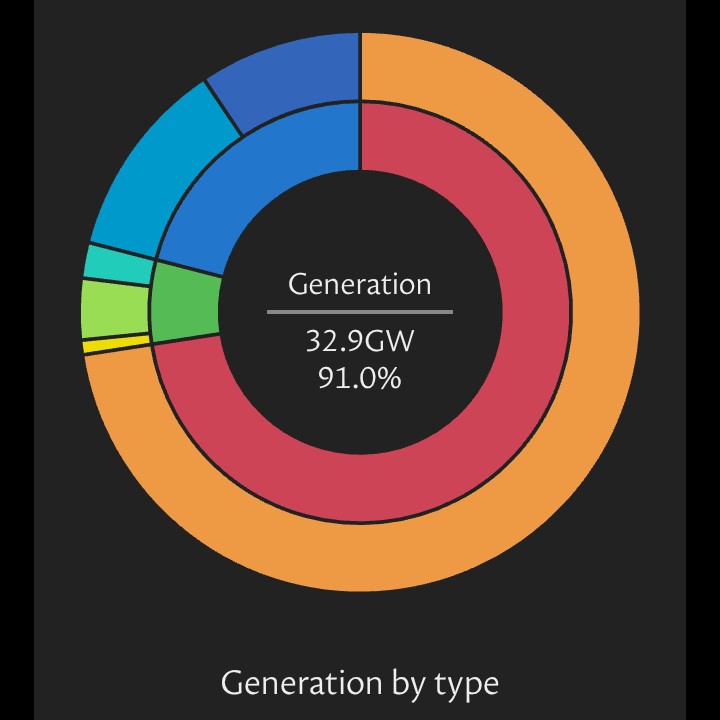
Winter grid data underscores this challenge, showing how low solar and wind output leaves BESS unable to deliver when needed most. 🪫

The Winter Energy Crunch ❄️
Winter in the UK brings soaring energy demand for heating, coupled with reduced renewable generation.
Solar photovoltaic (PV) systems produce minimal electricity due to short days, low sun angles, and frequent cloud cover, sometimes yielding near-zero output for days or weeks.
Wind power, another key renewable, faces prolonged “wind droughts” lasting weeks during high-pressure systems. Winter grid data for 2023/24 illustrates this: renewable generation (wind, solar, hydro) reached ~55 TWh from October to March, but wind output dropped significantly in periods of low wind speeds, contributing only 26% of the energy mix in March 2025, down 7% from March 2024. Solar contributed just 7% in the same period, despite a 3% year-on-year increase.
Most BESS, with a typical two-hour duration (e.g., a 100 MW system delivering 200 MWh), deplete rapidly during these low-generation periods. Without surplus renewable energy to recharge, they remain idle, forcing the grid to rely on gas (31% of the mix in March 2025) or imports, which hit a record high in 2024. This exposes a critical gap: BESS cannot bridge extended renewable shortfalls, despite their role in grid stability.
The Two-Hour Limitation of BESS
⏰Most utility-scale BESS are designed for short-term balancing, discharging at full power for just two hours.
For example, a 100 MW/200 MWh BESS can supply 100 MW for two hours before exhausting its capacity. This suits daily fluctuations but fails during multi-day or multi-week renewable lulls.
In winter 2024/25, the National Energy System Operator (NESO) reported a de-rated margin of 5.2 GW (8.8% above peak demand), improved from 4.4 GW the previous winter, thanks to more interconnection and battery capacity. Yet, this margin assumes BESS are charged—a risky assumption when wind and solar underperform for weeks.
Once discharged, BESS remain empty until renewable generation rebounds, leaving the grid vulnerable. In April 2025, zero-carbon sources (wind, solar, nuclear, hydro) accounted for 46% of electricity, down 13% from April 2024, with carbon intensity rising 45% to 133 gCO2/kWh due to increased gas use.
This underscores how BESS’ two-hour limit hampers their ability to support the grid during prolonged winter shortages.
The Costly Price Tag and Subsidy Burden
💷BESS are a major investment, with a 100 MW/200 MWh system costing £50 million to £100 million, based on UK estimates of £250,000 to £500,000 per MWh.
These costs are partly offset by renewable energy subsidies, notably the Contracts for Difference (CfD) scheme, which hit £2.4 billion in 2024.
The CfD guarantees developers a fixed price for electricity, with costs passed to consumers via energy bills. The 2024 CfD budget for the sixth auction round was £1.5 billion, with £1.1 billion for offshore wind, indirectly supporting BESS through the Capacity Market, which incentivizes storage.
Despite these subsidies, BESS underdeliver in winter. In 2024, 8.3 TWh of wind energy was discarded at a cost of £393 million due to grid constraints, highlighting inefficiencies in renewable integration.
When BESS sit idle, unable to recharge, subsidies fail to deliver reliability, contributing to high electricity prices—four times higher in the UK than in the US. Consumers bear the burden, with households paying nearly £1,000 extra annually to fund renewable projects.
Winter Grid Data:
A Closer Look 📊
Winter grid data reveals the scale of the challenge:
Renewable Output:
In winter 2023/24, renewables generated ~55 TWh, surpassing gas (~45 TWh), but wind’s contribution fell to 22% in April 2025 (down 10% year-on-year), and solar remained marginal at 7%.
Gas Reliance:
Gas led the energy mix in March (31%) and April 2025 (26%), filling gaps left by low renewable output.
Carbon Intensity:
Winter 2024/25 saw carbon intensity rise to 146 gCO2/kWh in March 2025 (up 15% from 2024), reflecting increased fossil fuel use when BESS couldn’t recharge.
Imports:
Record-high net imports in 2024, facilitated by a new 1.4 GW UK-Denmark interconnector, offset renewable shortfalls but increased reliance on foreign power.
These figures highlight BESS’ inability to provide long-term storage, leaving the grid exposed to renewable intermittency despite heavy subsidy support.
A Broader Perspective 🌍
Proponents argue subsidies are vital for scaling renewables, which reached 45% of UK electricity in 2024, with carbon intensity dropping to 124 gCO2/kWh, 70% lower than in 2014.
However, the two-hour duration of BESS limits their effectiveness in winter, and long-duration storage (e.g., flow batteries) remains underdeveloped. Critics on X note that subsidies inflate bills without ensuring reliability, especially when BESS fail to recharge.
The UK’s 2035 decarbonization target requires quadrupling offshore wind (to 50 GW) and tripling solar (to 47 GW), but without robust storage, subsidies may fund an unreliable system.
The Path Forward 🚀
To align subsidies with grid resilience, the UK must rethink its approach:
Invest in Long-Duration Storage:
Redirect subsidies to technologies like flow batteries or pumped hydro, capable of storing energy for weeks.
NESO forecasts a need for 65 GWh of BESS by 2050, a tenfold increase from today’s 5.8 GWh.
Diversify Energy Sources:
Support tidal, biomass, or nuclear to reduce dependence on weather-driven renewables.
Enhance Grid Infrastructure:
Fund interconnections and forecasting to mitigate intermittency, building on the 2024 UK-Denmark link.
Optimize Subsidies: Evaluate BESS’ winter performance to ensure subsidies deliver year-round value, avoiding wasted investments.
Conclusion 🌟
Renewable energy subsidies, costing £2.4 billion annually through CfD, have driven renewables to 45% of UK electricity in 2024. Yet, BESS, with their two-hour duration and £50 million to £100 million price tag, falter in winter when solar and wind output drops, leaving them empty for weeks. Winter grid data—showing wind’s 22% share and gas’ 31% dominance in early 2025—underscores this vulnerability. To meet 2035 decarbonization goals, subsidies must prioritize long-duration storage and diversified sources, ensuring a resilient grid that shines even in winter’s darkest days. ⚡️
References
Institute for Energy Research, Renewable Energy Received Record Subsidies in 2024, 2025-01-14.
Reuters, Britain to have sufficient energy supplies this winter, grid operators say, 2024-10-08.
Energy & Climate Intelligence Unit, UK renewables generate more…, 2024-03-25.
Edenseven, Britain’s Electricity Generation – October 2024, 2024-11-18.Modo Energy, November 2024:
GB battery energy storage research roundup, 2024-11.Statkraft, Helping the UK charge ahead with Battery Energy Storage Systems, 2024-09-11.
Carbon Brief, Analysis: UK’s electricity was cleanest ever in 2024, 2025-01-02.
Renewable Energy Foundation, Discarded wind energy increases by 91% in 2024, 2025-01-02.
For more on UK energy subsidies, visit https://www.gov.uk or https://x.ai/grok. For real-time grid data, check National Grid ESO.
 SAY NO TO THE DESTRUCTION OF OUR LAND
Leave a comment