Visualize Britain’s vital river courses—Tees, Wharfe, Derwent, Ouse, Rother, Don, Trent, Nene, Great Ouse, Wensum, Stour, Lee, Thames, Medway—choked by sediment and poisoned by solar panel leaching. Solar farms like Whitestone (3,500 acres), Tween Bridge (1,500 hectares/3,706 acres), Fenwick (325 hectares/800 acres), Howden (3,155 acres), Gainsborough (5,532 acres), Newark (7,166 acres), and Sunnica (2,500 acres) exploit grid connections to old power stations—Drax, Thorpe Marsh, Cottam, West Burton, Staythorpe, Tilbury, Barking, Medway—paving over best and most versatile (BMV) farmland and ecologically sensitive bog lands, enriched by river flooding, and risking contamination.
Driven by Ed Miliband’s net-zero zeal and Baroness Bryony Worthington’s 2008 Climate Change Act, these EVA-reliant projects, backed by £7 billion in subsidies, enrich corporations while decimating ecosystems, heritage, and food security. Fenwick’s 800 acres of bog land, critical for carbon storage, faces ruin near Thorpe Marsh BESS (1,400 MW/3,100 MWh), while Tween Bridge’s 800 MW dwarfs most UK solar farms. This grid-driven sprawl contradicts solar’s “green” label. Let’s expose how Miliband and Worthington’s policies are ravaging Britain’s rivers and countryside. 🕳️
The Ideological Roots:
Miliband and Worthington’s Net-Zero Obsession
🌱The 2008 Climate Change Act, drafted by Worthington and escalated by Miliband from a 60% to 80% carbon cut by 2050, locked the UK into a £1.3 trillion net-zero gamble—£50,000 per household [Web ID: 7, 9]. Miliband’s 2030 clean energy target fuels solar farms from the Tees to the Medway, exploiting coal-era grid connections [Web ID: 12].
🌱 Miliband’s Haste:
Miliband’s rapid approvals, like Sunnica’s in 2024 despite objections, prioritize grid access over fertile land and rivers [Web ID: 17]. His recusal from Fenwick’s decision, due to its location in his Doncaster North constituency, delegates scrutiny to another official, raising oversight concerns [Web ID: 7].
🌱 Worthington’s Legacy:
Worthington’s Act mandates these projects, sidelining nuclear or brownfield solar [Web ID: 7].
🌱 Corporate Capture:
The £7 billion in subsidies enriches developers like Green Nation (Whitestone), RWE (Tween Bridge), and Boom Power (Fenwick, Howden), with costs projected to hit £20 billion by 2030, adding £200 to bills [Web ID: 4, 9].This dogma drives a solar surge that threatens Britain’s most valuable land and rivers.
Whitestone and Tween Bridge:
Rother and Don’s Plight ☀️
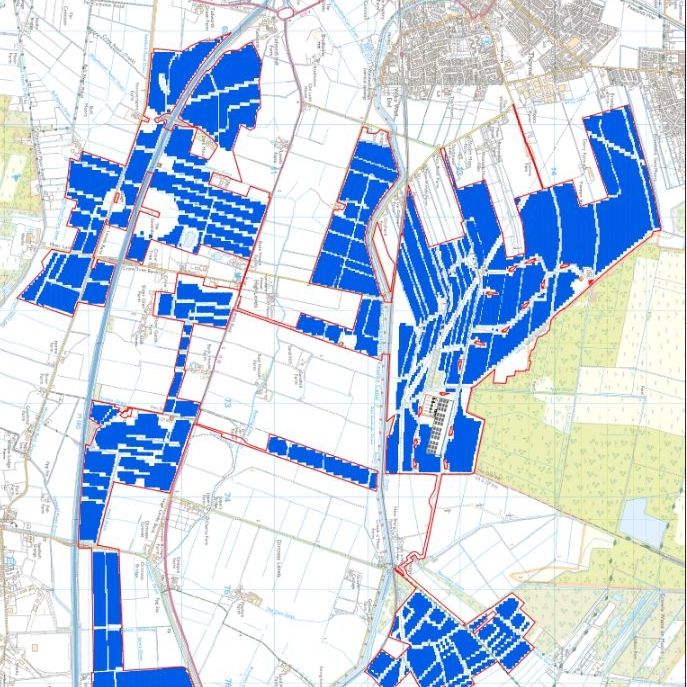
Whitestone Solar Farm (3,500 acres) near Bramley and Conisbrough connects to Brinsworth Substation, threatening the River Rother’s fertile floodplain [Web ID: 0, 2]. Tween Bridge Solar Farm (1,500 hectares/3,706 acres, 800 MW solar, 400 MW BESS) east of Thorne links to a 400 kV line near Thorpe Marsh, endangering the River Don’s nutrient-rich land [].
☀️ Farmland and Heritage Loss:
Whitestone imperils 13th-century sites like Firsby Hall Farm; Tween Bridge risks BMV land, with RWE’s “sheep grazing” claims dismissed as greenwashing [Web ID: 2,, Web ID: 17].
☀️ Petrochemical Irony: EVA-reliant panels emit CO2 equivalent to a year of petrol car use and risk leaching toxins [Web ID: 18].
☀️ Corporate Profits:
Both tap the £7 billion subsidy pool, mirroring Sunnica’s £600 million model [Web ID: 4].Locals fear “industrialisation,” yet Miliband’s NSIP approvals bypass councils, ignoring river and soil contamination risks [Web ID: 13, 5].
Fenwick: Threatening Bog Land Near Thorpe Marsh 🔋
Fenwick Solar Farm (325 hectares/800 acres) in Miliband’s constituency feeds Thorpe Marsh BESS (1,400 MW/3,100 MWh, approved 2025) via Thorpe Marsh Substation, near the River Don’s bog land [Web ID: 0, 21].
Miliband recused himself due to conflict of interest, leaving the decision to another official, prompting fears of inadequate scrutiny [Web ID: 7].🔋
Ecological and Farmland Loss: The Fenwick Solar Farm Action Group, with 75 members, warns that the 237.5 MW project threatens 70% of Fenwick’s bog land and BMV farmland, critical for carbon sequestration and flood mitigation.
Boom Power’s “wildlife habitats” claim ignores bog land’s sensitivity, with locals citing risks to public bridleways and mental well-being [Web ID: 0, 7, 16]. Bog lands store 20-30% of terrestrial carbon, and their destruction releases greenhouse gases, undermining net-zero goals [Web ID: 19].🔋
Grid Exploitation:
Fenwick’s connection to Thorpe Marsh, a former coal-fired site, prioritizes cost over ecology [Web ID: 14].🔋
Oversight Concerns: Miliband’s recusal, while procedurally correct, leaves the NSIP decision vulnerable to his broader net-zero agenda, as seen in his rapid approvals of Heckington Fen and Sunnica [Web ID: 7, 9, 15].
Thorpe Marsh BESS risks fires, like Liverpool’s 2020 incident, and its riverside location heightens leaching concerns [Web ID: 19].
River Courses Under Threat:
The Hidden Cost of Grid-Driven Solar
☔Solar farms targeting BMV farmland and bog lands near rivers—Tees, Wharfe, Derwent, Ouse, Rother, Don, Trent, Nene, Great Ouse, Wensum, Stour, Lee, Thames, Medway—exploit old power station grid connections, disrupting hydrological systems, eroding soil, and risking contamination from solar panel leaching.
These fertile floodplains and carbon-rich bogs, vital for food security and climate resilience, face destruction, contradicting solar’s “environmentally friendly” claims [Web ID: 2, 9, 16, 18].
☔ Fertile BMV Land and Bog Lands at Risk:
Riverside BMV land (Grades 1-2), enriched by flood-deposited nutrients, supports high-yield crops, while bog lands like Fenwick’s store carbon and mitigate floods. Whitestone’s 3,500 acres near the Rother, Tween Bridge’s 3,706 acres near the Don, and Newark’s 7,166 acres near the Trent target BMV soils, reducing food production. Fenwick’s 800 acres of bog land face ecological ruin, with 70% of solar farms on BMV land, per government data [Web ID: 2, 7, 13, 16].
☔ Hydrological Disruption: Solar farms increase runoff by up to 154%, sending sediment into rivers, as seen in a Chinese study.
Tween Bridge and Fenwick near the Don, Howden near the Ouse, and Gainsborough and Newark near the Trent risk clogging channels and harming aquatic life. The Great Ouse (Sunnica) and Nene (Northamptonshire proposals) face similar threats, disrupting flood cycles that sustain BMV land [Web ID: 9, 16, 19].
☔ Leaching Contamination:
Solar panels, containing lead, cadmium, and microplastics from EVA degradation, leach toxins into soil and rivers, especially during floods. California studies show heavy metal contamination in groundwater, a risk for the Don, Trent, Thames (Tilbury/Barking), and Medway (Kent solar farms). Fenwick’s bog land, with high water retention, amplifies this risk [Web ID: 18, 19, Post: 0].
☔ Grid-Driven Siting Worsens Impacts:
Old power stations, built near rivers for cooling, dictate solar farm locations: Drax (Ouse, Howden), Thorpe Marsh (Don, Tween Bridge, Fenwick), Cottam/West Burton (Trent, Gainsborough), Staythorpe (Trent, Newark), Tilbury/Barking (Thames/Lee, Essex proposals), Medway (Medway, Kent’s 900-acre plans). This grid-driven sprawl targets BMV and bog lands, increasing river damage compared to brownfield sites. The Tees (Teesside proposals), Wharfe (Yorkshire solar farms), and Derwent (Derby proposals) face similar risks [Web ID: 0, 12, 13, 19].☔ Proposed Developments Amplify Threats: Over 10 East of England solar farms threaten the Great Ouse, Wensum, and Stour. Northamptonshire’s eight-site proposal endangers the Nene, while Anglesey’s 3,000-acre Maen Hir risks local streams. Selby’s 13 applications near the Ouse and Don, driven by Drax’s grid, and Kent’s Medway proposals add pressure. The Lee (Essex solar farms) and Thames (Tilbury proposals) face growing risks, all targeting BMV land near rivers [Web ID: 2, 13, 14, 15].☔ Not Truly Green: Solar trades fossil fuel reduction for soil, river, and bog land damage. EVA’s petrochemical footprint and leaching risks, combined with gas’s 80% CO2 share in UK electricity, limit solar’s benefits. Developers’ “wildflower” mitigations fail to address leaching or hydrological harm, exposing net-zero’s flaws [Web ID: 4, 14, 18].This destruction of BMV land, bog lands, and rivers betrays Britain’s ecosystems and food security.
Grid-Driven Sprawl:
Howden, Gainsborough, Newark ⚡Solar farms cluster around old power stations, threatening rivers and BMV land.⚡ Howden: Boom Power’s 3,155-acre East Yorkshire Solar Farm (Drax Substation) impacts the River Ouse’s fertile catchment [Web ID: 3, 4].⚡ Gainsborough: Island Green Power’s Cottam and West Burton solar farms (5,532 acres, Cottam Substation) risk Trent pollution and BMV land loss. MP Sir Edward Leigh decries 13,000 acres lost [Web ID: 6, 17, 11].⚡ Newark: The Great North Road Solar Park (7,166 acres, Staythorpe Substation) threatens the Trent’s floodplain, with 8.8% of Newark’s BMV land at risk [Web ID: 5, 19, Post: 2].This “Megawatt Valley” sprawl paves fertile land and pollutes rivers [Web ID: 13].Land Use Under Siege: A SnapshotThe table below summarizes the land impacted by these solar farms, highlighting grid-driven sprawl:
ProjectLand Use. (Acres) GridConnection
Sunnica. 2,500. Burwell Substation
Whitestone. 3,500. Brinsworth Substation
Tween Bridge. 3,706. Thorpe Marsh 400 kV Line
Howden (East Yorkshire) 3,155. Drax Substation
Gainsborough (Cottam+WB) 5,532. Cottam Substation
Newark (Great North Road) 7,166 Staythorpe Substation
Fenwick. 800. Thorpe Marsh Substation
Newark and Gainsborough face the largest losses, followed by Tween Bridge, Whitestone, and Howden, all targeting BMV or bog land near rivers.
The Bigger Picture: Rivers and Fertile Lands Betrayed
🌳Miliband and Worthington’s net-zero crusade, rooted in the 2008 Climate Change Act, fuels this solar siege with £7 billion in subsidies, yet gas emits 80% of UK electricity’s CO2 [Web ID: 4, 14].
These projects threaten food security, heritage, and rivers, with MPs like Nick Timothy and Robert Jenrick slamming Labour’s disregard for communities [Web ID: 17, 7].
The Act’s £1.3 trillion cost burdens taxpayers, with green levies adding £200 to bills [Web ID: 9].
Nuclear or brownfield solar are ignored [Web ID: 7].
True sustainability demands preserving BMV land, bog lands, and rivers, not paving Britain for profit.
Conclusion:
Stop the Solar Siege 🛑Whitestone’s 3,500 acres, Tween Bridge’s 3,706 acres, Fenwick’s 800 acres of bog land, Howden, Gainsborough, and Newark, plus proposals threatening the Tees, Ouse, Trent, Great Ouse, and Medway, exploit old power station grids, paving Britain’s best farmland and polluting rivers with sediment and toxins under Miliband and Worthington’s net-zero dogma. Backed by £7 billion in subsidies, these EVA-reliant solar farms sacrifice ecosystems, heritage, and food security. Can Britain save the planet by poisoning its waterways and soils? Halt this grid-driven sprawl and demand nature-first solutions. Next, we’ll dive deeper into the waterway destruction threatening Britain’s rivers, from the Tees to the Thames, as solar sprawl continues unchecked. Join me in rejecting this green dogma—our rivers and countryside deserve better! 🌿
Citations
[Web ID: 0] Boom Power, “Fenwick Solar Project”
[Web ID: 2] BBC News, “Protest over solar farm plans between Rotherham and Doncaster”
[Web ID: 3] BBC News, “Doncaster: Concern over plans for large solar farm in countryside”
[Web ID: 4] BBC News, “Why more mega solar farms are coming to the countryside”
[Web ID: 5] The Star, “Proposals for one of largest solar farms in UK lodged”
[Web ID: 6] Doncaster Free Press, “Residents rally against huge solar farm near Doncaster”
[Web ID: 7] Doncaster Free Press, “Ed Miliband confirms he will not be involved in decision over controversial Doncaster solar farm application”
[Web ID: 9] Policy Exchange, “The Cost of Net Zero”
[Web ID: 11] Boom Power, “237.5 MW Solar Farm in development for Fenwick, Doncaster”
[Web ID: 12] Doncaster Free Press, “Ed Miliband confirms he will not be involved in Fenwick decision”
[Web ID: 13] Reform Doncaster Action Against Net Zero, “Tween Bridge Solar Farm”
[Web ID: 14] Solar Power Portal, “Ones to watch: NSIP movements in 2025”
[Web ID: 15] edie.net, “Ed Miliband Approves Major Solar Farms To Boost UK’s Renewable Energy”
[Web ID: 16] BBC News, “Doncaster: Concern over plans for large solar farm”
[Web ID: 17] BBC News, “Sunnica solar farm decision a ‘disgrace’ – West Suffolk MP”
[Web ID: 18] Solar Energy Journal, “EVA in Solar Panel Manufacturing”
[Web ID: 19] ScienceDirect, “The location of solar farms within England’s ecological landscape”
[Web ID: 21] Fidra Energy, “UK’s largest battery storage project secures planning consent”
[] tweenbridgesolar.co.uk, “Proposals | Tween Bridge Solar Farm”
[] uk.rwe.com, “RWE launches Tween Bridge Solar Farm statutory consultation”
[Web ID: 0] Newark Advertiser, “On grid! The reason why Lincolnshire is attracting so many solar projects”
[Web ID: 5] West Bridgford Wire, “UK’s biggest solar farm could be next to Nottinghamshire village”
[Web ID: 6] Lincolnshire World, “Concerns over solar farm plans next to power stations near Gainsborough”
[Web ID: 17] 7000acres.co.uk, “MAPS | 7000 Acres”
[Web ID: 19] gnrsolarpark.co.uk, “The Project — GNR Solar Park”
[Post: 0] X, “Residents and farmers in Newark are furious at the proposal for a 7,000-acre Great North Road solar park”
[Post: 2] X, “Sleaford and North Hykeham…proposed to cover 7% of our land, with neighbouring Newark…at 8.8%”
[Web ID: 2] Popular Science, “The hard truth of building clean solar farms”
[Web ID: 9] Liu et al., “Effect of Solar Farms on Soil Erosion in Hilly Environments,” AGU Publications
[Web ID: 13] Department for Environment, Food & Rural Affairs, “Agricultural Land Classification”
[Web ID: 16] Community & Environmental Defense Services, “Solar Farms”
Please leave comments and data regarding your concerns below.
 SAY NO TO THE DESTRUCTION OF OUR LAND
Leave a comment