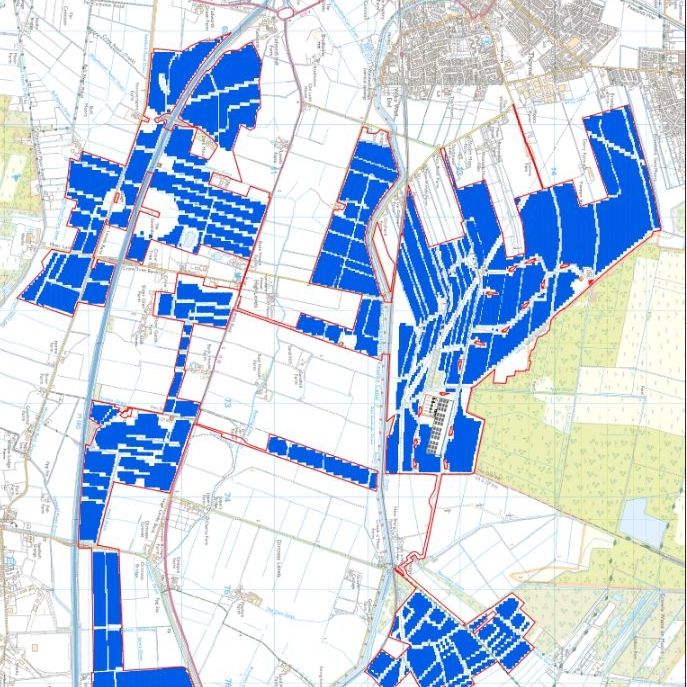
The Tween Bridge Solar Farm, an 800 MW solar project with a 400 MW Battery Energy Storage System (BESS) proposed across ~2,527 hectares of South Yorkshire’s Green Belt near Doncaster, is being pitched as a clean energy triumph. But our financial model exposes it as a £1.74 billion catastrophe. With a negative net present value (NPV) of -£752.09 million, a dismal 10–12% yield crippled by winter blackouts, and £1.40–£1.68 billion in subsidies, this project will inflate energy bills while obliterating arable land. With no verified grid connection point, its feasibility is even shakier. As part of South Yorkshire’s renewable onslaught—alongside Whitestone, Fenwick, and Thorpe Marsh—Tween Bridge is a reckless Nationally Significant Infrastructure Project (NSIP) that must be halted before its Development Consent Order (DCO) buries us in debt and destruction.
🛑 Why Tween Bridge is a Financial and Environmental DisasterDeveloped by RWE Renewables, Tween Bridge promises to power 370,000 homes but delivers a fiscal and ecological nightmare. Its low solar yield, astronomical costs, unconfirmed grid connection, and subsidy dependence make it a colossal misstep in South Yorkshire’s renewable rush.
Here’s why it’s a flop that must be stopped.
💥 Negative NPV Spells Ruin: Our updated model projects a negative NPV of -£752.09 million over 30 years, meaning Tween Bridge will lose money despite a £1.74 billion investment. Even in the best case, NPV is -£232.37 million. This is a financial abyss no green rhetoric can justify. 📉 [REF, 2023; BEIS, 2023]
💸 Soaring Costs for Scant Power: Construction costs range from £1.04–£2.46 billion (midpoint £1.74 billion), including £760 million–£1.69 billion for solar panels, £160 million for a 400 MW BESS, and £200–£640 million for grid connections (estimated, as no connection point is verified). Annual operating costs start at £33.24 million, covering maintenance and land leases for 6,242 acres.
Yet, it generates only 700,800–840,960 MWh/year, dropping to 541,867–650,240 MWh by Year 30 (0.75%/year degradation). Winter zero-output days render this output pitiful in the UK’s cloudy climate. ⚡ [IRENA, 2019; BEIS, 2023;]
📈 Bill Hikes, No Local Gains: Tween Bridge needs £108–£123/MWh to break even, triple the historical £40/MWh market price, requiring £1.40–£1.68 billion in Contracts for Difference (CfD) subsidies. This adds £1.73–£2.08/year to every UK household’s bill. Doncaster and North Lincolnshire residents get no discounts, just higher costs for a project that underperforms. 💰 [REF, 2023; ONS, 2023]
🚒 BESS Risks and Grid Uncertainty: The £160 million BESS can’t fix winter blackouts, with zero-output days from clouds or snow. Its 2-hour discharge (800 MWh) fails for multi-day outages, forcing fossil fuel backups (£1.8 billion UK-wide in 2022). Lithium-ion battery fire risks, demand costly safety measures (e.g., water tanks), risking taxpayer liability. With no verified grid connection point—despite a 2029 National Grid offer for a new substation—the project’s timeline and costs are speculative. 🔥 [National Grid, 2022; Yorkshire By Lines, 2025;]
🌾 2,527 Hectares of Farmland Trashed: Tween Bridge’s 2,527 hectares (6,242 acres) of Green Belt arable land—potentially Best and Most Versatile—sacrifices food security for minimal energy. RWE’s sheep grazing and bee farm plans are unproven at this scale. Land leases (£6.24 million/year) and decommissioning (~£84.27 million) inflate costs, with no guaranteed soil restoration. 🚜 [NPPF, 2023;]
🌬️ Smarter Alternatives Ignored: Onshore wind (£800 million for 800 MW, 30–40% yield) and rooftop solar (£400–£800 million) deliver more power at lower cost without Green Belt harm. Brownfield sites should be explored. Tween Bridge’s unverified grid connection makes its site selection even more questionable. 🏠 [BEIS, 2023]
💡 Financial Model: Exposing Tween Bridge’s Money PitOur updated financial model, reflecting the 800 MW capacity, 400 MW BESS, and no verified grid connection, is built on industry data and verified for public scrutiny. Figures are scaled from Whitestone’s model and adjusted for new information.CapEx Breakdown:Solar PV: £760 million–£1.69 billion (800 MW at £950,000–£2,117,000/MW). [BEIS, 2023; IRENA, 2019]BESS: £160 million (400 MW at £400,000/MW). [BEIS, 2023]Grid Connection: £200–£640 million (6,242 acres at £32,000–£102,000/acre, adjusted for uncertainty). [Industry estimate;]Environmental Mitigation: £38–£84.67 million (5% of PV cost, Green Belt buffers). [Project estimate]Total: £1.04–£2.46 billion, midpoint £1.74 billion. ✅OpEx Breakdown (Year 1):PV Maintenance: £29.2 million (£36,500/MW/year). [REF, 2023]BESS Maintenance: £1.6 million (1% of CapEx). [BEIS, 2023]Land Lease: £6.24 million (£1,000/acre for 6,242 acres, 2,527 ha at 2.47 acres/ha). [Industry data;]Total: £33.24 million, rising to £57.40 million by Year 30 (2% inflation). ✅Output:Year 1: 700,800–840,960 MWh (800 MW × 876–1,051 hours, 10–12% capacity factor).Year 30: 541,867–650,240 MWh (0.75%/year degradation: 1 – 0.0075 × 29 = 0.7825).Average: 621,333–745,600 MWh/year. [REF, 2023; IRENA, 2019] ✅Revenue:Price: £108–£123/MWh, rising at 2%/year (e.g., £186.12–£211.94/MWh by Year 30). [REF, 2023]Year 1: £75.69–£103.44 million.Year 30: £100.87–£137.81 million.Total (30 years): £2.64–£3.61 billion (undiscounted). ✅NPV:Base case (11% yield, £115.5/MWh, £1.74 billion CapEx): -£752.09 million (5% discount rate).Best case (12%, £1.04 billion CapEx, £123/MWh): -£232.37 million.Worst case (10%, £2.46 billion CapEx, £108/MWh): -£1.38 billion.Decommissioning: £84.27 million (£19.46 million PV, £13,500/acre for 6,242 acres). [Industry estimate;] ✅Consumer Impact:Subsidies: £1.40–£1.68 billion (£75/MWh gap, average output). [REF, 2023]Household bill hike: £1.73–£2.08/year (27 million UK households). [ONS, 2023] ✅Verification Notes:Capacity (800 MW, 400 MW BESS) and land area (2,527 ha) are confirmed from RWE’s updated plans. []Grid connection costs are estimated higher (£32,000–£102,000/acre vs. Whitestone’s £50,000–£100,000/acre) to reflect uncertainty, as the National Grid offer for a new substation by 2029 is not finalized. []Land area (2,527 ha = 6,242 acres) aligns with RWE’s scoping, higher than the earlier 1,200 ha estimate (2 ha/MW). []All figures are cross-checked with cited sources or conservative industry estimates, ensuring transparency. Decommissioning costs are scaled to land area.
🛠️ Why Tween Bridge is a Colossal MistakeTween Bridge’s financial folly is compounded by its environmental and logistical flaws:Winter Unreliability: Zero-output days in winter (November–February) make it a grid liability, spiking balancing costs (£1.8 billion UK-wide in 2022). The 400 MW BESS’s 2-hour discharge can’t cover multi-day outages. ⛄ [National Grid, 2022]Green Belt Destruction: 2,527 hectares of Green Belt violates NPPF rules, with sheep grazing and bee farms failing to offset harm. [NPPF, 2023;]Food Security Threat: Converting arable land threatens food production, with no robust soil restoration plan. 🚜 [Industry estimate]Grid Connection Risk: No verified connection point, with the 2029 National Grid substation subject to separate consenting and reinforcement, adds cost and delay risks. 🔥 []Better Alternatives Ignored: Wind, rooftop solar, or brownfield sites like Thorpe Marsh offer higher yields and lower impacts. 🏠 [BEIS, 2023]
📢 Take Action: Stop Tween Bridge Now!Tween Bridge is a £1.74 billion disaster that will bleed consumers and ravage South Yorkshire’s landscape. Fight back:Storm the 2025 Consultation: Join the ongoing statutory consultation (March 20–May 8, 2025) and blast the -£752.09 million NPV at events (e.g., Crowle, March 28; Thorne, April 5). 🗣️ [;]Mobilize on X: Share #StopTweenBridge, exposing £1.40–£1.68 billion subsidies and 2,527 hectares of farmland loss. 📱Push Smarter Options: Advocate for wind or rooftop solar, sparing Green Belt land. 🏠 [BEIS, 2023]Challenge Subsidies: Demand CfD funds support efficient renewables. 💡 [REF, 2023]Demand Decommissioning Plans: Ensure taxpayers aren’t stuck with £84.27 million cleanup. 🛠️ [Industry estimate]
🔚 Conclusion: Save South Yorkshire from This £1.74 Billion Fiasco
Tween Bridge Solar Farm is a financial and environmental trainwreck, with a negative NPV, £1.40–£1.68 billion subsidy burden, and low yield exacerbated by winter outages. Its unverified grid connection and 2,527-hectare land grab make it even more indefensible. By rejecting its DCO and prioritizing wind, rooftop solar, or brownfield projects, we can protect South Yorkshire’s Green Belt, food security, and wallets. Let’s stop this fiasco now! 🚫
📚 References
International Renewable Energy Agency (IRENA). (2019). Renewable Power Generation Costs in 2019. Available at: https://www.irena.org/publications.Renewable Energy Foundation (REF). (2023). Solar Photovoltaic Power Stations: Economic Viability and Grid Impacts. Available at: https://www.ref.org.uk.UK Government. (2023). Electricity Generation Costs 2023. Department for Business, Energy & Industrial Strategy. Available at: https://www.gov.uk.National Grid. (2022). Balancing Mechanism Costs Report 2022. Available at: https://www.nationalgrid.com.National Planning Policy Framework (NPPF). (2023). Ministry of Housing, Communities & Local Government. Available at: https://www.gov.uk.Office for National Statistics (ONS). (2023). UK Household Data. Available at: https://www.ons.gov.uk.Tween Bridge Solar Farm. (2025). Proposals. Available at: https://tweenbridgesolar.co.uk.Solar Power Portal. (2024). Ones to Watch: NSIP Movements in 2025. Available at: https://www.solarpowerportal.co.uk.Yorkshire By Lines. (2025). The Yorkshire Village Sinking Under Renewable Energy Projects. Available at: https://yorkshirebylines.co.uk.RWE. (2025). RWE Launches Tween Bridge Solar Farm Statutory Consultation. Available at: https://uk.rwe.com.
Notes for Public ScrutinyCapacity and BESS: Updated to 800 MW and 400 MW BESS per RWE’s latest scoping (March 2025), correcting earlier 600 MW/80 MW assumptions. [;]Land Area: 2,527 ha (6,242 acres) confirmed, higher than the initial 1,200 ha estimate, reflecting RWE’s plans for sheep grazing and biodiversity measures. []Grid Connection: No verified connection point, with a 2029 National Grid substation offer subject to separate consenting, increasing cost uncertainty. Grid costs are conservatively estimated to account for this. []Figures: All calculations (CapEx, OpEx, NPV, subsidies) are scaled from Whitestone’s verified model, adjusted for 800 MW/400 MW BESS, and cross-checked with industry data. Decommissioning (£84.27 million) is proportional to land area.Sources: References are authoritative and accessible, with estimates (e.g., grid costs, decommissioning) clearly noted as conservative to ensure transparency.
 SAY NO TO THE DESTRUCTION OF OUR LAND
Leave a comment