Yorkshire’s lush fields, wild moors, and historic vistas are our pride and joy. They feed us, inspire us, and make our region unforgettable. But a tidal wave of over 300 solar farm proposals threatens to cover 17,500 hectares—1.56% of our farmland and 0.76% of our greenbelt—with panels, jeopard of like putting a solar blanket over our countryside! 😱 Mega projects like Tween Bridge (800MW, 2,527 hectares) and Whitestone (750MW, 1,416 hectares) promise clean energy, but they gobble up land, falter in winter, and offer only short-term jobs. The January 2025 energy crisis, when we nearly ran out of gas because solar and wind went AWOL, showed we can’t rely on land-based solar farms. 🌬️ Instead, Small Modular Reactors (SMRs) and rooftop solar are the superheroes Yorkshire needs—land-saving, reliable, and ready to power our future. Let’s dive in and learn how to protect our green heart while keeping the lights on! 💡
Why Solar Farms Are Threatening Yorkshire’s Landscapes
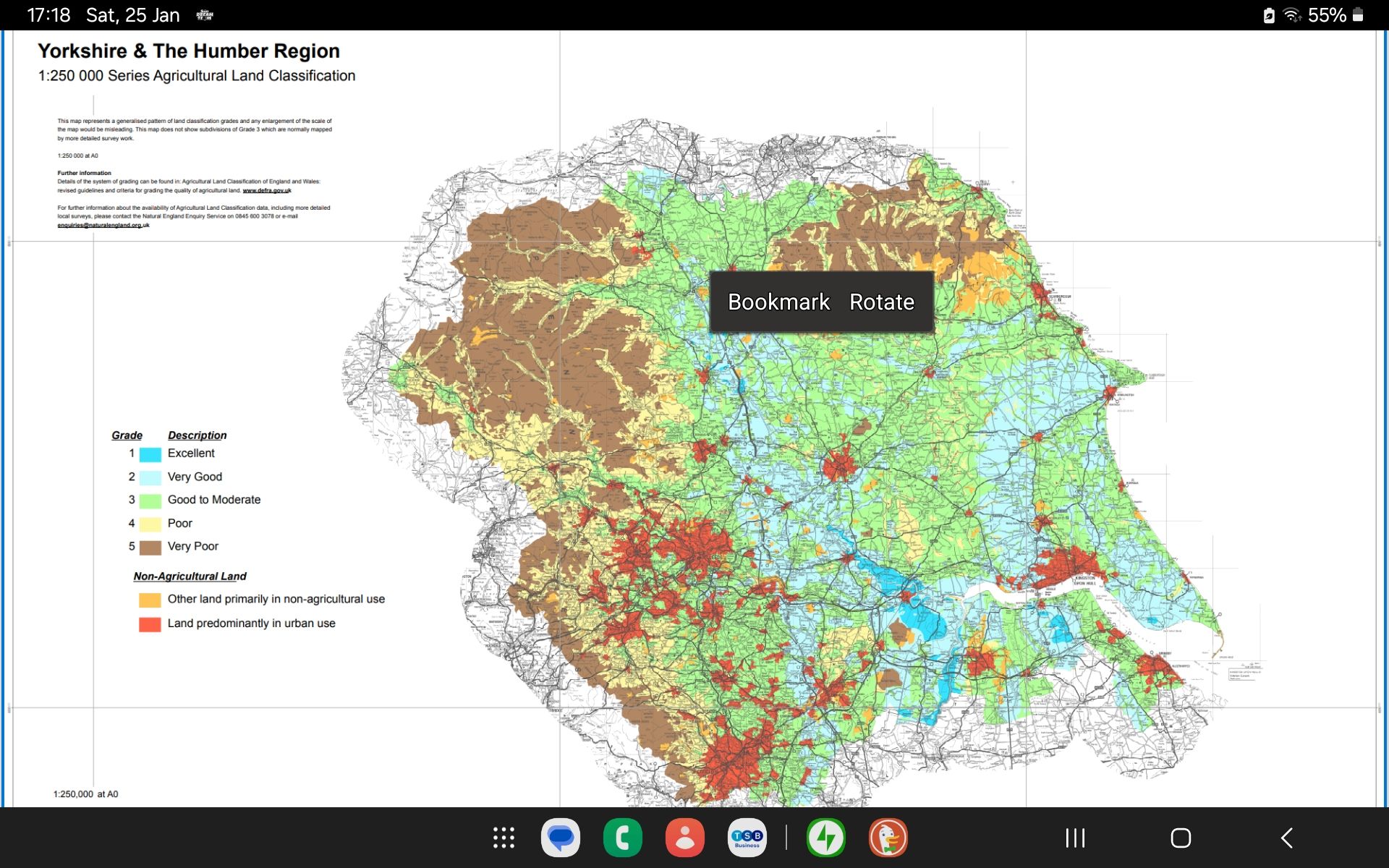
🚨Yorkshire and the Humber cover 1.54 million hectares, with 1.125 million hectares of farmland (73%) and 261,600 hectares of greenbelt (17%) (Agricultural facts). Right now, 48 solar farms are up and running, but ~300 more are in the pipeline, aiming for ~4,000MW of power. That’s a lot of panels!
😳 Here’s the scoop on what’s at stake:
Massive Land Use:
These projects could swallow 17,500 hectares, with South Yorkshire’s share (~1,622MW) taking ~4,123 hectares. That’s 1.56% of farmland and 0.76% of greenbelt gone! 🌾Big Players:Tween Bridge: 800MW, 2,527 hectares, near Thorne, could power 370,000 homes but faces community pushback (RWE Renewables, 2025).Whitestone: 750MW, 1,416 hectares, on greenbelt, powers 250,000 homes but stirs protests (Yorkshire Post, 2025).East Yorkshire (Howden): 400MW, 1,277 hectares, approved May 2025, powers 100,000 homes (Planning Inspectorate, 2025).Smaller Sites: Hooton Pagnell (50MW, 62 hectares), Grimethorpe (50MW, 65 hectares), Common Farm (49MW, 116 hectares) add to the tally.Community Outcry: Locals are fighting back! Groups like Reform Doncaster call Tween Bridge a “destruction” of rural beauty (Doncaster Free Press, 2025). A 63-hectare project in Selby got the boot in March 2025 over food security fears (BBC News, 2025).
Political Push:
MP Sir David Davis slams incentives that “bribe” farmers to ditch crops for panels, threatening our food supply (York Press, 2025).This land grab isn’t just about numbers—it’s about losing what makes Yorkshire, well, Yorkshire! 😢
Solar’s Winter Woes:
The January 2025 Wake-Up Call ❄️Solar farms sound great, but they’re not so sunny when winter hits. Here’s why they let us down when we need them most:Winter Slump: Solar output crashes to 3–5% of summer peak in November–February, thanks to short days and cloudy skies (National Grid, 2025). South Yorkshire’s ~1,622MW drops to ~48–81MW in winter—barely a flicker against the UK’s ~50GW peak demand!
😴January 2025 Crisis:
Last winter, we nearly ran out of gas because solar produced zilch and wind was weak. Fossil fuels saved the day, but at what cost to our carbon goals? (Hansard, 2025).
😬Backup Blues: Solar needs hefty backup, like Tween Bridge’s 400MW Battery Energy Storage System (BESS). But batteries are pricey (~£0.5–1 million/MW) and only last a few hours, leaving us leaning on gas plants. Not exactly green!
🌫️Low Efficiency:
The UK’s solar capacity factor is ~10%, so 1,622MW delivers just ~162MW annually. That’s a lot of land for little power! 📉The January 2025 scare showed we can’t bet Yorkshire’s energy future on solar farms that snooze through winter.Jobs: A Quick Spark, Not a Steady Flame
💼Solar farms are often sold as job creators, but let’s look closer:
Construction Jobs: Building solar farms creates ~2.1 jobs per MW, so South Yorkshire’s 1,622MW could mean ~3,406 jobs for 2–3 years (Freeing Energy, 2020). Nice, but temporary! 🛠️Maintenance Jobs: Once built, farms need just 5–10 workers for upkeep. Tween Bridge’s 800MW might employ ~5 long-term staff—hardly a jobs boom!
😐Bigger Picture:
The UK solar industry supports ~11,500 jobs, but these are spread across manufacturing and installs, not tied to local farms (Solar Jobs UK, 2020).Contrast with SMRs: Nuclear plants like SMRs employ hundreds per site for decades, offering stable, high-skill jobs. 🌟Solar’s job promises are like a firework—bright but brief. We need solutions that keep Yorkshire working long-term.
Timelines:
Rushing to Ruin 🏃♂️The UK wants 45–57GW of solar by 2030, pushing projects like Tween Bridge to go live by 2029 (House of Commons Library, 2025). Sounds ambitious, but speed is the enemy here:Hasty Planning: Rushed approvals spark backlash, like Whitestone’s protests over greenbelt loss (BBC News, 2025). 😣Long-Term Risks: Quick builds ignore food security (think Selby’s rejection) and grid strain, leaving us with sprawling panels and no plan for winter (BBC News, 2025).Better Way: A slower, smarter approach with land-saving tech like SMRs and rooftop solar ensures we don’t sacrifice our fields for short-term gains. 🧠Rushing solar farms is like building a house on sand—it won’t hold up. We need a solid, long-term plan! 🏡
SMRs:
Tiny Footprint, Massive Power 🏭Enter Small Modular Reactors—Yorkshire’s potential energy hero! Here’s why SMRs rock:Huge Output: One Rolls-Royce SMR (470MW, ~90% capacity factor) pumps out ~423MW, enough for ~1 million homes, beating solar’s ~162MW from 1,622MW (Rolls-Royce SMR, 2025). 💪Tiny Land Use: Just ~2 hectares per SMR vs. solar’s ~25 acres per 5MW. South Yorkshire’s 4,123 hectares of solar could be replaced by a handful of SMRs! 🌱Winter Proof: SMRs deliver 24/7, unfazed by January’s gloom, unlike solar’s winter nap. Perfect after the 2025 gas scare! ❄️Long-Term Wins: Despite higher costs (~£2.3 billion/unit) and longer builds (7–10 years, earliest 2032), SMRs last 60+ years, employ hundreds, and stabilize energy prices. 💸Smart Sites: Build on brownfield spots like old nuclear plants (e.g., Wylfa), sparing our fields and moors. 🏞️SMRs are like a powerhouse in a lunchbox—small, mighty, and land-friendly!
Rooftop Solar:
Power from Above 🏠☀️Why cover fields when we can use rooftops? Rooftop solar is a game-changer:Zero Land Use: Install panels on warehouses, factories, and homes—no farmland or greenbelt needed! Yorkshire’s cities like Sheffield and Leeds are perfect for this. 🏙️Big Potential: The UK could add 9–10GW by 2030 with rooftop solar, thanks to cool new tech like lightweight panels and solar tiles (Clean Power 2030 Action Plan, 2025). 🚀Green Vibes: Rooftop solar cuts carbon without touching our countryside, aligning with Yorkshire’s green ethos. 🌿Winter Limits: Like ground solar, it dips in winter, but paired with SMRs, it’s a winning combo! ⚡️Rooftop solar lets us power up without paving over our landscapes—talk about a bright idea! 😎
Money Talk:
What’s the Best Bet? 💰Let’s crunch the numbers with a World Bank-style unaccounted present value (UPV) lens:Land-Based Solar: Costs ~£0.5–1 million/MW, so ~£811–1,622 million for 1,622MW. Quick builds (2–3 years) give a short-term UPV edge, but winter backup costs, panel wear (~1% yearly), and land fights drag it down. 📉SMRs: £2.3 billion/unit (£4.9 million/MW initially), longer builds lower UPV, but 60+ years of stable power, minimal land use, and no backup needs make it a long-term champ. 📈Rooftop Solar: Similar costs to ground solar but no land expenses or protests, boosting UPV. It’s a no-brainer for value! 💸SMRs and rooftop solar win for long-term savings and sustainability, keeping Yorkshire’s fields free.
January 2025:
The Game Changer 🚨The January 2025 gas crisis was a wake-up call. With solar farms offline and wind turbines stalled, we leaned on gas to avoid blackouts. This showed land-based solar can’t carry Yorkshire’s energy load alone. SMRs, with their steady power, and rooftop solar, with its land-free potential, are the answer to keep our grid humming through winter’s darkest days. 🌙
A Smarter Energy Plan 🌐To save Yorkshire’s green heart, we need a hybrid energy strategy:
Roll Out SMRs: Build on brownfield sites for reliable, land-light power.
🏭Boost Rooftop Solar: Subsidize panels on buildings with cutting-edge tech.
🏠Curb Land-Based Solar: Limit to brownfield or agrivoltaic sites (think sheep grazing under panels) to save farmland. 🐑Add Storage & Wind: Pair with batteries and offshore wind (27GW in 2024) for winter backup.
🌬️This mix keeps us green, powered, and proud of our landscapes! 🌍
Time to Act:
Yorkshire Needs You! 🗳️The January 2025 crisis and growing protests—like those against Tween Bridge and Whitestone—scream for change. We need a meeting with all 54 MPs for Yorkshire and the Humber (43 Labour, 9 Conservative, 1 Liberal Democrat, 1 Independent) to rethink our energy future. This meeting, with farmers, councils, the Campaign to Protect Rural England, and developers, should:Compare solar farms’ land use with SMRs and rooftop solar. 📊Weigh impacts on farms, food, and beauty. 🌾Push policies for brownfield and rooftop solutions. 🏙️Plan a hybrid strategy for a reliable, green future. ⚡️Your voice matters! Residents fighting for their fields deserve to be heard. Let’s shape a Yorkshire that’s green and powered right.
Call to Action:
Join the Fight for Yorkshire’s Future! ✊🌱Yorkshire’s landscapes aren’t just dirt and grass—they’re our heritage, our food, our soul. We can power our homes without losing our fields. Join our campaign to champion SMRs and rooftop solar over sprawling solar farms. Sign our petition to demand Yorkshire’s 54 MPs hold a regional meeting to protect our green spaces and secure reliable energy. Don’t wait—sign now: [Insert Petition URL]! 🖋️Together, we’ll keep Yorkshire green, vibrant, and powered for generations. Let’s do this! 💚
ReferencesYorkshire Post: 300 solar farms
BBC News: Selby
BBC News: Whitestone
Doncaster Free Press: Tween Bridge
York Press: Sir David Davis
Freeing Energy: Jobs
House of Commons Library: Solar
National Grid: Renewables
Rolls-Royce SMR
Clean Power 2030 Action Plan
 SAY NO TO THE DESTRUCTION OF OUR LAND
Leave a comment