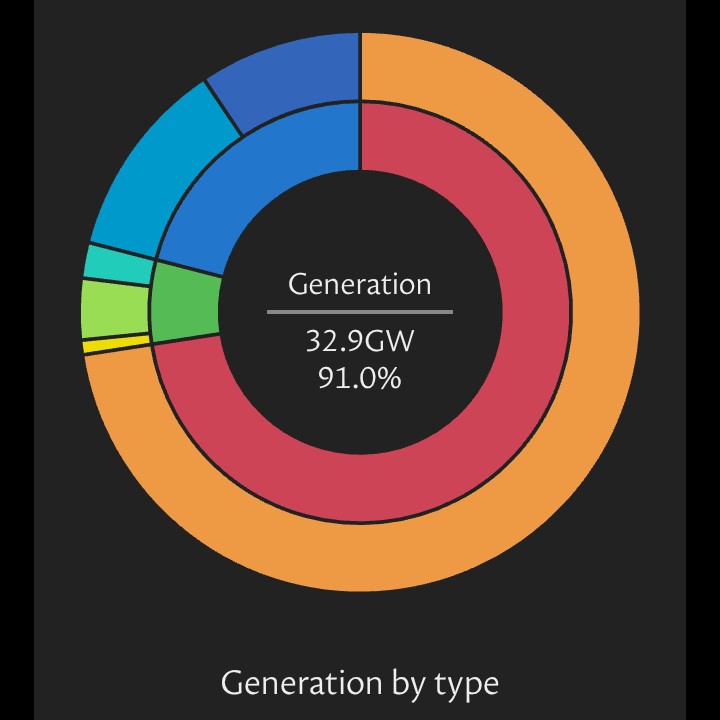
The UK’s headlong sprint to a 95% clean power grid by 2030, championed by Energy Secretary Ed Miliband, is a reckless gamble masquerading as climate salvation. Aiming to slash gas to 5% or less while piling on 115 GW of new renewables (60 GW solar, 55 GW offshore wind), 30 GW of storage, and a measly 3.5-4.1 GW of nuclear, this “clean energy superpower” pipe dream bets on unproven grid-forming inverters (GFIs), a £50-100 billion price tag, and a grid buckling under the strain.

X users (@7Kiwi, @Nunzio_Schwartz) brand it an “eco-zealot” delusion, and global failures—Australia’s blackouts, Spain and Portugal’s grid collapse—scream caution. Carbon capture and storage (CCS) and carbon credits, peddled as green fixes, are costly ideological props that inflate bills and delay real solutions.
It’s time to ditch this climate agenda entirely—CCS, carbon credits, and the 2030 rush—and embrace a pragmatic plan: lean on gas generation through 2050, scale up small modular reactors (SMRs), and roll out solar and wind gradually. This ensures a rock-solid grid, saves vast swaths of land and sea, and delivers massive cost savings, all while keeping net zero by 2050 in sight. In this 2,000-word deep dive, we’ll expose why the 2030 plan is a disaster, why CCS and carbon credits must be binned, and how gas, SMRs, and a slower renewable pace are Britain’s best bet for energy security, environmental protection, and economic sanity. Buckle up—it’s time for a reality check. 🚨
The 2030 Climate Agenda: A Recipe for Blackouts and Bankruptcy 💸⚡
Miliband’s Clean Power 2030 Action Plan targets 300 GW of clean capacity by 2030: 60 GW solar, 55 GW offshore wind, 27 GW onshore wind, 30 GW storage, and 3.5-4.1 GW nuclear from Hinkley Point C and Sizewell C [1]. Gas, currently 30% of electricity (35 GW), would plummet to ≤5%, relying on GFIs to integrate DC-based renewables (solar, batteries, HVDC-linked offshore wind) into the 50 Hz AC grid [2]. The Climate Change Act 2008 mandates a 68% emissions cut by 2030 and net zero by 2050, but the non-binding 2030 clean power goal ignores technical, economic, and environmental realities [3].
Here’s why it’s doomed to fail.
Why the Plan Is a Shambles
😬🛠️ Grid Incompatibility:
The UK grid runs on 50 Hz AC, stabilized by gas and nuclear’s rotational inertia, which prevents blackouts during sudden supply/demand shifts. DC sources like solar and batteries lack inertia, risking frequency drops, as seen in the 2019 UK blackout (1 million homes affected) [4]. GFIs, designed to mimic inertia, are unproven at the 71 GW scale needed (30 GW solar, 11 GW HVDC wind, 30 GW storage) [5]. Scotland’s 800 MW grid-forming battery pilot (NESO, March 2025) is a mere fraction, and utility-scale solar/wind GFIs won’t be commercial until 2027-2028, per GE Vernova [6]. Cornwall Insight projects a 30-36 GW shortfall (64% of solar, 70% of wind by 2030) [7].
💷 Crippling Costs:
The transition demands £50-100 billion: £20-30 billion for GFIs, £15-30 billion for HVDC converters, £20-50 billion for grid upgrades [8]. Labour’s £24 billion renewable budget falls woefully short, pushing £100-200/year bill hikes on consumers via Contracts for Difference (CfD) subsidies, fueling X outrage (@7Kiwi, 2025) [9]. Inflation and supply chain issues (15% semiconductor shortage, 2024) inflate costs further [10].
🚧 Grid Bottlenecks:
Connection queues for renewables stretch up to 14 years, per Cornwall Insight, and the Great Grid Upgrade (new 50 Hz lines, substations) faces 7-10 year delays due to planning hurdles and public protests (e.g., East Anglia pylon opposition, 2024) [11, 12]. NESO’s £323 million Stability Pathfinder is a start but won’t fix systemic grid constraints by 2030 [13].
🌿 Environmental Destruction:
Solar farms require ~120,000 acres for 60 GW (2,000 acres/GW, UKERC), gobbling up farmland needed for food security [14]. Offshore wind (55 GW) disrupts marine ecosystems, with North Sea turbines linked to seabird and fish declines (WWF, 2024) [15]. Rushing 115 GW by 2030 sacrifices nature for green optics.
🌍 Global Warnings:
Australia:
At 30% renewables, blackouts hit after the 2019 Callide coal plant explosion due to low inertia. Gas (20%) and coal (40%) remain critical through 2040, per AEMO’s 2024 Integrated System Plan [16].Spain/Portugal: The 2025 Iberian blackout (50% renewables in Spain, 40% in Portugal) left 10 million without power and caused seven deaths due to low inertia and inadequate backup (Telegraph, 2025) [17]. Gas (25-30%) is a mainstay, per Eurostat [18].Critical Take: The 2030 plan is a green fantasy, betting on unready GFIs, unaffordable costs, and a grid that can’t cope. It risks blackouts, bankrupts consumers, and trashes landscapes, echoing Australia and Spain’s failures. The “eco-zealot” agenda prioritizes ideology over reality—it’s time to pull the plug.
🛑Binning CCS and Carbon Credits:
Useless Green Dogma
🚮CCS and carbon credits, sold as ways to “clean” gas while meeting emissions targets, are costly, ineffective props that deserve to be scrapped. They inflate bills, delay real solutions, and serve the climate agenda’s optics over practicality.
Why CCS Is a Non-Starter
😡🔧 Technical Immaturity:
The UK has one CCS pilot (Drax bioenergy, 2024), capturing 1 MtCO2/year, a drop in the 20-30 MtCO2 needed for 10-15 GW of gas [19]. Globally, only 45 MtCO2 was captured in 2024, far below the 1.2 Gt needed for net zero (IEA, 2024) [20]. CCS cuts plant efficiency by 10-20%, increasing fuel use and costs (IEEE, 2024) [21]. Storage in North Sea reservoirs risks leaks and seismic issues (Nature, 2025) [22].
💸 Sky-High Costs:
Retrofitting a 1 GW gas plant with CCS costs £1-2 billion, with 10 GW costing £10-20 billion (Carbon Brief, 2024) [23]. Operating costs rise 20-30% due to capture and storage logistics (IEA, 2024) [20]. This adds £50-100/year to bills, on top of renewable subsidies [9].
🗣️ Ideological Fluff:
CCS is pushed by oil/gas firms (e.g., BP, Shell) to justify fossil fuel use, but only 10% of global projects work (IEA, 2024) [20]. Greenpeace UK calls it a distraction from renewables and nuclear [24]. X users (@Nunzio_Schwartz, 2025) slam it as a “money pit” [25].
Why Carbon Credits Are a Scam
💨❌ Ineffectiveness:
Credits fund dubious projects (e.g., forest preservation already planned), with 90% lacking real impact (Guardian, 2024) [26]. Offsetting 10 GW of gas (20-30 MtCO2/year) is greenwashing, not decarbonization.
💷 Costly Nonsense:
Offsetting 10 GW costs £5-10 billion through 2030 (Carbon Brief, 2024), adding to bill hikes [23]. Carbon credit prices swung 30% in 2024 (EU ETS), making budgeting a gamble [27].
🛑 Moral Hazard:
Credits let gas plants emit, delaying nuclear or renewable scale-up. They’re a policy crutch, not a solution, per a 2024 Nature commentary [28].
🌍 Global Rejection:
Australia and Spain/Portugal rely on gas (20-30%) without heavy credits, prioritizing stability (AEMO, 2024; Eurostat, 2024) [16, 18].
Honest Take:
CCS and carbon credits are green dogma—expensive, unproven, and ineffective. Binning them frees the UK from wasteful spending and ideological traps, focusing on reliable, tangible solutions. 🗑️
A Pragmatic Energy Plan:
Gas, SMRs, and Gradual Renewables 🌟
Ditching the 2030 climate agenda—CCS, carbon credits, and the 95% clean power rush—opens the door to a sane strategy:
gas through 2050, large-scale SMRs, and a gradual solar/wind rollout. This ensures grid stability, saves land and sea, and slashes costs, while targeting net zero by 2050.
Continuous Gas Generation:
The Grid’s Ironclad Backbone 🔌Gas, supplying 30% of UK electricity (35 GW, 2024), delivers 50 Hz AC with inertia, preventing blackouts during renewable dips. Australia (20%) and Spain/Portugal (25-30%) prove its necessity [16, 18].
✅ Unmatched Reliability:
Gas plants respond in minutes, balancing solar/wind variability. Maintaining 10-15 GW (15-20%) through 2050 avoids blackout risks, as seen in Spain’s 2025 collapse (Telegraph, 2025) [17]. Energy analyst Kathryn Porter (2025) warns that cutting gas to 5% courts disaster [29].
💰 Massive Cost Savings:
New gas plants cost £1 million/MW vs. £5-10 million/MW for nuclear or £200-300/kW for GFIs [8, 30]. Retrofitting 10-15 GW of aging plants (retiring by 2035) costs £5-10 billion, a fraction of CCS (£10-20 billion) or renewables (£50-100 billion) [23, 8].
🌳 Land/Sea Preservation:
Gas plants use ~1 acre/GW vs. 2,000 acres/GW for solar, saving 120,000 acres for 60 GW solar [14]. They avoid offshore wind’s marine harm (e.g., turbine noise impacting whales, Greenpeace UK, 2024) [24].
🚀 Immediate Availability:
The UK’s 35 GW gas fleet is ready, unlike GFIs (5-7 years) or SMRs (2032-2035) [6, 31]. North Sea gas curbs price volatility (2022 spikes) [32].⚠️ Challenge—Emissions: Unabated gas emits 400-500 gCO2/kWh, challenging the 2030 68% emissions cut [3]. A relaxed target (50-60% cut) and SMR scale-up by 2040 align with 2050 net zero, avoiding CCS/credit costs [33].⚠️
Challenge—Policy:
Labour’s green focus and X criticism (@7Kiwi, 2025) may resist gas expansion, needing public campaigns on reliability [25].Why It’s Essential: Gas is proven, cheap, and scalable, mirroring Australia and Spain’s success. It’s the grid’s lifeline without green dogma. 💪
Large-Scale SMRs:
The Low-Carbon Future ⚛️SMRs (≤300 MW) provide 50 Hz AC with inertia, ideal for baseload as gas phases down, supporting the UK’s 24 GW nuclear target by 2050 [31].
✅ Reliable and Clean:
Rolls-Royce’s 470 MW SMR powers ~600,000 homes at 95% capacity factor (World Nuclear News, 2025), cutting emissions vs. gas [34].
💰 Cost and Speed:
SMRs cost £2-3 billion/unit and take 3-5 years vs. 10-15 for large reactors (e.g., Hinkley Point C, £42-50 billion) [30, 31]. The UK’s £2.5 billion investment and relaxed planning (February 2025) target 3-7 GW by 2032-2035, scaling to 10-20 GW by 2040 [35].
🌳 Land Savings:
SMRs need ~10 acres/unit vs. 120,000 acres for 60 GW solar, using brownfield sites (e.g., Wylfa) to minimize impact [14, 36].
🌍 Global Momentum:
China’s HTR-PM (2024) and the EU’s SMR Industrial Alliance (2024) aim for early 2030s deployment [37]. X users (@Nunzio_Schwartz, 2025) back SMRs for clean reliability [25].
⚠️ Challenge—Timeline:
SMRs miss 2030, starting 2032-2035. Regulatory and supply chain hurdles (15% semiconductor shortage, 2024) could delay [10, 31].⚠️ Challenge—Cost: £20-60 billion for 10-20 GW, with Regulated Asset Base (RAB) bill impacts (Hinkley: £35 billion) [30]. Economies of scale need multiple units.
⚠️ Challenge—Public:
Safety and waste fears (Greenpeace UK, 2025) require clear communication [24].Why It’s Essential: SMRs are the low-carbon anchor, replacing gas by 2050 with minimal land use, but gas bridges the gap until they scale. 🚀
Gradual Solar and Wind:
Saving Land, Sea, and Wallets ☀️🌬️Rushing 115 GW of renewables by 2030 devours land, harms seas, and risks instability. A slower pace is smarter.
✅ Land/Sea Protection:
Targeting 40 GW solar (80,000 acres) and 40 GW wind (30 GW offshore) by 2030 saves 40,000 acres and reduces marine disruption (e.g., North Sea fish declines, WWF, 2024) vs. 60 GW solar and 55 GW wind [14, 15].
💰 Cost Savings:
80 GW renewables cut GFI and HVDC costs by £20-30 billion, easing bill hikes (£50-100/year vs. £100-200) [8, 9].⚡ Stability: Battery GFIs (2-3 GW by 2027) support an 80% clean grid, avoiding Spain’s 2025 blackout risks (50% renewables, low inertia) [6, 17].
🕒 Flexibility:
A 2035 target for 95% clean power lets GFIs mature (2027-2028), reducing instability [6].⚠️ Challenge—Emissions: Higher gas use (15-20%) requires a relaxed 2030 target (50-60% cut), achievable with SMRs by 2040 [33].
⚠️ Challenge—Policy:
Labour’s 2030 fixation needs recalibrating, facing green resistance [1].Why It’s Essential: A gradual 80% clean target by 2030, hitting 95% by 2035, protects nature and wallets while ensuring reliability. 🌿
Why We Must Ditch the Climate Agenda
🛑The 2030 climate agenda is a reckless ideology, betting on unproven GFIs, grid upgrades that won’t arrive (14-year queues), and £50-100 billion costs that hammer consumers [7, 8]. CCS (£10-20 billion, unscaled) and carbon credits (£5-10 billion, ineffective) are greenwashing scams, bloating bills for zero gain [20, 23, 26].
Australia’s 2019 blackouts (30% renewables) and Spain/Portugal’s 2025 collapse (10 million affected) warn of instability without backup [16, 17]. Solar and wind’s land (120,000 acres) and sea (North Sea ecosystems) toll is unacceptable [14, 15]. X users (@7Kiwi, 2025) demand affordability and stability over eco-dogma [25].A gas+SMR+gradual renewable plan delivers:
⚡ Reliability:
Gas (15-20%) prevents blackouts; SMRs (2032-2035) secure baseload [29, 31].💷 Cost Savings: £30-50 billion total (gas: £5-10 billion, SMRs: £20-30 billion, renewables: £10-15 billion) vs. £50-100 billion [8, 30].🌳 Land/Sea Protection: 80 GW renewables saves 40,000 acres and marine habitats [14, 15].
🌍 Net Zero Path:
Gas bridges to SMRs, hitting 2050 net zero with a relaxed 2030 target (50-60% emissions cut) [33].
A Sane Roadmap to 2050 🗺️
Gas Through 2050:
Maintain 10-15 GW (15-20%) with £5-10 billion for retrofits/new plants, no CCS or credits [8, 29].SMR Scale-Up: Fast-track Rolls-Royce SMRs (3-7 GW by 2035, 10-20 GW by 2040) with £5-10 billion, streamlined siting (Wylfa, 2025), and RAB cost caps [31, 35].Gradual Renewables: Target 80% clean power by 2030 (40 GW solar, 40 GW wind, 20 GW storage), hitting 95% by 2035 [6, 7].Grid Investment: £20 billion for HVDC/substations, using the Planning and Infrastructure Bill to cut delays [12].Public Buy-In: Counter “eco-zealot” backlash (X sentiment) with campaigns on gas/SMR reliability and 3,000 SMR jobs [25, 35].
The Bottom Line:
A Realistic Future 🌟
Miliband’s 2030 climate agenda is a costly, unstable fantasy, risking blackouts, bankrupting budgets, and ravaging land and sea. Scrapping CCS and carbon credits—useless green props—frees the UK to embrace gas through 2050, SMRs by 2035, and a gradual renewable rollout. Australia and Spain prove gas’s necessity; SMRs offer a clean future. An 80% clean grid by 2030, hitting 95% by 2035, keeps the lights on, saves billions, and protects nature, delivering net zero by 2050 without the eco-dogma. Let’s choose sanity over zeal. 🏴
References
1. National Energy System Operator (NESO),Clean Power 2030 Action Plan, 2024.
2. NESO, Electricity Ten Year Statement, 2024.
3. UK Government, Climate Change Act 2008, 2008.
4. National Grid ESO, 2019 Blackout Report, 2019.
5. IEEE, “ Grid-Forming Inverters: Challenges and Opportunities,”IEEE Transactions on Power Electronics, 2024.
6. GE Vernova, Grid-Forming Inverter Roadmap, 2024.
7. Cornwall Insight, UK Renewable Energy Forecast 2030, 2024.
8. Carbon Brief, UK Energy Transition Cost Estimates, 2024.
9. Cornwall Insight, Consumer Bill Impact Analysis, 2024.
10. IEA, Global Supply Chain Report, 2024.
11. Cornwall Insight,UK Grid Connection Queue Analysis, 2024.
12. NESO, Great Grid Upgrade Plan, 2024.
13. NESO, Stability Pathfinder Phase 2 Report, March 2025.
14. UK Energy Research Centre (UKERC), Land Use for Renewables, 2024.
15. WWF, North Sea Wind Farm Environmental Impacts, 2024
16. .Australian Energy Market Operator (AEMO), 2024 Integrated System Plan, 2024.
17. Telegraph, “Iberian Blackout Lessons for UK,” January 2025.
18. Eurostat, EU Energy Mix Data, 2024.
19. Drax, Bioenergy CCS Pilot Update, 2024.
20.IEA, Global CCS Status Report, 2024.
21. IEEE, “CCS Efficiency Impacts,”IEEE Power and Energy Magazine, 2024.
22. Nature, “Geological Risks of CCS,”Nature Geoscience, 2025.
23. Carbon Brief, CCS Cost Analysis, 2024.
24. Greenpeace UK, CCS and Energy Policy Critique, 2025.
25. X Platform, Posts by @7Kiwi and @Nunzio_Schwartz, 2025.
26. Guardian, “Carbon Credit Effectiveness Investigation,” 2024.
27. EU ETS, Carbon Market Price Data, 2024.
28. Nature, “Carbon Credits as Policy Crutch,”Nature Climate Change, 2024.
29. Kathryn Porter, UK Energy Reliability Analysis, 2025.
30. World Nuclear News, UK Nuclear Cost Estimates, 2025.
31. NESO, Nuclear Strategy for 2050, 2024
32. .UK Government, North Sea Gas Production Report, 2024.
33. Carbon Brief, UK Emissions Pathway Analysis, 2024.
34. World Nuclear News, Rolls-Royce SMR Update, June 2025.
35. UK Government, SMR Investment and Planning Reforms, February 2025.
36. UK Government, Wylfa SMR Site Selection, 2025.
37. EU SMR Industrial Alliance,SMR Deployment Roadmap, 2024.
 SAY NO TO THE DESTRUCTION OF OUR LAND
Leave a comment