1. Ideological Roots:
The Climate Change Act and the Renewables Trap
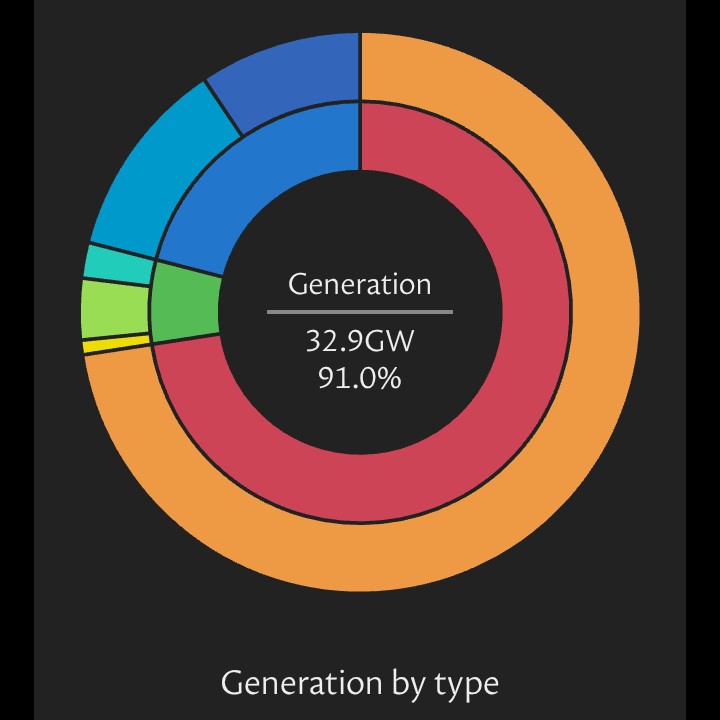
The Climate Change Act 2008 established legally binding carbon budgets and created the independent Committee on Climate Change (CCC) to guide policy . The Act ambitiously committed the UK to an 80 % reduction in greenhouse gas emissions by 2050 , later increased to a net‑zero target in 2019 .While successful in reducing emissions, delivering an approximate 48 % fall from 1990 to 2021 alongside a 65 % growth in national income , the Act also sidetracked balanced energy planning in favour of intermittent renewables. A national obsession with wind and solar sidelined reliable nuclear investment. Today, around 51 % of electricity comes from low‑carbon sources—14 % nuclear, 37 % renewables . Renewables have soared-but without the backup nuclear that ensures grid stability when the wind doesn’t blow or the sun doesn’t shine.

instigator of the Climate Change act
2. Data Centres:
The Reveal of a Broken System
Data centres consume tens of megawatts each, demanding constant, 24/7 power. The grid-originally designed for coal-struggles with the volatility of renewables and growing demand .National Grid warnings, approval bottlenecks, and the so-called “First Ready, First Connected” grid reforms illustrate the struggle:
New connections may take years—potentially into the 2030s .The AI Energy Council, set up to coordinate energy needs for AI and data centres, underscores the government’s awareness of the tension between AI ambition and net-zero targets .
3. Water and Land:
The Overlooked Cost
Cooling a single data centre can use billions of litres of water. Estimates show data centres already consume nearly 10 billion litres per year, roughly the equivalent of 190,000 people, while future AI demand threatens a daily shortfall of 5 billion litres by 2055 .New AI growth zones, such as the one proposed in Culham, Oxfordshire, worrisomely sit near reservoirs and already water‑stressed areas, raising concerns about further depletion .Meanwhile, potential sites like Elsham Wolds (North Lincolnshire) have been opposed by Anglian Water, citing water supply risk and flood concerns —while Slough’s data centre cluster strains Thames Water’s already fragile system .
4. A Solution That Was Overlooked:
Nuclear-Coastal Data Centres
The UK has already learned to co-locate nuclear plants on the coast-so they can be seawater-cooled. But data centre planning remains scattered across inland areas, straining both grid and water infrastructure.Imagine a better model:
Stable electricity:
Coastal nuclear (traditional or Small Modular Reactors—SMRs/AMRs) can supply 24/7 baseload power tailored for data centres .Abundant cooling: Seawater sidesteps the competition for limited potable water.Logical land use: Coastal zones avoid greenbelt destruction and concentrate infrastructure where it makes sense.Smarter policy: New planning reforms, such as the National Policy Statement EN‑7, endorse SMRs/AMRs and co-location with industrial users like data centres .Examples abroad show this works and the UK’s own nuclear sites (e.g. Hinkley C, Sizewell C) are already on the coast, presenting ready-made opportunities .
5. Sleeping Through the Storm:
The Consequences of InactionBy ignoring nuclear and overcommitting to renewables, the UK now faces a double vulnerability:
1. Unstable electricity:
The grid struggles with variable supply, hampering industrial growth and data centre expansion. With planning and grid upgrades lagging (even with TM04+ reforms), energy rationing is possible .
2. Strained water and land: Data centres compete for scarce water; policy leans toward building expensive reservoirs rather than sensible siting strategies .This high-stakes mismatch isn’t theoretical-it’s playing out now. As Ireland’s 20 % electricity share for data centres shows, unmanaged growth can cripple national utility systems .
6. The Path Forward:
Five Policy Pillars
1. Rebalance energy planning: End the 100 % renewables dogma; elevate nuclear as the backbone of the low-carbon grid.
2. Pause approvals until infrastructure aligns: No more data centre consents in areas without assured grid and water resilience.
3. Enforce nuclear‑coastal siting: Mandate that new data centres pair with coastal nuclear facilities or future SMRs, using seawater cooling.
4. Embed strategic flexibility: Use new planning reforms (e.g., EN‑7) to allow SMRs/AMRs deployment alongside industrial anchors like data centres .
5. Invest where necessary: Build nuclear, reservoirs, and grid capacity—but only where real demand meets real capability, not speculative growth.
7. Conclusion:
Engineering Over Ideology
The UK’s infrastructure crisis isn’t just a failing,it’s a direct outcome of 17 years of climate ideology, where legal mandates became doctrinaire targets. Wind and solar soared, but the constant, reliable energy that modern digital demands require was sidelined.Now, AI and cloud computing are accelerating energy and water demand in new ways. The nuclear + coastal data centre model offers a clear, realistic path: simultaneously deliver electricity, cooling, and land rationalisation.It’s time to wake up,not just to AI’s potential, but to the physical realities behind it. Britain can be those “world leader” promises, with clean nuclear base load, logical siting for data expansion, and infrastructure that serves citizens first. Or it can keep sleepwalking into a brittle, costly future.
 SAY NO TO THE DESTRUCTION OF OUR LAND
Leave a comment