Introduction – A Simple ChoiceThe UK is at a crossroads. On the one hand, developers are pushing vast industrial-scale solar farms across our countryside, swallowing farmland and greenbelt. On the other, we have millions of rooftops—factories, warehouses, schools, supermarkets, offices, and homes—lying underused and perfectly suited for solar generation.The truth is simple: solar belongs on rooftops, not on fields. Anything else is an attack on food security, biodiversity, and common sense.
1. The Rooftop Potential – Enough to Power the UKThe UK has an enormous unused solar resource hidden in plain sight: our rooftops.117 GW rooftop potential – CPRE research shows that all suitable rooftops and car parks across England could host up to 117 gigawatts (GW) of solar power. That’s well above the government’s 2050 target of 70 GW.250,000 hectares of roof space – enough to build a vast decentralised solar network without touching a single acre of farmland.Warehouses alone could power millions – the UK has around 350 million m² of warehouse roofs. Covering them with solar would generate more electricity than many of the land-based solar farms currently proposed.Today, the UK has around 18 GW of solar installed, with about a third already on rooftops. Scaling this up to meet future targets can and should be done entirely on our roofscape.
2. Jaguar Land Rover Shows the Way Forward
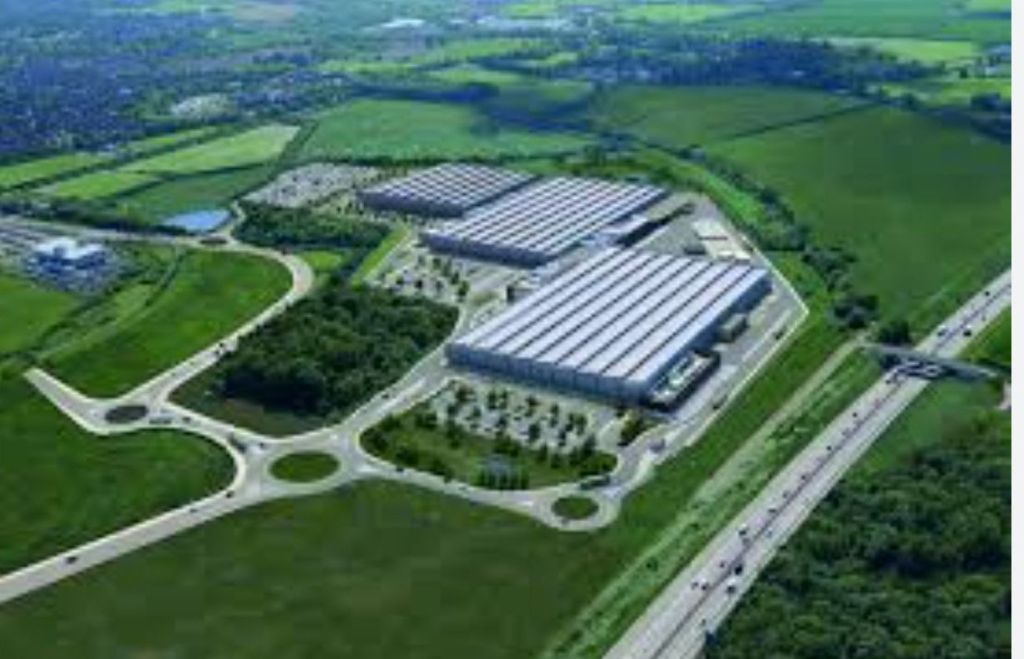
Jaguar Land Rover’s Wolverhampton plant recently installed 18,000 solar panels on its rooftop. This is the model Britain needs:No farmland lostPower consumed on-site – reducing demand on the overstretched gridZero planning battlesVisible proof of sustainabilityIf every major factory, logistics centre, supermarket, and warehouse followed suit, we could roll out tens of gigawatts of solar power without a single field being touched.
3. Power Roll and the New Solar Revolution
UK innovation is leading the charge. Power Roll, a thin-film solar technology, is revolutionising rooftop deployment:Lightweight – usable on rooftops that can’t support heavy panelsCheaper – up to 50% less costly than conventional solarMade in the UK – securing jobs and energy sovereignty instead of relying on imports from ChinaScalable – adaptable for homes, schools, barns, factories, and even carportsThis technology makes land-based solar farms completely unnecessary.
4. Why Land-Based Solar is a False Solution
Developers claim large-scale solar farms are “green.” The reality is very different:Farmland loss – taking productive Grade 2 agricultural land out of food use for 40+ years.Grid chaos – rural solar projects overload substations like Thorpe Marsh, Norton, and West Melton, forcing costly grid reinforcements that consumers pay for.Mismatch with demand – solar produces most in sunny summer afternoons, but Britain’s demand peaks on dark winter evenings. Rooftop solar offsets local daytime use; land farms don’t.Biodiversity damage – hedgerows ripped out, soil compacted, drainage altered, habitats lost. Token sheep grazing does not replace ecosystems.Flooding risk – compacted soils and vast impermeable surfaces increase water runoff, raising flood dangers downstream.Solar farms industrialise the countryside under the banner of “green energy,” but the hidden costs are borne by communities, consumers, and the environment.
5. The Better Alternative – Rooftop Microgrids
By focusing solar where we live, work, and consume power, we gain:Decentralisation – energy generated and used locally, reducing transmission losses (6–8% wasted in the national grid).Resilience – schools, hospitals, and factories become self-sufficient microgrids.Lower bills – cutting energy use directly at source rather than funnelling it through costly transmission lines.Public consent – rooftop solar has broad support; land-based solar is opposed by rural communities across the UK.
Conclusion – The Choice Before Us
Britain doesn’t need to choose between solar power and countryside protection. We can and must have both.By unleashing the vast potential of rooftops—using existing spaces, UK-made innovations like Power Roll, and industrial sites like Jaguar Land Rover—we can hit solar targets without covering fields in glass and steel.Every rooftop panel strengthens our energy security. Every solar farm on farmland weakens our food security.The future of solar in Britain is clear: rooftops, not fields.
 SAY NO TO THE DESTRUCTION OF OUR LAND
Leave a comment