£800 a Year Before You Switch on a Light — Heading to £1,000+ by 2035Most of us feel it every time the bill arrives: costs rising, standing charges climbing, and no clear explanation of why. The truth is simple — you are already paying hundreds of pounds a year before you even switch on a lightbulb, and unless things change, those fixed charges will pass £1,000 a year by 2035.
💥 How it hits your pocket
Today (2025):Standing charge: ~£350 a year Green levies & network costs: ~£450 a year👉 £800 a year gone before you use a single unit of energy.By 2035:Standing charges: £550–650 a year Levies & grid charges: £700+ a year👉 £1,000+ a year in fixed costs -even if you barely use electricity That’s the reality most politicians won’t spell out.
⚡ Why is this happening?
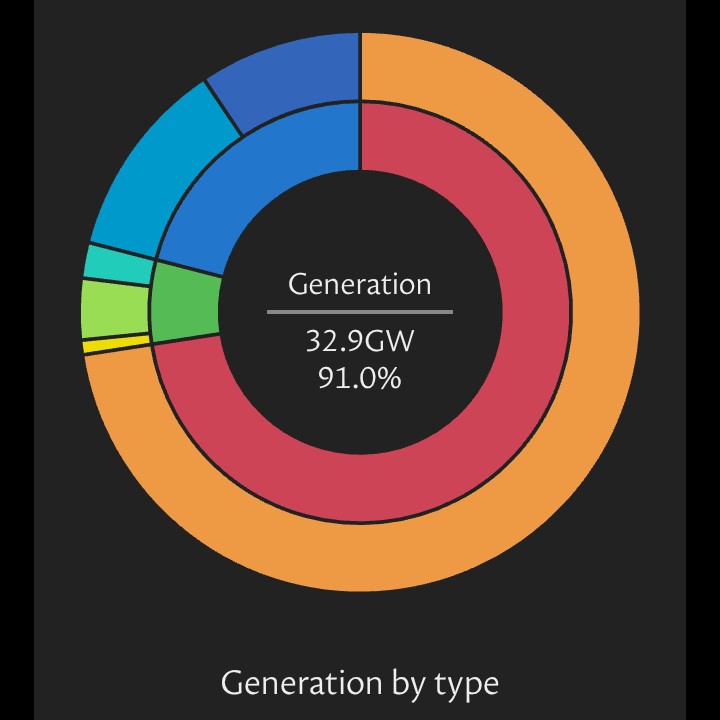
The UK is embarking on the largest power grid rebuild in modern history – the so-called Great Grid Upgrade.Locally, we are already seeing it:Grimsby to Walpole: 140 km of new 400 kV pylons and up to six giant substations.North Humber to High Marnham: a new 400 kV corridor to carry 13 GW of offshore wind.Brinsworth to High Marnham Uprating: three brand-new 400 kV substations across Rotherham, Chesterfield, and Nottinghamshire.Nationally, the programme is expected to cost £20–60 billion by the mid-2030s.And here’s the key point: this is not paid for out of general taxation. Ofgem guarantees National Grid’s costs will be recovered directly from consumers, through your bill.
🧾 Why you pay even if you use less
In the past, most network charges were added to the per-unit price of electricity.Since 2022, Ofgem has shifted more costs into the standing charge — the fixed daily fee you pay just to have a meter.That means you can cut your usage to zero, but you will still pay hundreds of pounds a year.It is the perfect mechanism to make sure no one escapes paying for the grid expansion — whether you’re a single pensioner living frugally, or a large family using far more power. Everyone pays the same fixed charge.
⚠️ Why it feels unfair
Flat rate, regressive impact: Pensioners, single households, and the poorest pay the same as the wealthiest.Regional penalty: Yorkshire and the North East host the substations and pylons, yet pay higher charges because Ofgem says we are “far from demand.”Jobs at risk: Local businesses already face some of the highest network charges in Europe, pushing factories and industry abroad.
⏳ The kicker:
you’ll pay before the power flowsNational Grid’s own timetables show many of these new lines and substations won’t be live until the early 2030s. Yet the costs are already being loaded into standing charges now.In other words, you’ll pay higher bills years before the infrastructure delivers a single watt of power.
❗ The plain truth
Now (2025): ~£350 standing charge + ~£450 in levies = £800 a year fixed costsBy 2035: £550–650 standing charge + £700+ levies = £1,000+ a year fixed costs. That’s nearly £10,000 per household over the next decade taken from you before you’ve even used any electricity.
🔎 References
1. Ofgem – Default Tariff Cap (Q2 2025): Electricity standing charge ~53p/day (£193/yr), Gas ~31p/day (£113/yr). Regional averages push dual-fuel close to £330–360/yr
2. Ofgem – Typical Bill Breakdown (2023/24): Networks + environmental levies ~25% of a typical bill, ~£450/yr on a £1,800 bill.
3. National Grid ESO – Great Grid Upgrade / ASTI Programme: £20bn of new transmission by 2030; £58–60bn by 2035 (Beyond 2030).
4. National Grid project documents (Grimsby–Walpole, NH–HM, Brinsworth–HM): multiple new 400 kV substations and ~140 km of OHL in local schemes.
5. Ofgem Policy (2022 onward): Shift of revenue recovery into standing charges to ensure predictable supplier returns.
 SAY NO TO THE DESTRUCTION OF OUR LAND
Leave a comment