Introduction (Part D – 2016–2022: The “Green Consensus” Survives Brexit and Austerity)
If the Thatcher and Blair years laid the foundations for Britain’s energy straitjacket, and if Gordon Brown locked it into the Treasury’s economic calculus, then the period between 2016 and 2022 revealed just how deeply entrenched this system had become. Brexit was sold to the people as the great rupture, the moment when Britain would “take back control” from Brussels, restore parliamentary sovereignty, and reclaim the ability to chart its own course. Yet on energy and climate policy, Brexit achieved nothing of the sort. In fact, in the years immediately following the referendum, Britain doubled down on its commitments to international climate frameworks, binding itself even tighter to the architecture erected under Blair, Brown, and Miliband.

The Conservative–Liberal Democrat coalition had already carried forward Labour’s green agenda. David Cameron’s self-proclaimed “greenest government ever” made no effort to repeal or even meaningfully amend the Climate Change Act 2008, despite the clear evidence that its legally binding targets were imposing costs on households and hollowing out domestic industry. By the mid-2010s, electricity prices in the UK were among the highest in Europe, not because of scarcity of resources — the North Sea still produced gas, and coal could still be mined — but because policy had deliberately pushed the system towards more expensive renewable and imported sources of power.
Yet Cameron, hemmed in by coalition politics and advised by a civil service already aligned with the Climate Change Committee (CCC) and its allies, chose symbolism over sovereignty. He aligned Britain closely with the EU’s 2030 Climate and Energy Framework and continued to lavish subsidies on offshore wind developers, many of them multinational corporations and foreign investment funds. The British public, meanwhile, saw little benefit beyond rising bills and landscapes increasingly dominated by turbines.
Brexit and the Illusion of Freedom
The 2016 Brexit referendum might have been expected to challenge this orthodoxy. The campaign to leave the EU had been fuelled in part by discontent in the former industrial heartlands — those same coalfield communities hollowed out by earlier waves of deindustrialisation. Many Leave voters believed that departure from Brussels would free Britain from restrictive European climate and energy directives, allowing it to pursue a balanced energy policy that prioritised affordability and security.
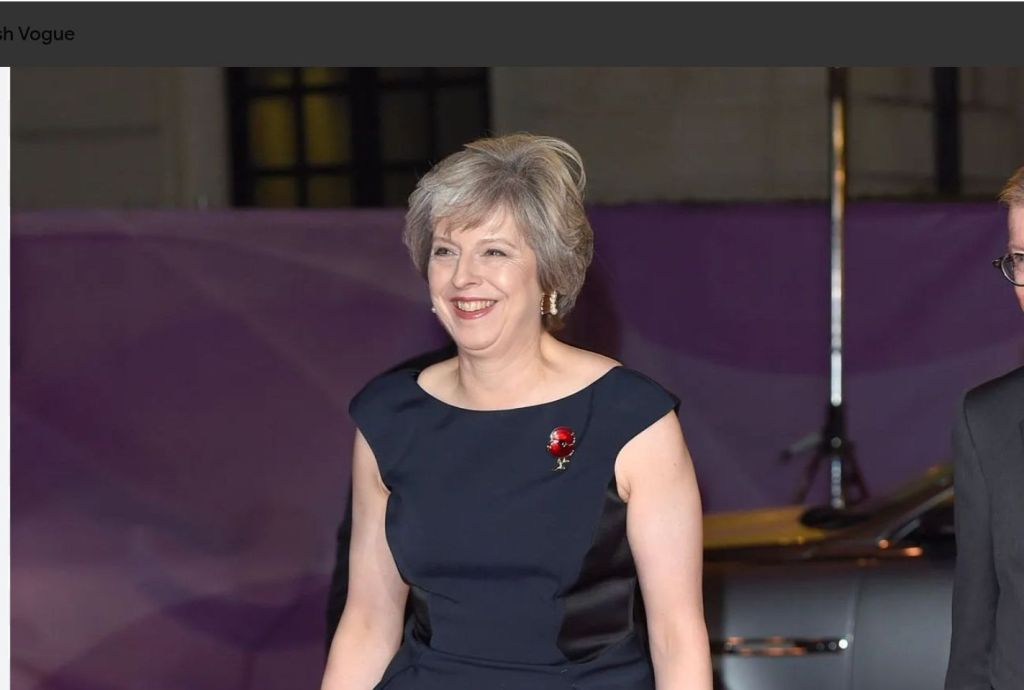
Yet the opposite occurred. In 2019, as she prepared to leave office, Theresa May amended the Climate Change Act to make Britain the first major economy in the world to enshrine a legal commitment to reach “net zero” emissions by 2050¹. This was a moment of constitutional significance: Parliament was not asked to debate the target in full; it was passed as a statutory instrument, a secondary legislative device that bypassed the kind of scrutiny once considered essential in a parliamentary democracy.
The timing was remarkable. May was a lame-duck Prime Minister, having announced her resignation, yet she committed the country to a generational transformation in its energy and industrial policy. Her decision followed advice from the CCC, which argued that net zero by mid-century was both necessary and affordable. No national election had been fought on this basis; no manifesto had set it out. Yet Britain was now legally obliged to undertake one of the most ambitious — and expensive — energy transitions attempted anywhere in the world.
The promise of “taking back control” through Brexit was thus fatally undermined. Whatever laws Parliament might pass about fisheries, immigration, or trade, the most fundamental economic question — how Britain powers its homes, industries, and transport — had already been predetermined by international agreements and technocratic bodies.
The Johnson Years: Green Rhetoric Meets Energy Reality
When Boris Johnson entered Downing Street in 2019, he faced twin crises: the aftermath of Brexit and a looming global pandemic. In theory, he had a mandate to reassert sovereignty and redirect policy towards national priorities. In practice, he became one of the most zealous evangelists for Net Zero.
Johnson embraced the “Build Back Better” and “Green Industrial Revolution” mantras, promising to make Britain a “world leader” in offshore wind, hydrogen, and electric vehicles. The government announced vast subsidy schemes, including the Contracts for Difference (CfD) auctions that guaranteed renewable developers above-market prices. Billions were pledged to offshore wind farms, many financed by foreign state-backed entities from Denmark, Norway, and even China.
The Treasury’s Green Book provided the rationale. Updated in 2020 to integrate carbon valuations, the framework ensured that nearly every infrastructure project was assessed through the lens of reducing emissions². A road upgrade could be dismissed as inconsistent with climate targets, while a wind project could be justified even if it imposed enormous costs on consumers. In effect, the economic rationale was predetermined: projects that aligned with Net Zero were “good,” and those that did not were “bad.”
Meanwhile, the public bore the cost. Between 2010 and 2020, household electricity bills rose by more than 40%, driven in part by environmental and social levies³. By 2022, the energy price crisis — exacerbated by Russia’s invasion of Ukraine — pushed millions of households into fuel poverty. Families who once could rely on coal or affordable gas to heat their homes now faced soaring costs for electricity supplied by offshore wind farms owned by foreign investors. The irony could not have been sharper: in the name of energy independence and sustainability, Britain had made itself more vulnerable to global supply shocks and more dependent on international capital.
The Entrenchment of the Quango State
During the 2010s, the quango state grew more powerful still. Bodies such as the Climate Change Committee became arbiters not only of policy but of politics itself. Their carbon budget reports were presented in Parliament as binding, their recommendations rarely questioned by ministers. Local councils, too, began adopting “climate emergency” declarations — often written with the assistance of NGOs or training groups such as Common Purpose, which had embedded itself within Whitehall and local government structures.
These developments were celebrated by climate campaigners as a triumph of “evidence-based policy.” Yet evidence was never truly neutral. The CCC’s models rested on assumptions about technological breakthroughs in battery storage and offshore wind that had not materialised by the early 2020s. The Treasury’s Green Book discounted present-day costs in favour of hypothetical long-term benefits, a technique criticised even by mainstream economists for its lack of realism.
Nevertheless, once institutionalised, these frameworks acquired a momentum of their own. Ministers of all parties could claim that they were simply “following the science” or “meeting our legal obligations.” The democratic process was effectively sidelined. The electorate might vote for change, but the rules — written by unelected bodies, endorsed by departing prime ministers, and enforced by statute — ensured that the direction of travel remained the same.
The Hidden Continuity of Blairite Influence
Tony Blair’s presence loomed large in this era, even in absentia. His Institute for Global Change, launched in 2016, was advising governments across Africa, the Middle East, and Europe on climate and governance strategies. Its staff included many former civil servants and political operatives who had cut their teeth in Whitehall during Blair’s premiership. Meanwhile, the Common Purpose network, often described as a leadership training organisation but in practice a mechanism for embedding a shared ideological agenda across institutions, continued to place its alumni in key positions across government departments, NGOs, and corporate boards⁴.
Thus, even as the public was told they had “taken back control” from Brussels, the machinery of globalist climate governance — designed in the Blair years and carried forward by his allies — remained firmly in place. Sovereignty was not restored; it was redefined. The power to make fundamental decisions about Britain’s energy and economy now lay with a constellation of quangos, regulators, and international agreements that no general election could overturn.
This was the true legacy of the Blair–Brown–Cameron era: the creation of a political economy in which democratic choice was subordinated to technocratic necessity, and in which the costs of energy transition were borne disproportionately by ordinary households and industries.
Endnotes (Part D)
1. UK Government. The Climate Change Act 2008 (2050 Target Amendment) Order 2019, legislation.gov.uk.
2. HM Treasury. The Green Book: Central Government Guidance on Appraisal and Evaluation, 2020 update.
3. Ofgem. Household Energy Bills Explained, 2021; Department for Business, Energy & Industrial Strategy (BEIS), Quarterly Energy Prices, 2022.
4. Common Purpose UK. Global Leadership Programmes, official website.

 SAY NO TO THE DESTRUCTION OF OUR LAND
Leave a comment