The Scottish Highlands have long stood as one of the last great wild landscapes of Europe — a place of beauty, history, and fragile ecosystems. But now, under the banner of Net Zero, these lands face an unprecedented assault: hundreds of 190-foot “super pylons” cutting through villages, mountains, and glens.
SSE, the power giant that owns Scotland’s northern high-voltage grid, has announced plans to build 550 pylons from Beauly to Peterhead, alongside three mega-substations, including Fanellan near Beauly — set to become one of the largest in Europe. These pylons will carry 400,000-volt lines across the Highlands, not to meet local needs, but to export Scottish wind power to English cities
.
Communities Paying the Price
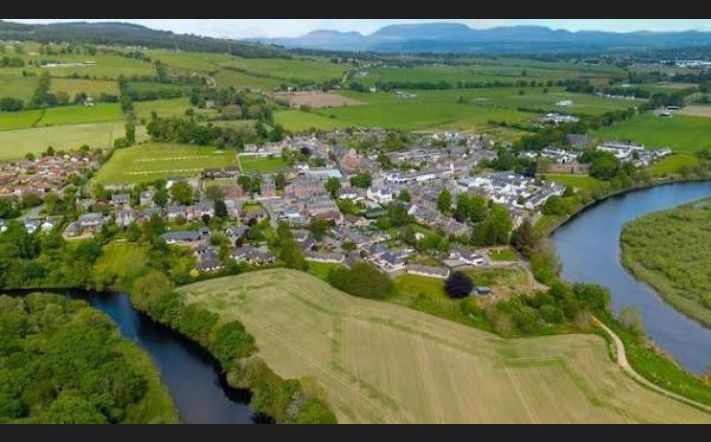
Highland residents are right to be alarmed. House values are collapsing, with some properties becoming unsellable. Tourism, the economic lifeblood of the region, faces devastation as treasured landscapes are industrialised. Wildlife will be displaced, and centuries-old scenery sacrificed.
Helen Crawford of the Highland Convention, representing 60 councils fighting 700 wind projects, warns bluntly:
> “They are ruining the countryside and industrialising precious landscapes. In many areas people can no longer sell their homes – no one will even look at them.”
This is not an isolated protest. It is a recognition that the so-called green revolution is coming at the direct expense of communities who never consented to become a sacrifice zone.
The Grid Trap No One Talks About
Supporters of the plan argue that the pylons are needed to reduce constraint payments — the billions handed out to wind farms when the grid cannot handle the electricity they generate. Already this year, UK consumers have paid almost £1 billion to switch off turbines.
But instead of addressing the root cause — the reckless siting of windfarms in the wrong places, far from demand centres — the Government and energy companies are doubling down. They are committing billions to concrete, steel, and cabling, in the hope that eventually the grid might catch up.
The irony? These vast costs don’t come out of corporate profits. They are pushed onto consumer standing charges, the fixed fees on every household bill. Families are already seeing standing charges spiral — in some regions by 500% since 2010. Projects like Beauly–Peterhead guarantee those charges will climb even higher.
Profits for Corporations, Losses for Britain
Let’s be clear: this is not about cheap power. It’s about locking in decades of profit for SSE and its foreign investors, who stand to gain £31 billion in new transmission projects. The company itself admits most of this power is for export to England.
Meanwhile, local people bear the blight, and national bills rise. Net Zero is being sold as clean, secure, affordable energy. In reality, it is none of these things:
Not clean: The industrialisation of wild land destroys habitats, peat bogs, and carbon sinks.
Not secure: Wind remains intermittent and unreliable, forcing reliance on backup gas stations anyway.
Not affordable: Infrastructure costs are loaded onto bills while consumers also pay subsidies and constraint payments.
The Alternative We Are Not Allowed to Discuss
There is another path. Instead of carving pylons across fragile Highland landscapes, Britain could:
Build nuclear and gas plants near demand centres in England, where power is actually needed.
Develop Small Modular Reactors (SMRs), a homegrown British technology with huge potential.
Support rooftop and micro-generation technologies like Power Roll, cutting demand for land-hungry windfarms and mega-grids.
These solutions would provide controllable, affordable electricity without destroying our countryside. But they don’t fit the subsidy-driven Net Zero model — so they are ignored.
A Call for Common Sense
The Beauly–Peterhead pylons symbolise everything wrong with Britain’s current energy policy: no national plan, no thought for communities, no cost control — just chaos driven by ideology and profiteering.
If Net Zero continues on this path, the Highlands will not be the last landscape sacrificed. Every region of Britain will feel the same pressure: pylons, substations, solar sprawl, and storage batteries, all imposed without consent.
It is time to pause the reckless expansion of windfarms and pylons and rethink Britain’s energy future. We need a policy built on reliability, affordability, and sovereignty — not one that tramples communities in the name of slogans.
The Highlands deserve better. So does Britain.
 SAY NO TO THE DESTRUCTION OF OUR LAND
Leave a comment