This week Sky News (23 September 2025) reported that Ofgem has shortlisted 77 “long-duration energy storage” projects — from lithium-ion batteries to “sugar-based super batteries” and pumped hydro — to stop wind farms being paid to switch off when the grid cannot handle their output.
The regulator and ministers painted this as a turning point. Energy minister Michael Shanks declared it a “huge step forward” to “protect billpayers for good.” Ofgem’s infrastructure chief insisted it will mean “no watt goes to waste.”
But scratch the surface and the spin starts to unravel.
The Problem They’re Admitting To
In 2024, constraint payments — money given to wind farms to stop generating — cost billpayers over £1 billion.
This happens because the wind blows hardest in Scotland, while demand is greatest in the South. The grid cannot carry the power, so turbines are paid to switch off.
At the very same time, gas stations in the South are fired up to keep the lights on.
This is not a system of efficiency. It is a system of waste — created by the rush to build renewables before the grid is ready.
Ofgem’s “Solution”: More Cost, More Complexity
The projects chosen are not free. They will be funded through a “cap and floor” scheme:
Billpayers guarantee a floor of revenue to investors.
Developers get capped profits if things go well.
In short, consumers carry the risk, developers pocket the upside.
The claim is that this will save money by storing excess wind power. But here’s the reality:
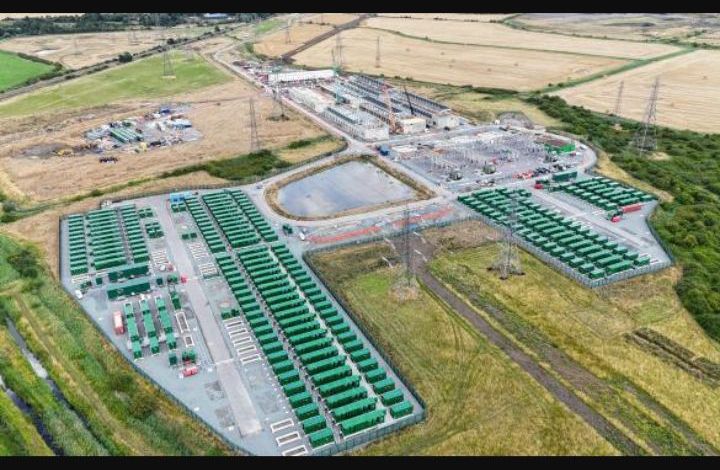
Batteries
£400,000–£600,000 per MWh installed.
A national system needs hundreds of GWh to make a dent — easily costing hundreds of billions.
Li-ion batteries last 10–15 years. After that, replacement costs land on us again.
Pumped Hydro
SSE’s flagship Coire Glas scheme will cost £1.5bn for just 30GWh of storage.
Britain’s daily electricity demand is closer to 1,000GWh.
You would need dozens of Coire Glas equivalents, at a cost in the tens of billions.
Efficiency Losses
Storage is not magic. You lose 20–40% of the power every time you store and release it.
That means stored energy is always more expensive than using it directly.
The False Spin of Net Zero
We’re told:
“Renewables are cheap.” In reality, they rely on subsidies, constraint payments, and massive hidden grid costs.
“Storage will cut bills.” In reality, it multiplies costs and inefficiencies.
“Net Zero means independence.” In reality, we import the panels, turbines, and batteries — and still rely on gas.
“This is about saving the planet.” In reality, it destroys farmland, raises bills, and shifts emissions to China.
The spin is that Net Zero will save money and secure energy.
The reality is that Net Zero will cost billions more, increase dependence, and destabilise the grid.
What We Actually Need
Grid-first investment, not storage-first gimmicks.
Reliable baseload — nuclear, gas, hydro — not overbuilt intermittent renewables.
Local rooftop and microgrid solar, instead of tearing up prime farmland.
Energy sovereignty: make our own kit, use our own fuel, set our own policy.
Don’t Be Fooled
The Ofgem shortlist isn’t about protecting billpayers. It’s about protecting an ideology — forcing the UK deeper into the Net Zero trap while burying the real costs in your standing charge.
Constraint payments won’t vanish. Bills won’t fall. And storage will not stabilise the grid.
Until we admit Net Zero is a political slogan, not an engineering solution, Britain will keep throwing billions at schemes that look good in press releases but make no difference to the people paying the bills.
 SAY NO TO THE DESTRUCTION OF OUR LAND
Leave a comment