For years, politicians and regulators have reassured us that the transition to “clean energy” would deliver cheaper bills and a more “secure” supply. Yet every household across Britain knows the opposite has happened: energy costs are spiralling, standing charges are punishing, and security of supply looks more fragile than ever.
Why? Because the Net Zero ideology has been allowed to dictate how we generate, transmit, and pay for our electricity.
1. The Hidden Tax on Households
The most striking example is the standing charge.
In 2010, many households paid around 10–15p per day.
Today, typical electricity standing charges exceed 60p per day, and in some regions are pushing £300 a year before a single unit of energy is used.
This increase is not a reflection of real metering costs. It’s a way of smuggling the vast costs of grid upgrades, renewable subsidies, and system balancing into your bill. In other words: Net Zero is being funded through the back door.
2. Net Zero = Infrastructure Explosion
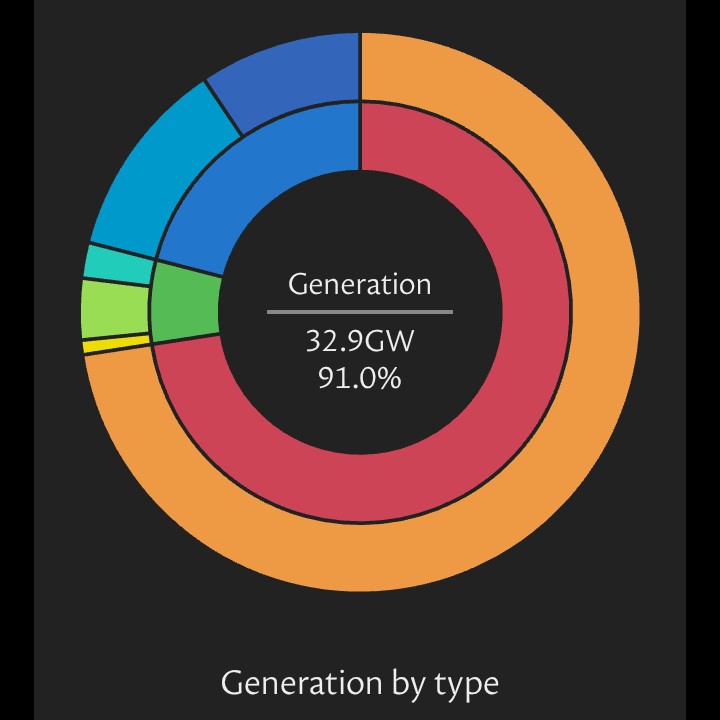
The government and Ofgem have committed billions to reinforce the grid to accommodate vast fields of intermittent wind, solar, and batteries.
New pylons, substations, and super-grid transformers are being forced through.
National Grid has admitted that tens of billions more will be needed in the next decade.
Instead of the state paying for this through transparent taxation, consumers are being landed with the bill through higher charges.
So when Ofgem announces a “review” of standing charges, what they really mean is: you will still pay, whether you use energy or not.
3. Punishing the Frugal, Rewarding the Wasteful
Net Zero pricing creates a perverse incentive:
A pensioner cutting back on heating pays the same standing charge as a data centre guzzling gigawatts.
A single-person household pays more per unit than a family running multiple appliances.
This isn’t just unfair — it shows how ideology is distorting the market. Energy bills are no longer linked to real usage, but to the political obsession with achieving carbon targets at any cost.
4. The Myth of “Cheaper Renewables”
We’ve all heard the claim: “Wind and solar are now the cheapest forms of energy.” If that were true, bills would be falling. Instead:
Offshore wind developers are demanding higher subsidies or walking away.
Solar farms require massive grid reinforcements and battery systems, costs that are never included in the headline figures.
Balancing the grid when the wind doesn’t blow or the sun doesn’t shine requires gas back-up and costly imports.
The result? Consumers pay twice: once for the renewable build-out, and again for the fossil backup that keeps the lights on.
5. Where Does This End?
Unless challenged, the Net Zero ideology means:
Bills that keep rising regardless of consumption.
Ever greater reliance on imported energy and technology.
A countryside covered in solar, wind, and pylons while communities see none of the promised “cheap, clean energy.”
Britain deserves a fair, affordable, and sovereign energy system. That means ending the hidden taxes, scrapping Net Zero’s legal straitjacket, and investing in power sources that actually deliver — such as nuclear, gas, and innovative rooftop technologies like thin-film solar.
Conclusion
The energy crisis is not accidental. It is the direct result of political choices made under the banner of Net Zero. The question now is whether Britain will continue down this path of rising costs and weakening security, or whether we will demand an honest reckoning with reality.
 SAY NO TO THE DESTRUCTION OF OUR LAND
Leave a comment