Eight centuries ago, English barons forced King John to sign the Magna Carta — a promise that no ruler could treat the realm as private property.It enshrined a simple idea: the King was not above the people.Today, that principle has been quietly undone. Under the banner of Net Zero, the same ancient pattern has returned — a few powerful interests controlling the nation’s land, sea, and resources while the public pays tribute through their energy bills.What began as a climate policy has become a new form of feudalism — one in which corporate barons, royal estates, and foreign investors hold dominion over Britain’s most essential resource: energy.
The Charter Reversed
The Magna Carta was designed to limit the power of the few.The modern Net Zero Charter does the opposite. It has concentrated ownership, influence, and profit into fewer hands than at any time since the medieval era.
1215 Principle 2025 Reality
“No free man shall be dispossessed of his lands.” Tenant farmers lose fields to 40-year solar and battery leases.“The Church and realm shall be free.”
The Crown Estate and Duchies lease the seabed and farmland for profit.“Justice shall not be sold or delayed.” Planning permissions and grid access are sold to the highest bidder.“Common pastures and rivers shall remain open.” Public land, coasts, and even the sea are leased for private gain.What was once a charter of freedom has become a charter of control.
The New Energy Oligarchy
Britain’s so-called green revolution is not being driven by the people — it’s being carved up by a handful of corporations and landowners who now dominate every part of the renewable sector.
Developer Parent Company
Country What They Control
BayWa r.e. BayWa AG Germany Dozens of UK solar farms; leases farmland; sells to investors like Octopus and Railpen.Lightsource bp BP plc (50%) UK / US Thousands of acres under 40-year solar leases.
RES Group McAlpine Family UK One of the oldest renewables firms; builds and sells large solar and wind projects.
RWE / JBM Solar RWE AG Germany Rapidly expanding UK solar and onshore wind capacity.
Statkraft UK Statkraft AS Norway Norwegian state-owned; controls power purchase agreements for UK sites.
Together, these five companies control more than 60% of all solar, wind, and battery projects in the UK’s grid connection pipeline.They are the new barons of energy — unaccountable, unelected, and often foreign-owned.
The Land Question — A Modern Enclosure
The majority of renewable projects stand on leased farmland, not developer-owned freeholds.
The profits flow upward to landlords and institutional investors, not to the communities who live beside the turbines and panels.
The beneficiaries are depressingly familiar:
Historic estates such as Buccleuch, Chatsworth, and the Church Commissioners.
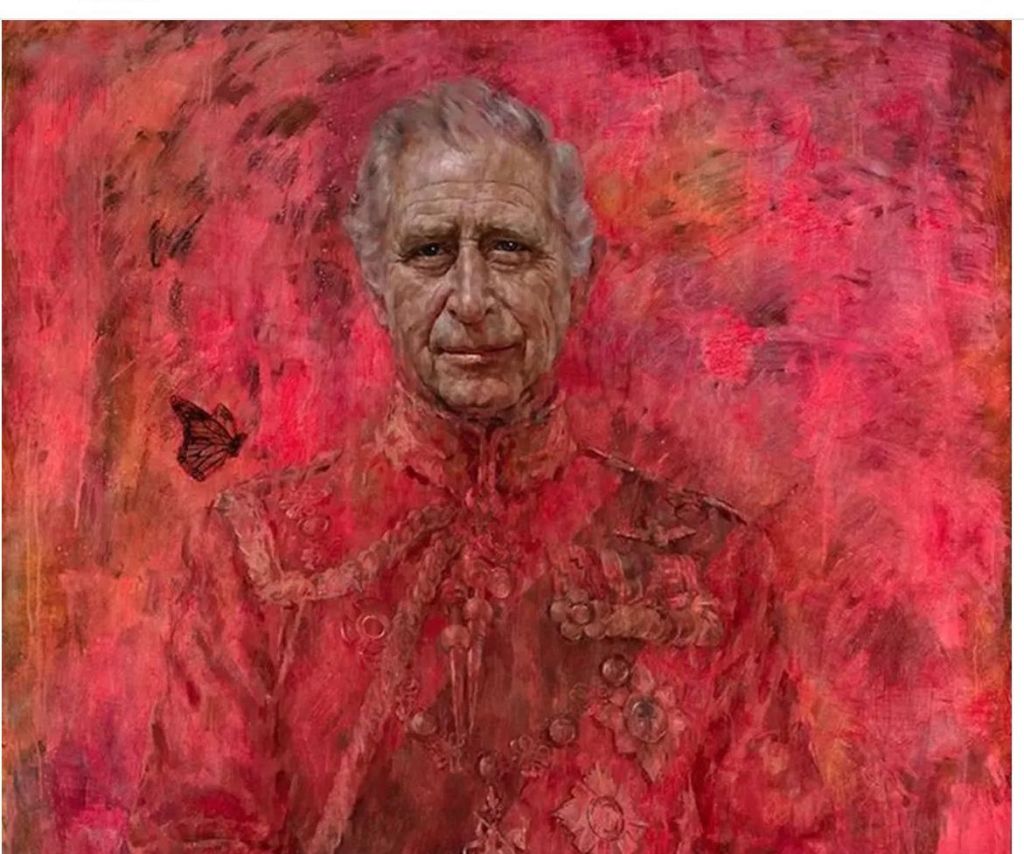
Royal holdings — the Duchies of Cornwall and Lancaster.
The Crown Estate, which owns the seabed around the UK.
Institutional investors such as Railpen, Octopus, and Brookfield.
Private absentee landlords, some living abroad, who sign decades-long option agreements.
Ground rents of £800–£1,100 per acre per year, index-linked, are common.A 200-acre solar lease can generate £200,000 per year, guaranteed for 40 years — funded ultimately by British consumers.
Meanwhile, tenant farmers are displaced, villages lose agricultural land, and rural landscapes are industrialised in the name of “saving the planet.”
The Sea — Britain’s Forgotten Frontier
Every offshore wind turbine, cable, and seabed anchor sits on a lease from the Crown Estate or Crown Estate Scotland.
These leases generated £1.1 billion in England and Wales and £755 million in Scotland in 2023 alone.
The developers paying these sums are mainly foreign corporations — RWE, Ørsted, BP, SSE Renewables, Equinor — who then sell the electricity back to Britain at market rates.The money flows to the Treasury and shareholders, not to the coastal towns that host the turbines.The people’s sea has become the Crown’s cash machine.
The Grid Monopoly
Even if communities wanted to build their own power systems, they couldn’t.
The National Grid and a handful of regional monopolies control every connection point.National Grid ESO manages transmission and interconnectors.Regional operators — Northern Powergrid, SP Energy Networks, UK Power Networks, and others — control local distribution.Access to the grid has become a tradable commodity.
95% of all new grid connections are held by just ten major developer groups, leaving small or community-led schemes locked out.The very infrastructure of power has been privatised — not just the electricity, but the permission to generate it.
Who Pays the Price?
Tenant farmers, evicted or sidelined as landlords sign away their fields.
Rural communities, facing industrialisation of their countryside without a share in the benefits.
Consumers, burdened with higher bills, standing charges, and hidden subsidies.
Democracy itself, as decisions on land, grid, and energy are made by unelected quangos and private financiers.
Britain’s energy transition is not a revolution.It’s a reversal — a return to top-down control dressed up as environmental virtue.
A People’s Energy Charter
If the Magna Carta once limited the King, Britain now needs a new charter to restrain the modern energy monarchy.
A People’s Energy Charter should guarantee:
Transparency in all land and seabed leases.
Community ownership or dividend rights in local projects.
Legal protection for tenant farmers and rural livelihoods.
Parliamentary accountability for every major energy decision.Because the sun, the wind, and the sea belong to all of us — not to a handful of corporations, aristocrats, and royal estates.
Closing the Circle
The barons who stood at Runnymede in 1215 fought to restrain tyranny.In 2025, the British people face a new kind of tyranny — not of crowns and castles, but of corporations and contracts.
The Magna Carta was a charter of freedom.
The Net Zero Charter has become a charter of control.Unless we stand up again, the story of 1215 will end where it began — with the people paying tribute to their own rulers.
 SAY NO TO THE DESTRUCTION OF OUR LAND
Leave a comment