The Data Centre Paradox
New research from Foxglove and Global Action Plan has exposed one of the most devastating contradictions in Britain’s so-called “green revolution.”
Just ten new UK data centres could generate 2.7 million tonnes of CO₂ emissions per year — effectively erasing the carbon savings of every electric vehicle on Britain’s roads in 2025.
That’s right: the environmental gain from the entire national EV transition would be wiped out by a handful of massive server warehouses powering AI, cloud computing, and streaming services.
The digital economy is cancelling out the “green economy.”Renewables Can’t Power the AI Revolution
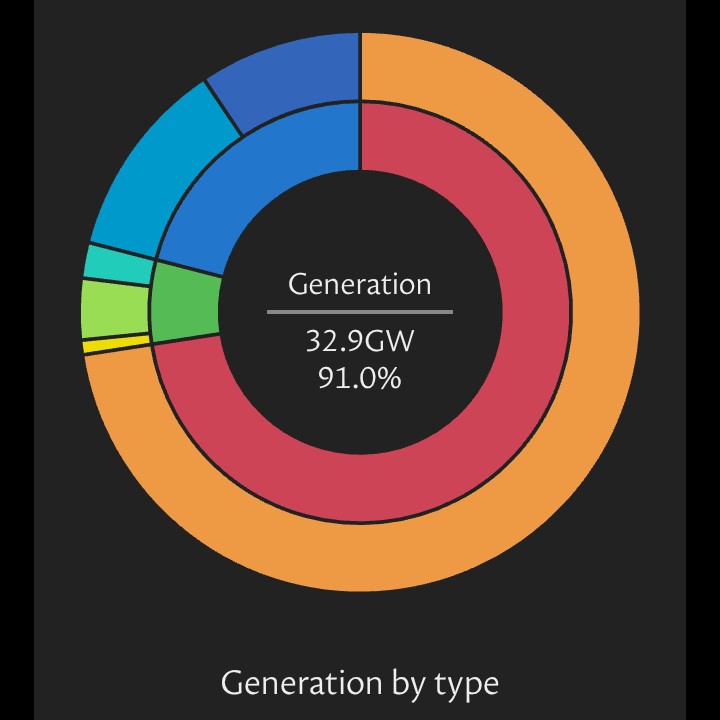
Data centres demand 24/7 baseload — not sunlight and wind gusts.
Even if every field in Britain were paved with solar panels, it still wouldn’t sustain the continuous electricity required by AI clusters.
And as Professor Adam Beaumont (aql, Leeds) points out, each new data centre carries a heavy opportunity cost:
> “It removes grid capacity that could be used for other city development and expansion.”
In other words: the more we digitise, the less room there is left for real industry.
The Hidden Truth Behind the Cloud
The National Energy System Operator (NESO) has quietly doubled its forecast for data centre demand to 71 terawatt-hours by 2050 — the same as the entire UK commercial sector consumes today.
Each new data centre competes for scarce electricity with homes, factories, hospitals, and transport networks. Yet their emissions are calculated using wildly inconsistent assumptions:
QTS Cambois (Northumberland): 1,100MW, claiming 180,000 tCO₂e
Greystoke Elsham (Lincolnshire): smaller, but claiming 850,000 tCO₂e
Developers assume the future grid will be “clean.” But adding such colossal load makes that goal impossible — forcing Britain back toward gas and even coal for backup.
As Foxglove’s Donald Campbell warns:
> “If you pile in all this extra demand, is the grid really going to be decarbonised? Or will we be forced into what’s happening in the US, where they’re extending the life of coal and gas?”
The Political U-Turn Begins
Now even the architects of Net Zero are admitting what engineers have said for years: it doesn’t add up.
Former Prime Minister Boris Johnson has confessed that he “went too far, too fast” on Net Zero, saying he got “carried away by the idea that renewable energy could fill the gap.”
> “It’s too expensive for ordinary people,” Johnson told Lord Elliott for the forthcoming book Prosperity Through Growth. “When the price went up and the Ukraine thing happened, it was obvious that that wouldn’t work.”
He compared his revised stance to St Augustine’s famous line:
> “We will be chaste — but not yet.”
In short: Net Zero must wait for reality.
Blair, Hammond, and the Collapse of Consensus
Johnson isn’t alone.
Sir Tony Blair now calls the policy “doomed to fail” in its current form, admitting that voters “know their sacrifices make no real difference globally.”
Former Chancellor Philip Hammond goes further, revealing the Treasury’s own estimate that Net Zero will cost between £1–2 trillion — money that could have been invested in productive industry instead of subsidised decarbonisation schemes.
> “The public has been deliberately misled about the costs,” Hammond warns. “The decarbonisation agenda does not have informed popular consent.”
Even pro-market economists like Arthur Laffer and Matthew Elliott are calling the current policy “economically destructive.”
They note that Britain already faces the highest industrial energy costs in the world — and Net Zero’s forced decarbonisation by 2030 will push prices higher still.
The Economic Trap Tightens
Here lies the grim irony:
We shut down domestic energy.
We import manufactured goods from countries burning coal.
We build “green” technology that depends on fossil-fuelled supply chains.
We export emissions, lose industry, and call it progress.
The UK’s territorial emissions have fallen 53% since 1990 — but its true carbon footprint only 22%, once outsourced manufacturing is counted.
Decarbonisation hasn’t cleaned our economy — it has hollowed it out.
Renewables Will Never Be Enough
The uncomfortable truth is now unavoidable:
renewables will never be sufficient for data centres, EVs, or a modern industrial economy.
They can supplement the grid, but they cannot anchor it.
The grid itself is already collapsing under strain — years behind on upgrades, burdened by curtailment payments, and dependent on fantasy forecasts.
When National Grid pays wind farms to not generate, something is deeply wrong.
Time for Reality
Britain cannot have a Net Zero grid, an electrified vehicle fleet, and a digital superpower economy all at once without reliable baseload generation.
It’s time to stop pretending.
It’s time to stop chasing targets and start building capacity — nuclear, gas, and grid renewal before expansion.
If Britain wants to stay online, it must first stay powered.
Final Thought
As Boris Johnson put it — unwittingly echoing what engineers, economists, and campaigners have been saying for a decade —
> “We will be chaste, but not yet.”
He’s right about one thing:
chastity before marriage is sensible.
Chasing Net Zero before building the grid is not.
 SAY NO TO THE DESTRUCTION OF OUR LAND
Leave a comment