Seventeen years after the 2008 Climate Change Act, Britain still hasn’t solved the most basic problem in its energy transition: where reliable power will actually come from. Ministers talk endlessly about Net Zero and renewables, but ignore the single biggest barrier to energy security — a grid starved of stable baseload generation.
If the UK is serious about decarbonising without deindustrialising, it must start building Small Modular Reactors (SMRs) now — and it must build them on the right sites, not in theoretical “energy parks” or on green fields. The best candidates already exist: former coal power stations like Cottam in Nottinghamshire.
⚙️ 1. Cottam Already Has What the Grid Needs
Cottam Power Station, once a 2-gigawatt coal giant, was plugged straight into the 400-kilovolt National Grid backbone. That connection is still there.
While solar farms and wind parks wait a decade for grid access, Cottam’s infrastructure could export up to 470 MWe from a Rolls-Royce SMR tomorrow.
Every week, we hear that hundreds of renewable projects are “queued” behind nonexistent transformers or capacity. The answer is not to build more cables across farmland — it’s to reuse the infrastructure we already paid for.
🧱 2. Brownfield First — Not Greenfield Destruction
Cottam is a brownfield industrial site, cleared and ready. No hedgerows to rip up, no farmland to bury under glass, no local protests about landscape impact.
Planning permission on sites like Cottam can be delivered quickly, because their former use as power stations already establishes an industrial precedent.
If the government is serious about “levelling up,” it should be redeveloping the Midlands’ and Yorkshire’s old coal stations — not sacrificing agricultural land for transient solar projects that generate nothing at night.
🔧 3. A Perfect Fit for British Engineering
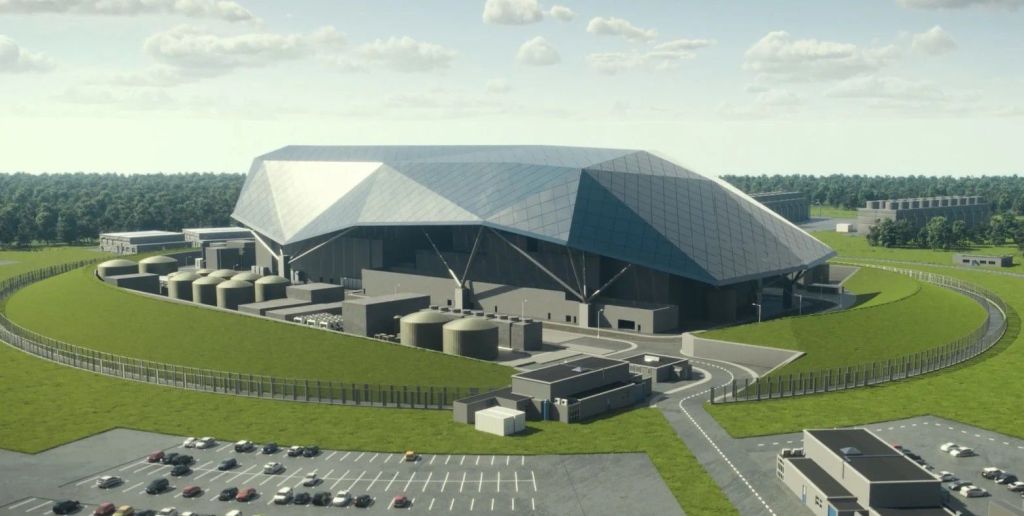
Rolls-Royce’s SMR is a 470 MWe pressurised water reactor, designed to be 90% factory-built.
Each reactor measures just 16 metres by 4 metres — small enough to transport by road and assemble on site in modular form.
Cottam, located less than an hour from Rolls-Royce’s Derby plant, is practically next door to the UK’s nuclear engineering heartland.
This isn’t just convenient — it’s strategic. Local manufacturing, short supply chains, and lower transport costs mean British jobs, British expertise, and British control.
💧 4. Cooling Water and Safety Infrastructure Already Exist
Sitting on the River Trent, Cottam has a built-in water source that once cooled four massive coal units. The site already has the land, access, and environmental baselines required for a modern nuclear operation.
Rolls-Royce’s SMR includes passive safety systems that allow safe shutdown without human intervention — light years ahead of Cold War-era technology.
The UK’s Office for Nuclear Regulation (ONR) has confirmed that modular reactors like this can meet the same rigorous safety standards as existing nuclear plants, with a fraction of the footprint.
💰 5. A Realistic Investment, Not a Green Fantasy
While government pours billions into offshore wind and battery subsidies that deliver intermittent or short-duration power, SMRs provide constant, 24/7 electricity for at least 60 years.
They stabilise the grid, enable hydrogen and industrial heat production, and drastically reduce the need for imported gas.
Each Rolls-Royce SMR could power a city the size of Sheffield, yet can be assembled in under four years.
The first units could be operational by the mid-2030s — the same decade when the UK’s ageing nuclear fleet will be retiring.
Cottam could be one of those first units — if the government stops dithering and makes a final investment decision by 2029, as promised.
⚡ 6. The Right Power in the Right Place
Britain’s energy strategy currently relies on vast renewable schemes in remote coastal or rural areas, with no grid capacity to carry the power inland.
This is madness. Cottam sits in the middle of the National Grid’s central corridor — a region once built for coal but now perfectly suited to nuclear-powered reindustrialisation.
Nottinghamshire could once again become the backbone of Britain’s energy system, linking directly into demand centres in the Midlands and South Yorkshire.
🇬🇧 7. Energy Sovereignty Starts at Home
Reusing sites like Cottam for SMRs achieves everything the government claims to want:
Clean, firm, British-made power
Secure supply chains
Local regeneration
Rapid deployment
No dependence on Chinese solar imports or foreign wind subsidies
Instead of paying billions to import panels from Xinjiang and turbines from Denmark, Britain could export nuclear modules built in Derby — a genuine industrial revival.
🔊 The Message to Ministers
Enough of the slogans and pilot projects. Britain doesn’t need more consultations or glossy reports — it needs shovels in the ground at the right places.
The technology exists. The sites exist. The workforce exists.
What’s missing is political will.
If the government wants a legacy beyond empty targets, it must:
1. Designate Cottam and West Burton as the first two SMR deployment sites under Great British Energy – Nuclear.
2. Expedite planning and environmental clearance through the existing Justification and GDA frameworks.
3. Commit to grid-ready brownfield redevelopment before wasting another penny on greenfield renewables.
⚙️ Conclusion
Cottam Power Station once symbolised Britain’s industrial might. Today, it could symbolise its rebirth.
Rolls-Royce’s SMR isn’t a fantasy — it’s a proven, practical design that can return power and purpose to communities abandoned by the green revolution.
The government has a simple choice:
keep chasing Net Zero slogans, or start building real power at real sites like Cottam.
 SAY NO TO THE DESTRUCTION OF OUR LAND
Leave a comment