Cornwall Council has just delivered the biggest admission yet that the United Kingdom’s race to Net Zero is built on wishful thinking, not practical reality.
After years of boasting about being “first to zero,” Cornwall has quietly delayed its Net Zero target by fifteen years — shifting from an impossible 2030 goal to a still-ambitious 2045. The council’s own officers finally confessed that emissions have only been falling by 2–3% per year since 2019, far below the 10–12% annual reductions required to hit the original deadline.
The Sustainable Growth Scrutiny Committee heard the truth: Cornwall’s progress is too slow, the costs are too high, and the targets too unrealistic. The revised plan will now go before the council’s Liberal
Democrat–Independent cabinet for approval.
The Admission of Failure
Mark Holmes, Cornwall’s head of environmental partnerships and climate change, admitted what every honest observer already knew: “We said at the outset that 2030 was an ambitious target that may well prove impossible.”
That statement marks a quiet but historic turning point. For years, politicians across the UK have chased fantasy deadlines, cheered on by campaigners who treat economic limits as mere inconveniences. But Cornwall’s own data exposes the flaw.
Even after securing £250 million of green investment, emissions are barely falling. That money bought plenty of press releases but little measurable progress. The region remains heavily reliant on imported energy, tourism, and transport — all sectors difficult or impossible to decarbonise quickly.
Still Dreaming
Yet even Cornwall’s “revised” plan remains detached from reality. It now aims to:
Meet 100% of electricity demand from renewables by 2035
Plant 8,000 hectares of trees
Achieve Energy Performance Certificate (EPC) rating C for all housing by 2030
Cut emissions 70% by 2030, 90% by 2040, and reach Net Zero by 2045
Each of these pledges requires major infrastructure, vast subsidies, and technology that doesn’t yet exist at scale. Cornwall’s geography and grid capacity alone make full renewable self-sufficiency by 2035 deeply unlikely. And achieving EPC C ratings across all housing stock within five years would demand billions in retrofitting — a cost most Cornish households simply cannot meet.
Cllr Peter Channon summed up the problem plainly: “Cornwall is not an economically sound county. People can’t afford it, and this must be taken into account.”
The Broader Lesson
This is not just about Cornwall. It’s a sign of what’s coming across Britain. Dozens of councils — from Oxfordshire to Glasgow — have set similar 2030 or 2035 Net Zero pledges, and most are already failing to meet them. They were never grounded in engineering, finance, or market realities, but in political virtue-signalling.
Cornwall’s decision to delay is therefore less a betrayal of ambition and more an acceptance of physics and economics. It recognises that you cannot decarbonise faster than the infrastructure allows and you cannot spend what people do not have.
The great irony is that Cornwall’s new 2045 date still beats the UK’s legally binding national target by five years — proof of how unrealistic the earlier rhetoric really was.
When Will “Mad Ed” Wake Up?
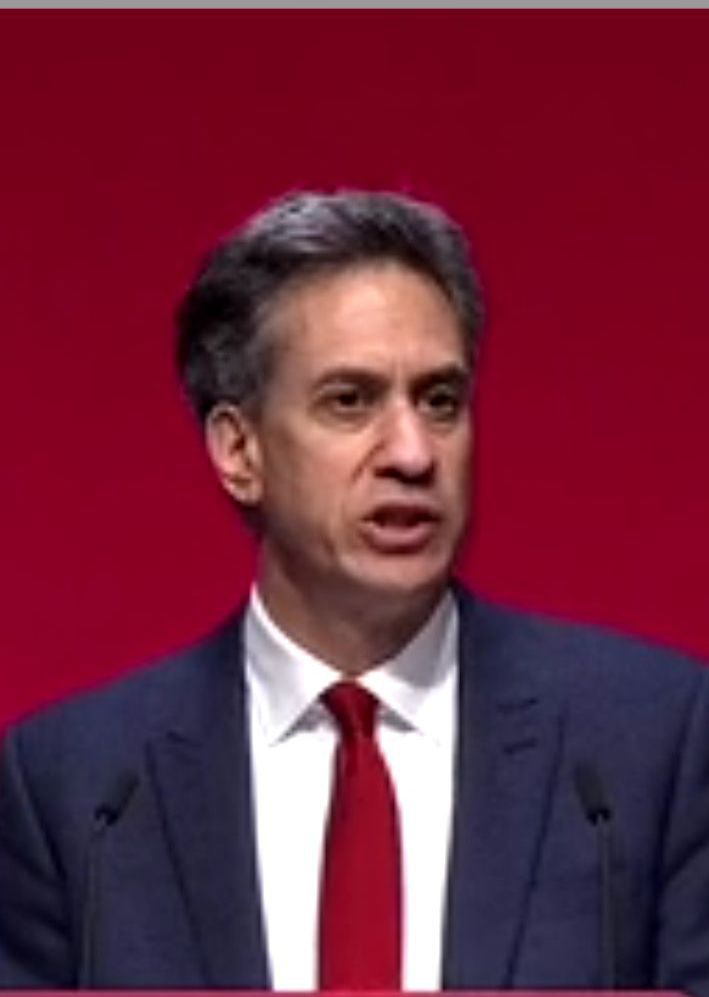
While Cornwall is coming to its senses, Labour’s Ed Miliband continues to cling to the ideological fantasy of a 2030 electricity system fully powered by renewables. His slogans may please activists, but they ignore hard numbers: grid stability, supply gaps, and the collapse of investment in reliable baseload generation.
Cornwall’s experience should serve as a warning. Even with enthusiastic local leadership and hundreds of millions in “green” funding, the county could not deliver its targets. What chance does the entire nation have when energy prices are soaring, heavy industry is leaving, and ordinary households are struggling to heat their homes?
The country does not need more arbitrary deadlines. It needs affordable, secure, and realistic energy policy — one that values innovation, nuclear development, domestic gas, and gradual decarbonisation driven by technology, not ideology.
Cornwall has just blinked. Others will follow.
The Net Zero bubble is beginning to deflate — and with it, the illusion that you can rewrite the laws of economics or engineering through political will alone.
It’s time for Westminster to wake up.
Cornwall has had its reality check.
“Mad Ed” Miliband is still asleep.
 SAY NO TO THE DESTRUCTION OF OUR LAND
Leave a comment