For years, politicians have promised that “big batteries” will back up wind and solar, giving us clean, cheap, secure energy.But when you strip away the slogans and look at the facts, this is nothing more than a dangerous illusion.Batteries don’t generate a single watt of power.They just buy electricity from the grid, then sell it back later at a higher price — and you pay for it.
⚡ The £43 Billion Build Cost , Before a Single Watt Is Stored
Let’s start with the numbers.
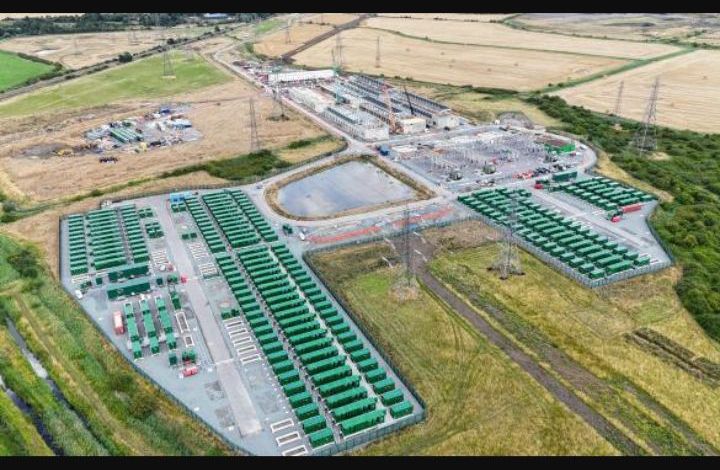
Thorpe Marsh Green Energy Hub in South Yorkshire, a 1.4 GW / 3.1 GWh battery project ,is being built for around £1 billion.
If you scale that benchmark up to match the UK’s 60 GW / 120 GWh pipeline of planned BESS:60 GW × £714 m/GW ≈ £42.9 billion in capital expenditure,Energy basis gives roughly the same result
That’s just to build them.It doesn’t include:
🏗️ Grid connection upgrades
🧭 Planning and land costs
🧯 Safety systems, synchronous condensers, fire protection
🔁 Replacement cycles (batteries degrade after 10–15 years)
👉 Real lifetime costs for the full build-out are likely £60–70 billion or more.And remember: this is for technology that runs dry within hours during a typical winter Dunkelflaute.
🧊 Seven Hours of Power for £60 Billion
We modelled what happens in a five-day winter wind and solar drought.
With 15 GW of firm generation (nuclear, hydro, imports), the entire 60 GW battery fleet empties in 7 hours.With 25 GW firm, it lasts 11 hours.Then the lights go out.
👉 Download the simulation data here.
Five winter nights. Seven hours of backup. £60 billion in capital.That’s not energy security. That’s a house of cards.
💰 But the Real Sting Comes After the Build
These batteries don’t run on sunshine and good intentions.They buy power in from the grid when prices are low and sell it back at a profit when prices are high.That means:They rely on other generators (gas, nuclear, imports) to charge them.They don’t displace fossil generation — they arbitrage it.They make money from volatility, not stability.This isn’t a public good — it’s a private profit model, funded by higher bills.
🧾 You Pay Twice
1. You pay to build them.Directly through grid investment, subsidies, or capacity market mechanisms.
2. You pay again to charge them.Because the power they buy comes from the same market your home and business rely on.
The operator pockets the margin. You get the bill.And when the grid is tight — like in winter — the batteries buy expensive power, sell it back later, and amplify price spikes instead of reducing them.
🕳️ A Middleman Masquerading as a Power Station
Politicians talk as if these batteries are mini-power stations.They’re not. They’re middlemen sitting between generation and consumers — skimming profit without adding energy.They don’t produce electricity.They don’t guarantee winter supply.They don’t reduce demand on fossil fuels.But they do increase volatility and cost.This is not a strategy. It’s a subsidy pipeline dressed up as climate policy.
🧭 What We Could Build InsteadFor the same £60–70 billion:
A fleet of Small modular reactor plants generating firm, low-carbon power for decades.Pumped hydro storage that lasts for days, not hours.Strategic grid reinforcements to lower bills and boost resilience.That’s real infrastructure.Not trading platforms in disguise.
📢 The Illusion of Ideology
Why does this fantasy persist?
✅ It fits Net Zero talking points.
💸 It attracts fast private capital.
🏗️ It’s quick to permit and build.
🧮 It lets ministers boast about capacity without delivering reliability.Meanwhile, the hard work of building reliable generation — nuclear, gas, hydro — is being neglected.
🕯️ The Price of Pretending
£43 billion in build cost£60–70 billion over lifetime£0 in net generation7–11 hours of coverage in winterHigher bills for everyoneThis is not the energy transition we were promised.It’s a dangerous political illusion — and consumers will pay the price.
🧭 Britain Deserves Better
Build firm power first.Use BESS for what it’s good at — short-term balancing, not baseload fantasy.End the ideological targets.Tell the public the truth.Energy security isn’t achieved through slogans and spreadsheets.It comes from real power stations, not expensive batteries that sit empty in the cold.
 SAY NO TO THE DESTRUCTION OF OUR LAND
Leave a comment