In May 2011, the UK Government quietly made one of the most consequential decisions in modern history.
It legally adopted the Fourth Carbon Budget (2023–2027) — a commitment to slash emissions by 50% compared to 1990 levels.
This wasn’t just another green policy. It locked the entire country into a Net Zero pathway, setting off a cascade of infrastructure costs, grid upheavals, heating mandates, and industrial decline.
And here’s the scandal:
It was based on a computer model that assumed everything would go right — cheap offshore wind, mass heat pump adoption, instant grid upgrades, smooth finance, and compliant consumers.
None of it has happened.
🏛 The Decision That Changed Everything
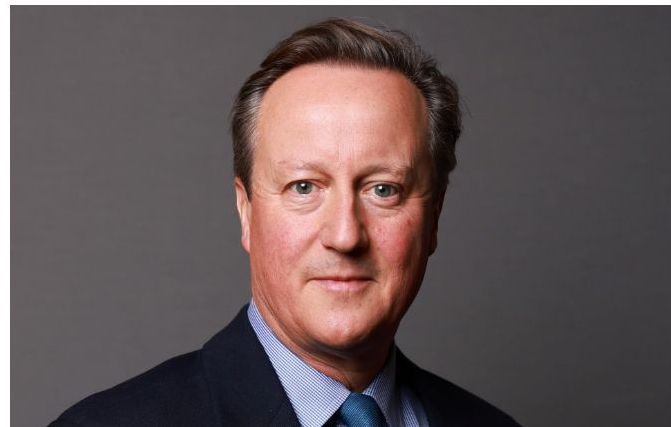
The decision came under David Cameron’s coalition government.
The Secretary of State for Energy at the time, Chris Huhne, accepted the advice of the Climate Change Committee (CCC) without serious scrutiny.
There was no parliamentary line-by-line review.
No cost-benefit debate.
Just a Cabinet write-round, a rubber stamp — and a legal carbon budget locked into the Climate Change Act 2008.
The modelling behind it was produced by DECC using the MARKAL energy system model — a least-cost optimisation tool designed for theoretical scenarios, not real-world engineering.
🧮 Fantasy in, Fantasy Out
The CCC’s 2010 modelling assumed:
Offshore wind at ~£100/MWh by the mid-2020s.
Millions of heat pumps installed at low cost.
Grid upgrades happening seamlessly and cheaply.
Carbon capture and hydrogen arriving like clockwork.
Consumers happily electrifying everything.
International markets cooperating smoothly.
What was missing?
Grid congestion, curtailment, and storage limits.
Supply chain shortages and planning delays.
Real cost of capital.
Any realistic modelling of risk.
The result was a “cost curve” that looked brilliant on paper but has proved utterly detached from reality.
Even DECC later admitted that MARKAL “is not designed to model delivery constraints.”
⚠️ No Real Scrutiny
The Treasury raised concerns in 2011 — but they were overruled for political reasons.
Parliament couldn’t amend the carbon budget. It could only accept or reject it wholesale.
So the most far-reaching energy decision in British history was based on a single model that was never properly audited in public.
💰 And Then the Bill Arrived
Fast forward to 2025:
Grid upgrade costs are expected to exceed £100 billion.
Offshore wind auctions are failing.
Heat pump rollout is lagging dramatically.
Curtailment costs are spiralling.
Consumers are paying record standing charges to fund a system built for a fantasy grid.
Every major strategic error flows from that 2010–2011 modelling moment.
The carbon budgets didn’t fail — they were never deliverable in the first place.
🕵️ Who Was Involved
Key players at the time included:
David Cameron – Prime Minister
Chris Huhne – Secretary of State for Energy (announced 4CB)
Edward Davey – later confirmed the budget in 2014
Adair Turner – CCC Chair
Julia King, Baroness Brown of Cambridge, Jim Skea, Michael Grubb – CCC members and modellers
Many of these figures have since taken roles in green finance, renewables, and climate consultancies — the same sectors boosted by their decisions.
🧾 The Modelling Is the Weak Point
Every law, subsidy, and energy upheaval since 2011 ultimately traces back to those model runs.
And here’s the good news: those runs are FOI-able.
You can demand:
MARKAL model input and output files (2010–2011)
AEA Technology review reports
CCC sensitivity analyses
Treasury impact assessments
If those files show what the evidence suggests — wild optimism and no serious risk analysis — then the legal foundation of the Fourth Carbon Budget is rotten.
⚔️ Why This Matters Now
The Sixth Carbon Budget (2033–2037) and the legally binding Net Zero target both rest on the same modelling tradition — just with more assumptions stacked on top.
If the original 4CB modelling was flawed and politically waved through, the public and Parliament were never given informed consent for the energy transition now underway.
This isn’t about opposing clean energy.
It’s about exposing bad governance, fantasy economics, and a political elite that treated mathematical models as law.
 SAY NO TO THE DESTRUCTION OF OUR LAND
Leave a comment