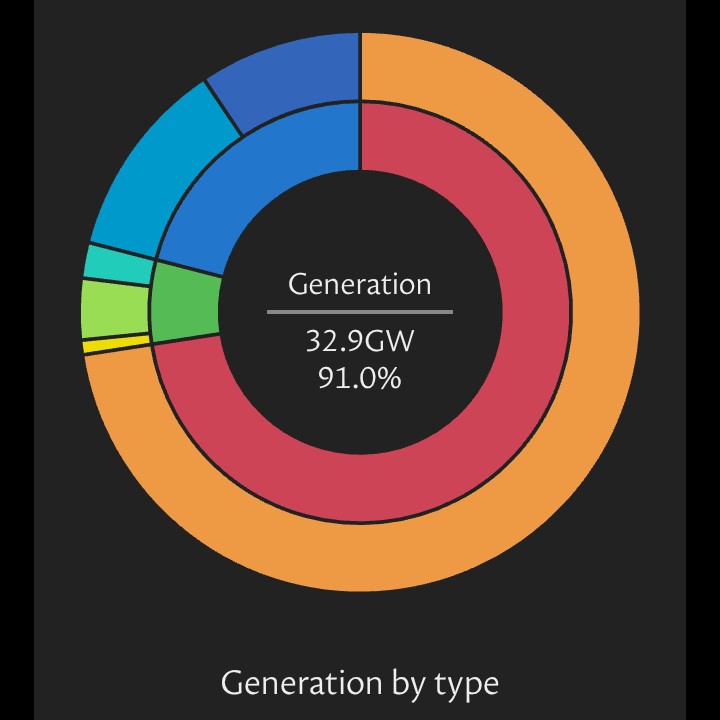
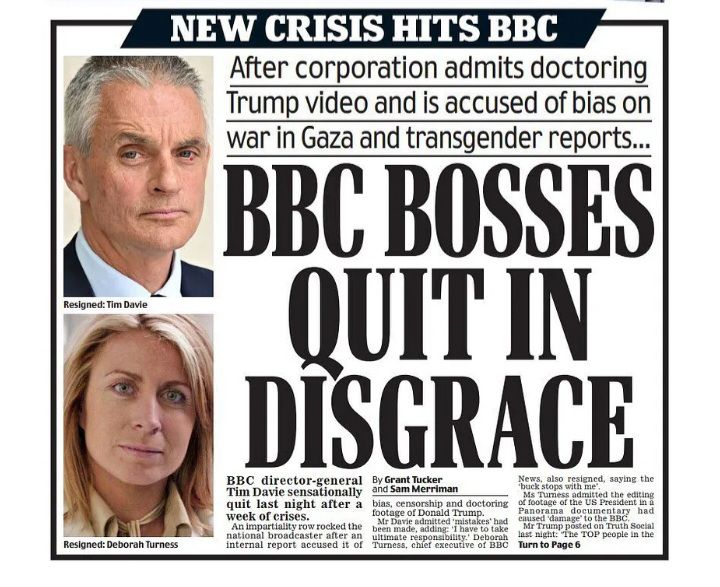
In the past few weeks, the BBC has faced a fresh storm of criticism about political bias, selective reporting, and its increasingly one-sided coverage of energy and climate issues. Whether it is the BBC’s senior leadership being accused of pushing “approved narratives,” or the quiet sidelining of dissenting scientific voices, the trend is unmistakable: the BBC is no longer reporting energy policy — it is advocating for it.And nothing exposes this clearer than their latest “exclusive access” piece on the Cleve Hill Solar Park.Because while the BBC presented Cleve Hill as a triumph of green engineering — even claiming it was powering “20,000 homes” on an overcast day — live National Grid data showed the exact opposite. As we monitored the ESO live dashboard, Cleve Hill’s output was virtually zero. Not low. Not reduced. Zero.The BBC did not mention that once.Instead of journalism, this was cheerleading.
The BBC was given exclusive access to Cleve Hill, which in 2020 became the first solar plant to receive planning consent at government level as a Nationally Significant Infrastructure Projects (NSIPs).Since then, 11 NSIPs have been approved by the government.Even on an overcast November day, the park generates enough electricity to power 20,000 homes.Keith Gains the managing director of Quinbrook, the company who built Cleve Hill, said the UK will need lots more big solar projects to decarbonise electricity generation and provide energy security.”We’re going to need big projects” he said, if the UK is to reach its net zero target.Big projects, he added, “enable us to generate electricity at a cheaper rate than a series of smaller projects”.Around 80 solar farms the size of Cleve Hill – 373MW – are needed by 2030 for the government is to reach its solar target.Three large-scale solar farms are planned on Kent’s Romney Marsh.A 99.9MW solar farm – Stonestreet Green Solar Park near Ashford – was approved by the government last month.Wildlife has returned When Cleve Hill was granted planning permission in 2020 there was strong local opposition.Kent Wildlife Trust and the Campaign to Protect Rural England (CPRE) opposed the scheme, arguing the development would threaten wildlife, including marsh harriers.The park now includes 136 acres of habitat dedicated to bird species.Golden plover and brent geese have been spotted on the park and water voles have been found living in the channels and ditches on the site.”The wildlife is here,” said Mr Gains. “Some has returned and some has always been here.”Official surveys of the site’s wildlife are yet to be carried out.
A New Pattern:
BBC Energy Coverage Is Becoming Government Messaging
The Cleve Hill report fits a broader trend.Over the last six months alone, the BBC has been accused of:Publishing near-identical talking points to DESNZ statementsBreaching neutrality rules over Net Zero commentarySilencing or excluding engineers, economists, and grid specialistsPlatforming developers while ignoring local communitiesRunning “explainer” pieces that read like promotional materialThe BBC now routinely repeats claims like:“Solar is the cheapest electricity.”“Wind is nine times cheaper than gas.”“The grid simply needs upgrading.”“Batteries will store surplus power.”But it doesn’t reveal:Solar is cheap per watt at the point of generation, but useless during UK peak demandWind costs spiral once you include firming, balancing, grid, and constraint paymentsGrid upgrades are decades late and billions over budgetBattery storage lasts 2–4 hours — not days, not weeks, not across winterThe public deserve these realities.Instead, they get a curated narrative designed to maintain political momentum for the Clean Power 2030 agenda, regardless of engineering or economic viability.
The BBC’s Solar Fantasy vs. National Grid Reality
Cleve Hill is huge — 373MW installed capacity — and the BBC leaned heavily on that number. Size makes headlines. But in Britain’s winter climate, size means nothing.Here is the reality:On many winter days, Cleve Hill produces less than 1–3% of its peak capacity.During cold spells and low-pressure systems — when the UK needs power most — output typically collapses to near-zero.Solar provides no contribution to winter peak demand, which occurs around 5–7pm in darkness.Yet the BBC told the public that “even on an overcast November day, the park generates enough to power 20,000 homes.”Simply untrue. And demonstrably so.We captured the screenshots. The ESO dashboard doesn’t lie.The BBC’s report selectively used a brief sunny interval while ignoring the multiple days before and after when output tanked. That’s not context. That’s not balanced reporting.That’s narrative curation.
Cleve Hill Is the Perfect Example of the Problem
The BBC painted a picture of:wildlife returningcheap electricityclean energy powering 20,000 homesand massive solar farms as the key to “energy security”But this is all partial at best and misleading at worst.Here is what Cleve Hill actually demonstrates:Output collapses in winterPeak generation occurs when demand is lowestIt relies on a substation built for offshore wind because the local grid is inadequate
It occupies prime agricultural landIt adds little to winter security of supplyIt increases summer curtailment riskCalling it “secure power” is as misleading as calling a 2-hour battery a “seasonal storage solution.”But this is the BBC now:Energy policy is not reported — it is marketed.
Solar in Winter: The Reality the BBC Won’t Touch
If the BBC had done its job, it would have acknowledged three unavoidable facts:
1. Solar collapses in winter — just when the UK is most vulnerable
This year’s January grid emergency proved how tight margins have become. Solar played no role. It simply wasn’t there.
2. Adding more solar increases curtailment, not securityThe government claims we need “80 more Cleve Hills” by 2030.Even if we built them:The grid can’t absorb that much midday summer electricity
Curtailment costs (already in the billions) would explode
Winter output would barely rise at all
The BBC ignored this because it contradicts the political line.
3. Solar farms need land — huge amounts of it
Kent MP Sir Roger Gale is right to be alarmed.Britain is losing thousands of acres of high-quality farmland to solar NSIPs.There’s no need for it: the UK has tens of thousands of acres of roofs, car parks, warehouses, brownfield land — all ignored by developers because grid connections and subsidies make farmland easier and cheaper.The BBC never asked why.
A New Pattern:
BBC Energy Coverage Is Becoming Government Messaging
The Cleve Hill report fits a broader trend.Over the last six months alone, the BBC has been accused of:Publishing near-identical talking points to DESNZ statementsBreaching neutrality rules over Net Zero commentarySilencing or excluding engineers, economists, and grid specialistsPlatforming developers while ignoring local communitiesRunning “explainer” pieces that read like promotional materialThe BBC now routinely repeats claims like:“Solar is the cheapest electricity.”“Wind is nine times cheaper than gas.”“The grid simply needs upgrading.”“Batteries will store surplus power.”But it doesn’t reveal:Solar is cheap per watt at the point of generation, but useless during UK peak demandWind costs spiral once you include firming, balancing, grid, and constraint paymentsGrid upgrades are decades late and billions over budgetBattery storage lasts 2–4 hours — not days, not weeks, not across winterThe public deserve these realities.Instead, they get a curated narrative designed to maintain political momentum for the Clean Power 2030 agenda, regardless of engineering or economic viability.
Conclusion: Britain Deserves the Truth — Not a Narrative
The energy transition must be based on engineering, economics, and security, not PR campaigns wrapped in green branding.Solar has a role — in the right place, at the right scale, and used sensibly on rooftops and brownfield.But the government’s current obsession with giant farmland solar NSIPs is:Uneconomic Environmentally damaging
Strategically naive And grid-incompatible
The BBC should be examining these failures, not covering for them.Cleve Hill isn’t the beginning of Britain’s green future.It’s a warning sign — one the BBC seems determined to ignore.
 SAY NO TO THE DESTRUCTION OF OUR LAND
Leave a comment