By Shane Oxer — Campaigner for fairer and affordable energy
Introduction
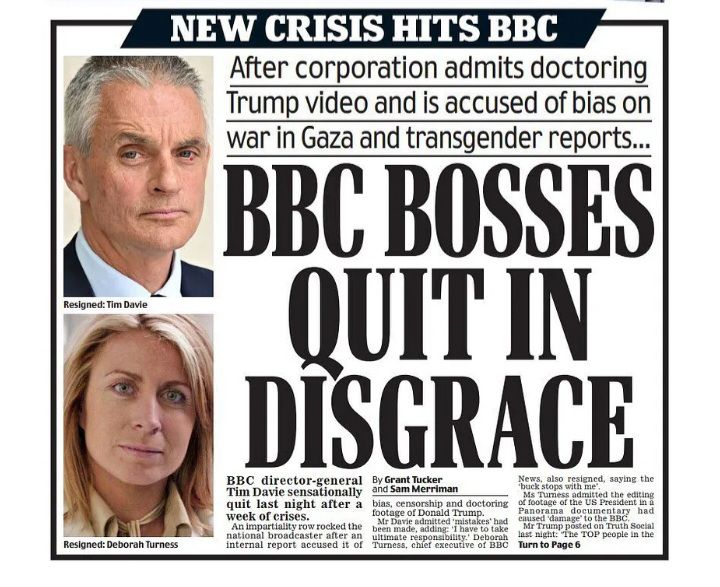
The resignation of BBC Director-General Tim Davie and the CEO of BBC News after the exposure of doctored climate footage represents far more than a newsroom failure. It is the moment Britain finally confronts a deeper truth: our most powerful public institutions have not been reporting on the climate debate.They have been participating in it.[^1]
The scandal is being treated as a matter of internal misconduct, but it is actually a symptom of a larger national crisis.For more than a decade, Britain’s political class, media establishments, and regulatory machinery have operated under a single ideological banner: Net Zero. During that time, scrutiny vanished, dissenters were silenced, and the line between journalism and activism eroded. The BBC scandal does not merely show bias; it reveals how deeply the green ideological complex has captured the commanding heights of British public life.[^2]And now, as the BBC promises an internal review of climate coverage, and the Conservative Party belatedly “reconsiders” its Net Zero timetable, the fundamental questions remain unanswered.
A Manufactured “Epiphany” Too Late, Too Shallow
We are told the Conservative Party is having a climate “epiphany” recognising that Net Zero has pushed up energy prices, damaged competitiveness, and accelerated deindustrialisation.[^3] After fourteen years in government, the party finally admits there were flaws. But this admission is cosmetic.
There is no explanation of how policy went catastrophically wrong.
No acknowledgement that civil servants, quangos, NGOs, and ministers built an energy system based on fantasy timelines and ideological certainty.
Nor is there any clarity about what happens next.
Will Net Zero be delayed to 2045? 2050? 2060?
Or will it simply be rebranded while the machinery behind it continues unchanged?
Nothing indicates that the party understands the scale of the failure,or that it intends to dismantle the green ideological networks embedded across Whitehall. The rollback is performative, a gesture to buy time. Without a forensic investigation of how the UK fell into this trap, there will be no meaningful change.[^4]
The BBC’s Collapse: Journalism Replaced by Narrative Control
The leaked memo revealing that BBC News producers doctored climate footage, and that senior executives ignored the allegations, confirms what millions already suspected: the BBC long ago ceased to treat climate change as a subject for journalism. It became instead a sacred narrative to be protected.[^5]
For years:alternative analysis of grid constraints was absent
engineers challenging storage myths were marginalised
community opposition to solar farms or BESS schemes was treated as provincial nuisance
Net Zero costs were downplayed or omitted entirely
failures were reframed as successesThe BBC did not fail accidentally—it failed structurally. The organisation adopted climate ideology as an editorial principle, elevating campaigners to “experts” while excluding dissenting specialists in engineering, energy security, or economics.[^6]This scandal is not about one memo.It is about an institution that has lost the capacity for independent thought.
Britain Needs an Inquest, Not Another Apology
The BBC will now conduct an internal review. Ministers will express “concern” and promise to “learn lessons.” Political strategists will claim that the Net Zero transition simply needs “better communication.”This is not serious.Britain does not need contrition—it needs accountability.
A real reckoning requires:
The publication of receipts, emails, and meeting minutes showing who shaped climate policy
Full disclosure of the role of NGOs, consultancies, philanthropic foundations, and quangos in drafting legislation
Parliamentary hearings on editorial bias, influence networks, and the outsourcing of policy to unelected bodies
An examination of the Climate Change Committee’s unchecked authority
An audit of the financial waste buried inside Net Zero programmes
Without this, Britain will merely drift from one manufactured narrative to another, never addressing the ideological engine that has driven the country into an energy affordability crisis.[^7]
How Net Zero Captured the Institutions
One of the most important points raised in Ben Pile’s analysis is that the climate agenda did not expand organically; it was engineered.
Over years, a network of organisations,green lobbyists, renewable corporations, quango officials, academics, and environmental NGOs embedded themselves within the state.
The BBC’s job was to scrutinise this network.
Instead, it became an amplifier for it.This capture explains:
The absence of coverage about grid bottlenecks
The silence on battery limitations
The under-reporting of solar sprawl on farmland
The refusal to discuss curtailment waste
The dismissal of alternative technologies like SMRs or rooftop microgeneration
Net Zero was presented not as a policy but as a moral inevitability. To question it was to oppose “the science,” even though the real debate was never about science—it was about engineering, economics, sovereignty, and democracy.[^8]
Reform Requires More Than Rebranding
The BBC now claims it will review climate bias.
The Conservative Party claims it is rethinking timelines.
Quangos claim they will “simplify governance” around Net Zero delivery.
This is all theatre.
Britain does not need cosmetic change.It needs structural reform.
Real reform requires:
Dismantling unaccountable quangos like the CCC
repealing or rewriting the Climate Change Act
Rebuilding the grid as an engineering project, not an ideological experiment
Restoring journalistic independence
exposing the networks that used climate politics to override democratic debate.The institutions that drove Net Zero are attempting to save themselves with superficial apologies. But apologies do not undo the damage done to industry, energy bills, or public trust.
Conclusion:
The Scandal Behind the Scandal
The BBC scandal is not ultimately about journalism.It is about power. It is a window into how Britain has been governed for more than a decade: through narrative, ideology, and unaccountable authority.
We cannot allow this moment to be reduced to a personnel change at the BBC or a press release from the Conservative Party. Britain needs a full national inquest into the Net Zero era, from the Climate Change Act to the present day.Only then can we rebuild an energy system that works, a media that scrutinises, and a democracy that functions.
Footnotes
[^1]: Internal BBC correspondence leaked in November 2025 confirmed deliberate alteration of climate-related footage and the dismissal of concerns raised by staff.
[^2]: For over a decade, the BBC’s Editorial Guidelines explicitly elevated “climate consensus,” limiting the inclusion of alternative expert voices.
[^3]: Government briefings in 2024–25 acknowledged that electrification costs, grid infrastructure failures, and storage limitations were exceeding original Net Zero projections.
[^4]: The Conservative Party’s “rethink” offers no legal change to carbon budgets or the Climate Change Act, meaning policy remains fundamentally intact.
[^5]: Memo details reported by the Telegraph (Nov 2025) reveal producers “constructed narrative alignment” through selective editing.
[^6]: BBC climate reporting has relied heavily on NGOs such as the Energy & Climate Intelligence Unit (ECIU) and Carbon Brief, both of which promote activist-aligned analysis.
[^7]: The National Audit Office has repeatedly warned of billions in uncosted Net Zero commitments across multiple departments.
[^8]: Grid engineers, energy economists, and independent researchers have warned for years that storage technology cannot meet seasonal demand, but these warnings were systematically omitted from public debate.
 SAY NO TO THE DESTRUCTION OF OUR LAND
Leave a comment