Britain is entering the most dangerous phase of its modern energy history and the warning lights are now flashing red.
This week’s analysis from the National Energy System Operator (NESO), reported by The Telegraph, confirms what engineers, analysts, and campaigners have been warning for years:
The UK is on course for severe gas shortages, just as the national grid is becoming more dependent on gas than ever before.This crisis is not caused by geology. It is not caused by a lack of resources. It is a direct consequence of political decisions, especially the ban on new North Sea exploration and the 78% effective tax rate imposed on domestic producers.
NESO’s findings are stark:
Britain’s gas availability will fall by 78% by 2035 an annual decline of up to 13% ,at the exact moment winter demand remains stubbornly high and the grid becomes increasingly fragile.[1]In simple terms: the UK is shutting down domestic gas while increasing its reliance on imported gas to keep the lights on. This is the energy equivalent of slashing your income while taking on a bigger mortgage.
The Grid Still Runs on Gas And Will for Decades
Despite declarations of “clean power by 2030,” gas remains the backbone of British energy security. NESO makes clear that even in 2035, long after Net Zero milestones are supposed to reshape the system, winter peak demand will still hit 422 million cubic metres/day.[2]That level of demand cannot be met by wind, solar, hydrogen, batteries, or interconnectors. It is met by gas.
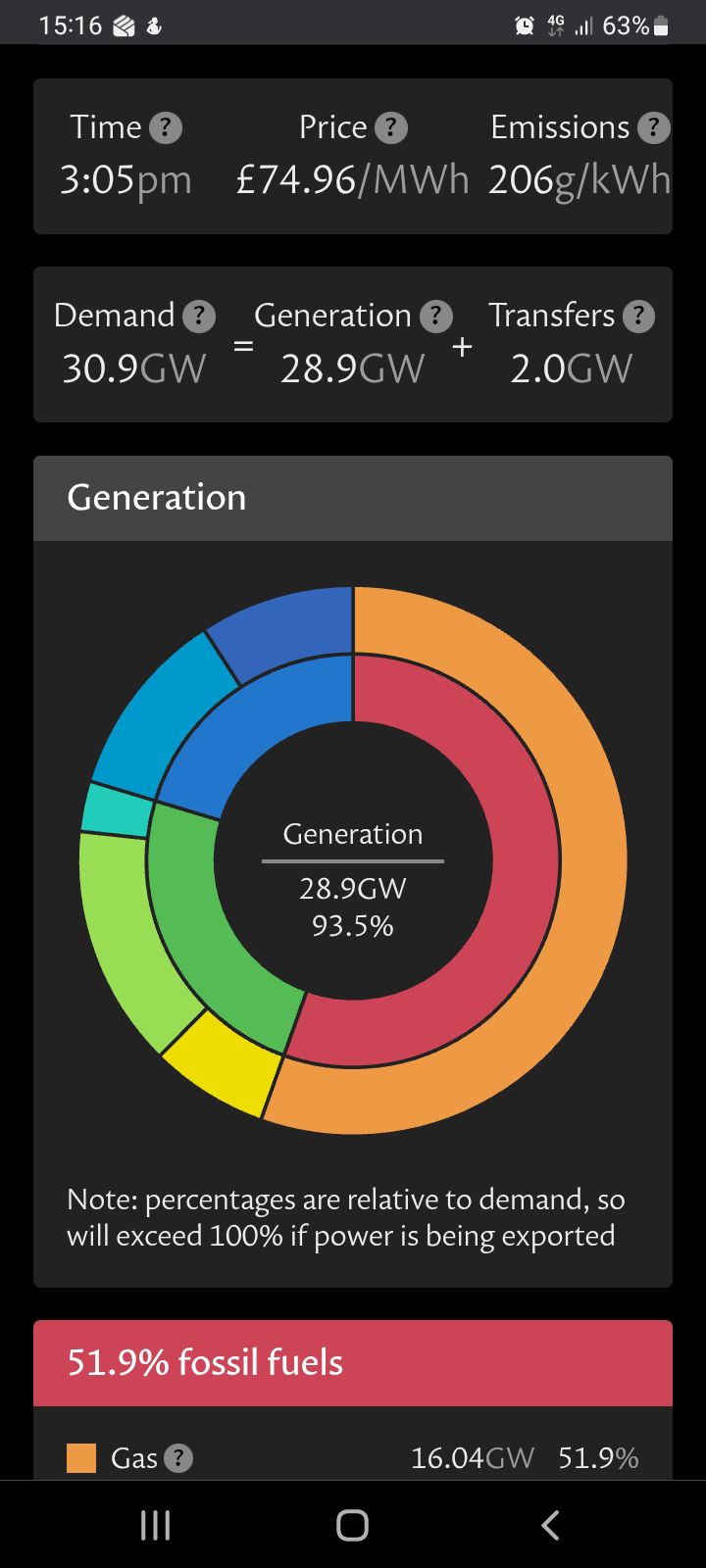
The reason is simple: only gas-fired generation can stabilise an electricity grid dominated by intermittent renewables. Batteries provide minutes or hours of support, not days or weeks. Hydrogen remains an expensive laboratory fantasy. Interconnectors fail when neighbouring countries face their own shortages. And during winter evenings , when demand surges and solar output collapses , wind often underperforms, as seen during the UK’s near-grid collapse in January 2025.[3]So while ministers boast about getting off “petrostates,” the reality is the opposite: government policy is increasing the grid’s dependence on imported gas to compensate for renewable volatility.
Britain’s Domestic Gas Is Falling Off a Cliff
NESO reports that North Sea output is collapsing ,not gradually, but catastrophically. Production will fall from 27 billion cubic metres today to just 5 billion by 2035, a drop of more than 80%.[4]That means the UK will be forced to import over 90% of its gas during peak winter periods. This is a national security vulnerability on a scale the UK has never faced. One major failure ,a damaged Norwegian pipeline, an LNG terminal outage, or geopolitical disruption ,could cause immediate unmet demand.This is not theoretical. NESO uses the understated language typical of government bodies, warning that if the “single largest piece of gas infrastructure” were lost, supply “falls short of demand.”[5]Translated into plain English: a single failure could cause blackouts.
But Even Our Imports Are at Risk
Norway currently supplies almost half of Britain’s gas via pipelines. But NESO warns that Norwegian production will halve by 2035, tightening global supply just as the UK’s import dependence skyrockets.[6]This means Britain will be competing with Europe, Asia, and the US for LNG cargoes ,with prices driven by whoever bids highest. The supposed “cheap renewables future” collapses when the grid still relies on imported gas to function, and that gas becomes more expensive and harder to obtain.
Chris Wheaton of Stifel goes further than NESO, warning that the UK may hit its LNG terminal capacity limits as early as 2031, because winter demand will exceed the maximum rate terminals can feed the grid.[7]In other words: we could face shortages even in a world where the LNG is physically available ,simply because we don’t have the infrastructure to import it fast enough.
The Energy Policy That Brought Britain Here
This crisis is self-inflicted. It is the direct result of:
The North Sea exploration ban
The 78% windfall tax on domestic gas
Ideological pressure to meet legally binding Net Zero targets
An overbuild of renewables without grid-first planning
A refusal to invest in long-term domestic sources like SMRs and flexible gas generation
As analyst Ashley Kelty points out, current government policy “makes no sense,” placing “ignorant net zero dogma” above energy security.[8]NESO’s analysis confirms that Britain has created a perfect vulnerability: a system that needs more gas, while political leaders have ensured we produce less gas, and will soon struggle to import enough gas.This is not resilience. It is fragility.
A National Security Threat.Not Just an Energy Issue
Britain’s electricity grid is being redesigned around a “clean power” dream while ignoring the foundational reality: it remains an AC grid that requires firm, controllable generation. Gas does this job today. Nuclear can do it tomorrow,but only if the government stops chasing ideological targets and commits to large-scale domestic baseload.
If Britain loses access to gas during a cold winter spell, no amount of solar farms, BESS containers, hydrogen pilots, or offshore wind farms will prevent outages. Those technologies depend on gas to fill the gaps.We learned this lesson in 2022 during the Russian invasion of Ukraine. We ignored it. NESO is repeating it. And this time the consequences will be worse because we have deliberately dismantled the system that once protected us.
Conclusion:
Britain Needs Domestic Power, Not Imported Dependence
The solution is not complex:
Lift the North Sea exploration ban
Reduce punitive taxes on domestic gas
Fast-track SMR deployment
Rebuild gas storage
Reinforce the grid for reliability, not ideology And abandon legally binding targets that ignore engineering reality
Britain can either produce its own gas and build its own electricity system, or it can continue down the current path of dependency, insecurity, and spiralling costs.NESO has issued the warning. The numbers could not be clearer.The only question now is whether political leaders will finally listen,or whether we will face another national crisis before they act.
Shane Oxer. Campaigner for fairer and affordable energy
Footnotes
[1] NESO analysis reported by The Telegraph, 27 Nov 2025: projected 78% decline in gas availability by 2035.
[2] NESO winter demand forecast: 422 mcm/day by 2035.
[3] UK grid stress event, January 2025 (National Grid ESO Contingency Reports).
[4] NESO projection: North Sea production falling from 27 bcm to 5 bcm by 2035.
[5] NESO warning: loss of single largest infrastructure asset results in unmet demand.
[6] NESO: Norwegian gas production expected to halve by 2035.
[7] Chris Wheaton, Stifel: UK LNG terminal throughput could hit maximum by 2031.[8] Ashley Kelty, Panmure Liberum: critique of UK energy policy as “ignorant net zero dogma.”
 SAY NO TO THE DESTRUCTION OF OUR LAND
Leave a comment