By Shane Oxer Campaigner for fairer and affordable energy
Introduction
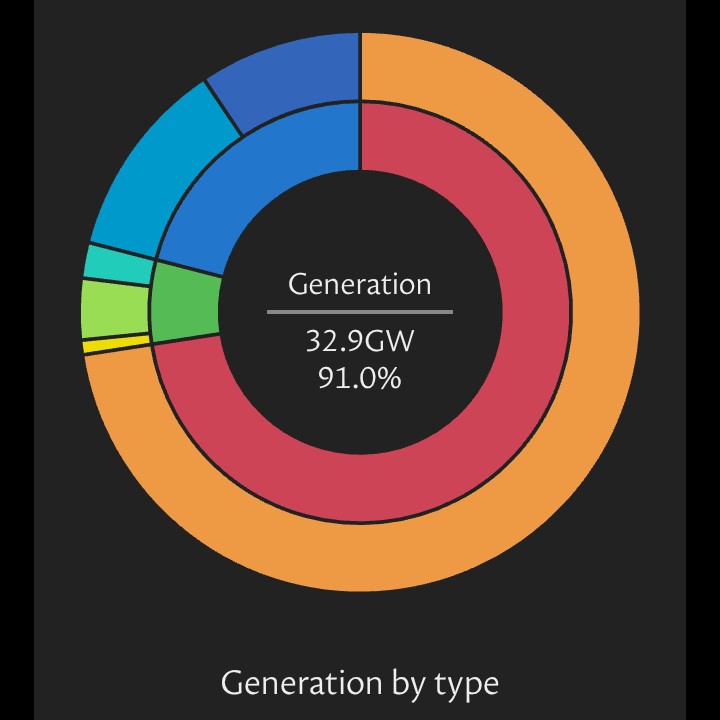
The United Kingdom has just recorded one of its largest annual increases in solar capacity, adding 1.9 GW of new photovoltaic installations in the 12 months to October 2025.[1] Total installed solar capacity now stands at 20.7 GW, with a surge of large utility-scale solar farms approved under the Contracts for Difference (CfD) regime and the Nationally Significant Infrastructure Project (NSIP) process.[2]But the latest National Grid data , taken directly from publicly available real-time dashboard figures, exposes a serious and uncomfortable truth: despite installing over 20 gigawatts of solar capacity, the UK is routinely receiving just 2–4% of its electricity from solar generation.[3]The mismatch between capacity and actual generation is no longer a niche technical concern. It is now a structural threat to energy security, grid stability, land use, and household bills. The more solar we build, the clearer this pattern becomes.
1. Twenty gigawatts installed , but only 0.7–1.6 GW generated
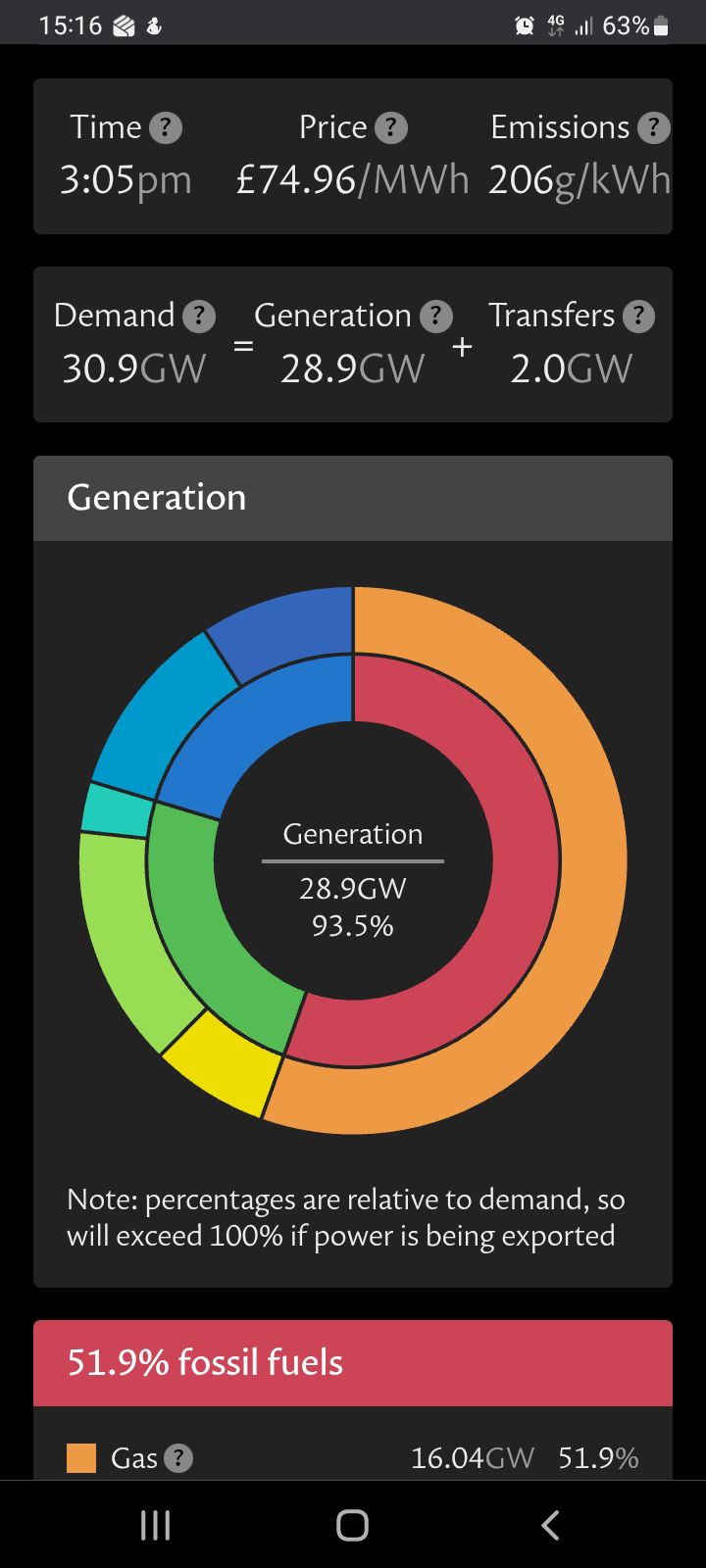
On multiple days this week, National Grid data shows the UK generating:0.77 GW of solar (2.1%) at 08:35.
1.68 GW of solar (4%) even at 13:27 — peak daytime[4]This is despite 20.7 GW of installed capacity.In practical terms, this means:Solar is delivering less than 1/10th of its installed capacity on ordinary days.The industry continuously promotes capacity figures because they sound impressive. But capacity does not heat homes, keep hospitals running, or balance the grid. Actual generation does. And on this measure, the UK’s solar output is chronically inadequate.
2. Solar vanishes when the UK most needs power
British electricity demand follows a predictable pattern:High in early morningHigh in late afternoon and evening
Elevated during winter
Lower in summer
Solar follows the opposite pattern:
Zero at night
Minimal in early morning
Peaks around midday
Collapses in winter
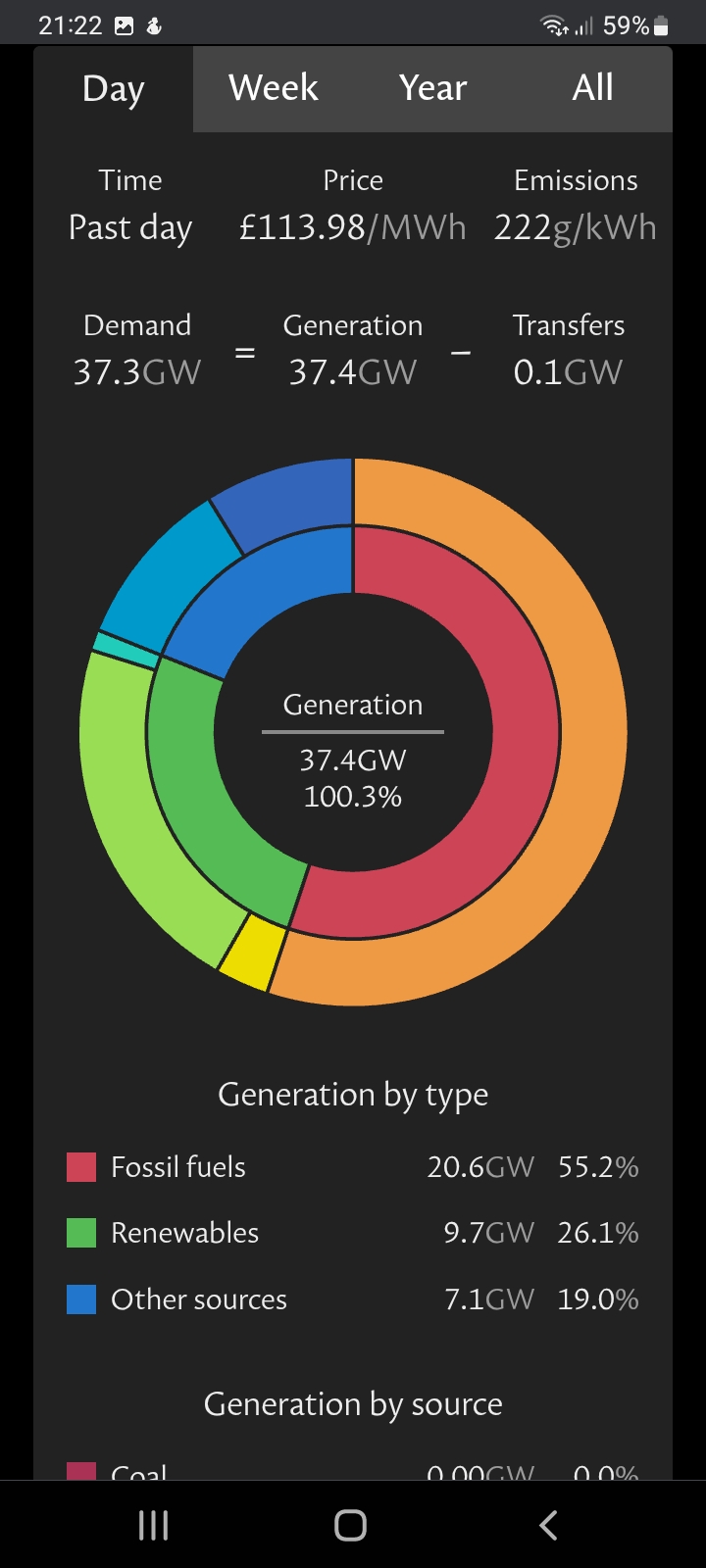
This means that no matter how much capacity is installed, solar cannot supply the UK when demand peaks. The screenshots capture this perfectly: at 08:35, with demand nearing 40 GW, solar contributes just 4%.[5]The UK energy system must therefore maintain full gas-fired backup to cover the entire shortfall. Solar farms do not remove gas plants — they simply force gas plants to operate less efficiently, with expensive start-stop cycling and spinning reserve requirements.
3. Gas remains the backbone of the UK grid ,because solar cannot be
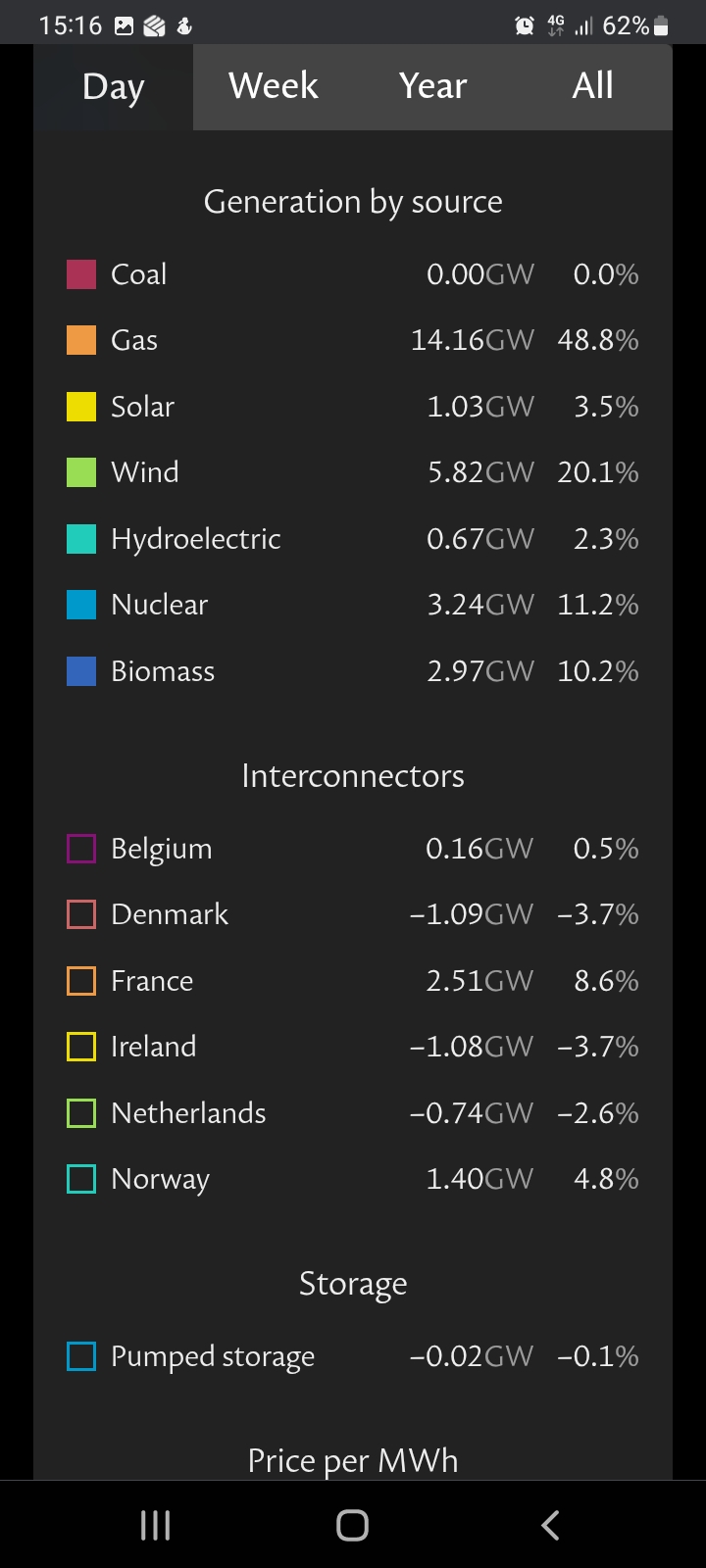
Despite billions spent on renewables subsidies across the RO, FiT, CfD, and grid-balancing regimes, your data shows gas supplying:50.9% 60.0% 47.6%of total electricity generation at the times recorded.[6]This is not a coincidence, and it is not a transitional stage. It is the direct result of a structural engineering reality: intermittent solar cannot replace dispatchable power.Grid operators must rely on gas because gas is:

Controllable
Dispatchable
Available all hours
Required for winter demand
Needed to stabilise voltage and frequency
Solar contributes only when the sun shines. Gas contributes whenever the grid needs it.
4. Solar farms increase exports, curtailment, and grid inefficiency. Another screenshot clearly shows:Generation: 41.6 GW Demand: 39.8 GW Exports: 1.8 GW[7]Solar developers claim this “surplus” power is a sign of success. In reality, it is a sign of grid imbalance.When the grid has too much intermittent power at the wrong time, National Grid ESO must:
Export it (often at a loss)Curtail it (pay developers not to generate)Ramp gas down only to ramp it back up hours later
Activate balancing mechanisms that increase costs.This is why curtailment payments , already over £1 billion per year are rising rapidly.[8] Solar farms are contributing to a structural mismatch between when power is available and when it is required.
5. Utility-scale solar consumes land but delivers weak output
The PV Magazine report reveals that:The majority of new solar capacity is ground-mounted, not rooftop.Many of the biggest projects (Cleve Hill at 373 MW) are on farmland or greenfield sites.More than half of all solar capacity is now ground mount[9]Yet despite this land consumption, the real-world output remains minuscule. A system that produces only 2–4% of national electricity despite occupying thousands of acres is not “green energy” — it is inefficient land use that undermines food security and rural landscapes.
6. Solar is not lowering bills and never will under the UK climate.PV Magazine repeats the standard industry line that “cheap solar” will reduce household bills. But the government’s own data shows:Wholesale prices at £93–£119/MWh during the screenshots.Emissions rising during solar output troughs.The government having to shift Renewables Obligation costs onto general taxation because the burden on households became politically unreasonable[10]If solar were lowering prices, it would:
Reduce gas dependence
Reduce wholesale volatility
Reduce balancing costs
Reduce network reinforcement spending
None of these things are happening. Instead, the UK is now paying for:
New pylons
New substations
New supergrid transformers
New balancing mechanisms
New curtailment payments
Solar has not lowered bills, in fact, the infrastructure required to support it is a major driver of rising electricity costs.
Conclusion:
Solar is booming, but failing to power Britain
With 20.7 GW of installed solar capacity and almost 2 GW added in a single year, the UK should be seeing significant energy security improvements if solar worked as advertised.Instead:
Gas continues to supply half to two-thirds of our electricity
Solar rarely exceeds 2–4%
Grid stability is worsening
Costs are rising
Land is being consumed
Curtailment is increasing
Exports are growing rather than domestic resilience
Solar may have a role in southern climates with long summers and stable grid conditions. But in a northern, winter-peaking electricity system like the UK’s, it is structurally incapable of providing reliable, meaningful power.The data speaks plainly:
Solar is not a solution for Britain. It is an expensive distraction from the infrastructure and generation technologies we actually need — nuclear, gas, and rooftop micro-generation.
Footnotes
[1] pv magazine, “UK adds 1.9 GW of solar in 12 months,” Nov. 27, 2025.
[2] Ibid.
[3] National Grid ESO data screenshots (user-provided), November 2025.
[4] Ibid.
[5] Ibid.
[6] Ibid.
[7] Ibid.
[8] National Audit Office, “Electricity System Costs: Balancing and Constraint Payments,” 2023.
[9] pv magazine, op. cit.
[10] UK Government Budget Statement, 26 Nov 2025; DESNZ Renewables Obligation Cost Reform Commentary, 2025.
 SAY NO TO THE DESTRUCTION OF OUR LAND
Leave a comment