For years, the public has been told that high energy bills are the result of global gas prices or geopolitical instability. But the numbers tell a different story. The real driver of Britain’s energy crisis is not the fuel itself — it is the Net Zero policy framework that has deliberately inflated the cost of gas generation. Today, around half of the price of producing electricity from gas is carbon taxation, not fuel.[1] This means the UK has engineered an energy market where reliability is punished and political ideology is priced directly into every unit of power the country relies on to avoid blackouts.
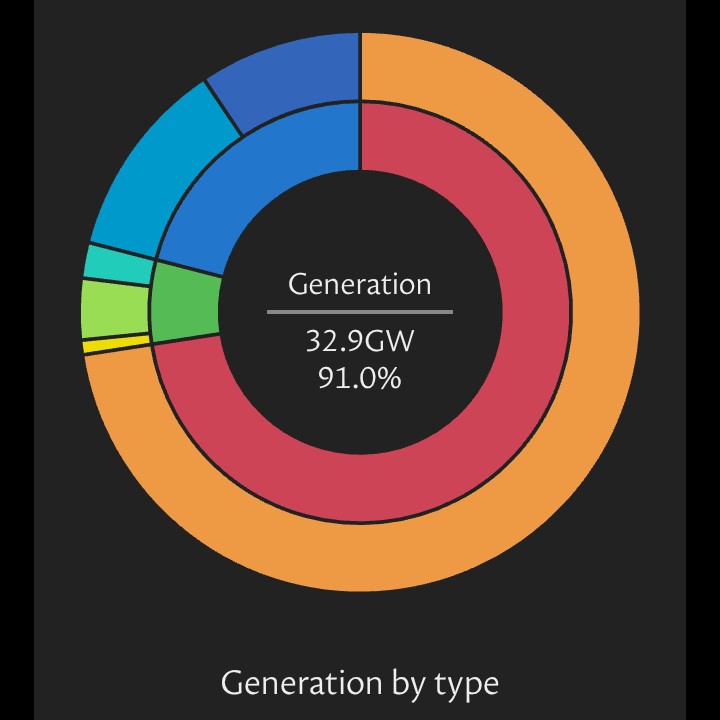
Gas is still the backbone of the electricity system, especially in winter. Wind and solar cannot provide firm power, cannot meet seasonal demand, and collapse precisely when they are needed most. Yet instead of supporting the only technology that guarantees supply, government policy has turned gas into the most heavily taxed generator in the country. A gas plant must pay the UK Emissions Trading Scheme (UK ETS) carbon price, the Carbon Price Support (CPS) tax, and associated levies — before it even buys the fuel. These carbon taxes are now so high that they make up roughly 50% of the total cost of generating electricity from gas in normal market conditions.[2]
This means the government has not just distorted the market — it has replaced the market.
At the same time, renewables operate on a different planet. They receive subsidies, guaranteed income, priority dispatch, curtailment payments, balancing costs, and billions in grid reinforcements that are quietly added to consumer bills. The Renewables Obligation alone will cost £7.8 billion in 2024–25, rising to £8.5 billion by 2026–27.[3] None of this reflects market logic. It reflects a political decision to make intermittent generation appear “cheap” by forcing reliable generation to carry the cost burden.
This is why carbon taxation is not a neutral environmental tool — it is the central mechanism used to rig the system.
By inflating the cost of gas (the backbone of national security), policymakers artificially make wind and solar appear competitive even when they fail to generate. If carbon tax disappeared tomorrow, the entire renewable-cost narrative would collapse. Gas would instantly be the cheapest, most flexible, and most economically rational source of electricity in the UK. But under Net Zero, the more unreliable generation we build, the more carbon tax must rise to suppress the price signal from gas — the technology that actually works.
The result is the worst of all worlds:
Electricity prices doubled.
Fossil fuel backup made artificially expensive.
Renewables dependent on hidden subsidies.
A grid at risk every winter.
Consumers punished for political engineering.This is not a natural outcome. It is a man-made crisis, created by policy, not fuel.
Net Zero has turned carbon taxation into a weapon — aimed not at polluters, but at the stability of Britain’s energy system itself. Until that political design is exposed and dismantled, the UK will remain trapped in a cycle of high bills, high taxes, and low reliability, paying a premium on gas not because it is scarce, but because government has decided to make it expensive.
Footnotes
[1] Based on standard UK ETS carbon prices, Carbon Price Support rates, and wholesale spark-spread modelling. In typical conditions, around 40–55% of the total cost of gas-fired electricity is carbon taxation, not fuel.
[2] BEIS/ESO generation cost modelling and Treasury tax instruments show that carbon pricing can exceed the underlying gas cost itself in non-crisis years.
[3] OBR, March 2025 Forecast Tables: Receipts, Renewables Obligation — £7.8bn (2024–25) rising to £8.5bn (2026–27).
 SAY NO TO THE DESTRUCTION OF OUR LAND
Leave a comment