1. What the government admits , quietly , in its own Solar Roadmap
The DESNZ UK Solar Roadmap (June 2025) contains a series of admissions that directly undermine the public narrative of rapid, deliverable progress.
First, it concedes that grid constraints are already preventing delivery:
“This demand, combined with network capacity challenges, has created a connection queue and ultimately sees many solar projects getting delayed, curtailed, or cancelled.” �
This is not a warning from campaigners; it is a statement of fact from DESNZ. Projects that are delayed, curtailed, or cancelled do not enhance energy security, regardless of how many megawatts are approved on paper.
Second, the Roadmap admits that headline capacity figures are not forecasts of delivery at all:
“It is therefore possible that the Clean Power Action Plan solar capacity range of 45–47GW could yield around 57GW… This is not a forecast of deployment and is closer to a theoretical maximum.” �
This single sentence validates the core critique. The government is counting theoretical maximums , not electricity that can physically reach homes and businesses , while presenting those numbers as evidence of success.
Third, the document acknowledges that the very projects most heavily promoted by ministers are the most constrained:
“Large-scale solar projects have faced some of the longest delays and costs as a result of the connections queue.” �
Large-scale solar dominates ministerial announcements, land take, and community disruption , yet DESNZ admits these schemes face the worst delays. That is approval theatre, described in the department’s own words.
2. The administrative fantasy:
treating the grid as paperwork
Rather than addressing physical constraints, the Roadmap repeatedly substitutes process reform for infrastructure:
“Connection reforms will help ensure that ready projects can connect sooner and reduce delays caused by stalled projects in the queue.” �
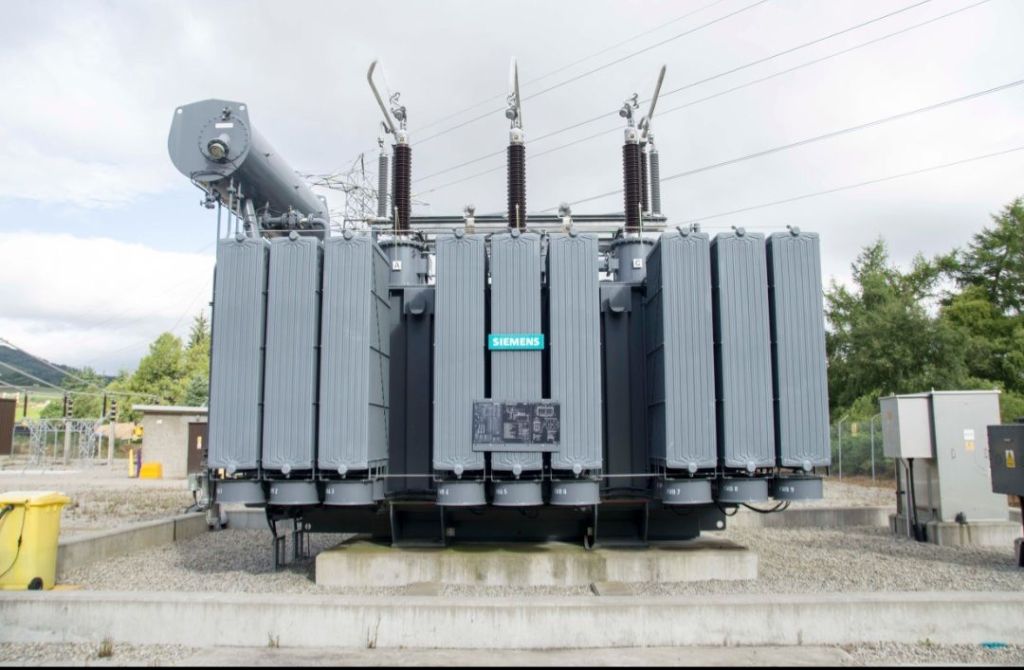
Queue reform does not create transformers. It does not build substations. It does not increase fault-level headroom or resilience. It merely rearranges who waits longest for assets that do not yet exist.
The Roadmap also makes a critical assumption without evidence:
“Delivering this deployment scenario assumes the plentiful availability of skills, supply chain and finance.” �
There is no accompanying assessment of super-grid transformer availability, long-lead manufacturing constraints, ageing asset replacement, or resilience-driven reprioritisation. After recent events, that assumption is no longer credible.
3. The grid registers tell a very different story
When the political narrative is tested against NESO’s Existing Agreements (EA) Register, the illusion collapses.
Across multiple critical nodes, dates have quietly moved into the 2030s:
Drakelow super-grid transformer reinforcement: Oct 2029 → Q2 2031
Brinsworth (South Yorkshire): now shown as 2032 on the EA Register
Norton GSP (Teesside / North Yorkshire / Durham): major projects stacked into 2031–2035
These are not speculative risks;
They are embedded in the system operator’s own planning assumptions. The gap between approval dates and connection reality is widening , not narrowing.
4. Norton: a stress test for North Yorkshire and Durham
Norton GSP is a critical gateway for Teesside, North Yorkshire, and parts of County Durham. It is exactly the kind of node policymakers assume that can absorb new solar, battery, energy-from-waste, and prospective onshore wind projects.
Yet the EA Register shows Norton already operating on a post-2030 timetable, with large schemes clustering at 2031 and others drifting to 2035. Even before new projects publish grid connection statements, the reality is clear: there is no near-term headroom. Political promises of rapid delivery simply do not align with engineering fact.
5. The ageing grid problem
The Roadmap does not confront
Beneath all of this lies a deeper structural issue the Solar Roadmap barely touches: the age and fragility of the existing grid.
Large parts of the UK’s transmission and distribution system were built in the 1950s–1970s. Transformers, switchgear, and protection systems are approaching , or exceeding , their safe design lives.
Life-extension assumptions that once appeared prudent now carry systemic risk.
At this point, grid operators face an unavoidable hierarchy of priorities:
Prevent catastrophic failure and loss of supply
Replace life-expired assets
Maintain system stability (voltage, fault level, inertia)
Only then enable new connections
This hierarchy is engineering law, not politics.
A failing transformer feeding a city, hospital cluster, or industrial region will always take precedence over connecting a new solar farm.
6. The Heathrow moment:
When survival overtook expansion.
That hierarchy became unavoidable after the outage at Heathrow Airport, caused by failure at the North Hyde substation. A single infrastructure fault shut down Europe’s busiest airport. The implications were stark: critical national infrastructure was one transformer failure away from prolonged disruption.
From that moment, grid planning ceased to be solely about decarbonisation and became about resilience and restoration. Replacement transformers, strategic spares, and asset integrity moved to the top of the priority list. That shift was never announced in ministerial speeches , but it is visible everywhere in revised schedules and slipping dates.
7. Expansion versus survival:
The trade-off no one admits.
Read the Solar Roadmap alongside the EA Register, and a clear conflict emerges:
The system is being forced to choose between expansion and survival.
The Roadmap assumes both can proceed simultaneously. Engineering reality says otherwise. Transformer manufacturing capacity is finite. Skilled labour is finite. Outage windows are finite.
When replacement of ageing assets becomes urgent , as it has , reinforcement and new connections inevitably slip.
That is why Drakelow, Brinsworth, Norton, East Anglia, and Yorkshire GREEN follow-on phases all show the same rightward drift. It is not a coincidence. It is triage.
8. Approval theatre exposed.
This is the essence of approval theatre. Projects are approved at speed, counted as political wins, and cited as proof of progress. While the engineers quietly re-sequence work to stop the existing system from failing.
DESNZ’s own Roadmap admits:
projects are delayed, curtailed, or cancelled �
35.87_DESNZ_UK_Solar_Roadmap_final.pdf None capacity figures are theoretical, not deliverable �
35.87_DESNZ_UK_Solar_Roadmap_final.pdf None large-scale solar faces the longest delays �
35.87_DESNZ_UK_Solar_Roadmap_final.pdf None What it does not do is confront the central truth:
keeping the lights on now takes priority over ideological targets.
9. The unavoidable conclusion.
Britain is not short of approved energy projects. It is short of a grid capable of delivering them and is now prioritising system survival over expansion. That reality explains every delay uncovered across the country and every contradiction buried in official documents.
Ed Miliband is not presiding over a smooth energy transition. He is presiding over approval theatre , a widening gap between political narrative and physical reality. Until government admits that grid resilience and asset replacement now come first, approvals will continue to race ahead, delivery dates will continue to slide, and the public will continue to be misled about what Britain’s energy system can actually do.
Shane Oxer. Campaigner for fairer and affordable energy
 SAY NO TO THE DESTRUCTION OF OUR LAND
Leave a comment