When a serving European prime minister describes a central pillar of EU energy policy as “the stupidity of the century,” it is more than rhetoric. It is an admission that something has gone badly wrong.
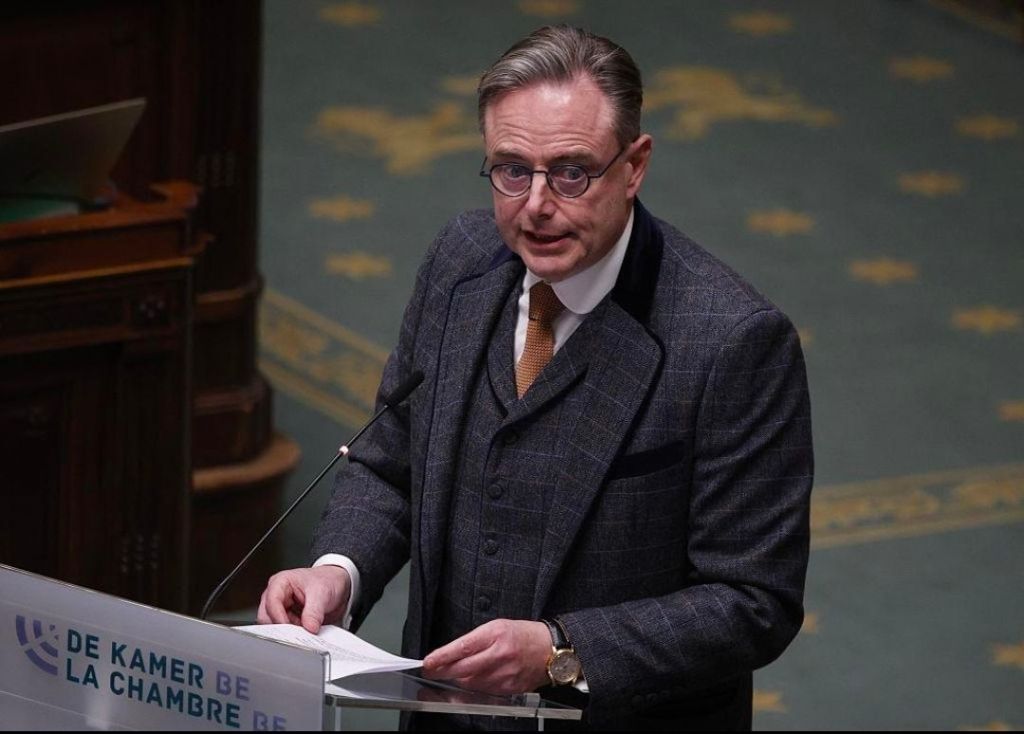
Last week, Bart De Wever, Prime Minister of Belgium, delivered a blunt assessment of Europe’s energy trajectory. Speaking at a public forum, he argued that climate-driven energy decisions have left Europe poorer, less competitive, and increasingly dependent on foreign powers for fuels, technology, and materials.[1]
This was not the critique of an activist or a retiree. It came from a head of government of a founding EU member state.
And what he said closely mirrors concerns long voiced by engineers, grid operators, and energy economists: that political dogma has too often displaced technological pragmatism.
“We made our life extremely hard”
De Wever’s central charge was stark:
Europe made dogmatic choices against nuclear energy.
He did not describe this as a minor policy error. He called it:
“the stupidity of the century.”[1]
Belgium, like several European states, pursued nuclear phase-out policies while expanding wind and solar generation. The practical consequence, he suggested, is now evident: intermittent renewables have struggled to replace the reliability, density, and price stability that nuclear power provided.
Belgium has since been forced into complex negotiations to extend the life of reactors it had previously planned to close.
The Davos moment
At the World Economic Forum in Davos, De Wever met executives from Engie, the operator of Belgium’s nuclear fleet. He described the situation in unusually candid terms:
“happy vassalage or slavery.”[1]
A country that had politically distanced itself from nuclear energy now found itself reliant on the same company to maintain basic energy security, negotiating from a position of weakness.
This is not theory. It is policy reversal under pressure of reality.
Offshore wind , and the hydrogen solution
De Wever also referenced discussions at January’s North Sea Summit, where European leaders promoted large-scale offshore wind expansion. In private, he said, industry executives were more candid: offshore wind remains expensive, variable, and dependent on backup capacity.
Their proposed remedy was to convert surplus wind power into green hydrogen at sea.
“That sounds brilliant,” De Wever remarked, “but also extremely expensive.”[1]
When executives told him what they required from politicians , the creation of a market for green hydrogen , his response was telling:
“That’s when I felt like I was in the Soviet Union.”[1]
His point was economic. If governments must artificially create demand for an energy product, the system depends on permanent subsidy rather than market viability.
The UK connection: Ed Miliband and the North Sea push
The North Sea Summit referenced by De Wever did not arise in isolation. It was strongly backed and promoted by the UK’s Energy Secretary, Ed Miliband, as part of a wider strategy to accelerate offshore wind deployment and deepen North Sea energy cooperation between European states.
The summit’s public message was clear: offshore wind is the backbone of Europe’s clean energy future.
Yet De Wever’s account of the private conversations paints a more complex picture , one where the industry itself acknowledges the cost, intermittency, and dependency challenges, and looks to hydrogen (and therefore subsidy frameworks) as the solution.
This tension is significant. Public political messaging emphasises offshore wind as a route to affordability and security. Private industry discussion, as described by De Wever, acknowledges that the system requires additional layers of technology and financial support to function at scale.
“If the artery of your economy depends on subsidies…”
De Wever’s most telling observation was this:
“If the artery of your economy, energy, depends entirely on subsidies, you are heading in the wrong direction.”[1]
This goes to the economic structure of much of Europe’s transition strategy: large capital investment in wind and solar, further investment for hydrogen conversion and storage, and long-term subsidy frameworks to make the chain commercially workable.
The result, critics argue, is rising consumer bills, industrial strain, and increased exposure to foreign supply chains for rare minerals, solar panels, and battery components.
The absence of “technological neutrality”
Perhaps his most important line was also the least dramatic:
“There still isn’t technological neutrality in EU policy.”[1]
EU frameworks heavily promote wind, solar, and hydrogen, while nuclear energy, domestic gas production, and raw material extraction face regulatory and political barriers.
For De Wever, this is not an environmental argument but an engineering one: policy has pre-selected answers before technical and economic questions are resolved.
A wider European pattern
Belgium’s experience reflects pressures visible across Europe:
Policy Aim
Emerging Reality
Cheaper energy
Historically high household and industrial prices
Energy independence
Reliance on Chinese manufacturing and imported LNG
Green industrial revival
Energy-intensive industry contraction
Renewable reliability
Growing curtailment and grid balancing costs
Hydrogen future
Significant projected subsidy requirements
What makes De Wever’s comments notable is not that these issues exist, but that a sitting prime minister has articulated them so plainly.
Why this matters
These remarks were reported by Brussels Signal and later circulated by Climate Change Dispatch.[1][2] They did not originate from a think tank or an opposition platform, but from an unscripted assessment of Europe’s current position.
The underlying message is difficult to ignore:
Europe’s energy transition, as currently structured, may be economically and strategically misaligned with its own interests.
The sentence that will linger
“The stupidity of the century.”
Such language is rare from a serving EU leader about EU policy.
But once spoken, it reframes the debate in a way that careful diplomatic phrasing cannot easily contain — especially when set against political momentum, in both the EU and the UK, to double down on the very policies he questions.
Footnotes
[1] Remarks by Belgian Prime Minister Bart De Wever at public forum, as reported by Brussels Signal, January–February 2026.
[2] Melissa O’Rourke, “‘Stupidity Of The Century’: Belgian PM Rips EU Green Energy Dogma,” Climate Change Dispatch, 3 February 2026.
Shane Oxer — Campaigner for fairer and affordable energy
 SAY NO TO THE DESTRUCTION OF OUR LAND
Leave a comment