No Grid = No Approval
In a quiet but highly significant development, the proposed Kilnside Energy Park in Rutland , a large solar and battery scheme promoted by Aukera , has reportedly been withdrawn from the planning process. There has been no dramatic announcement and no formal admission of failure. Instead, the developer used a phrase that has become increasingly familiar across the country: “We are reviewing the project in light of NESO processes.”
To most readers, that sentence sounds procedural and harmless. To anyone following the realities of the UK’s electricity network in 2026, it is a red flag. It is the language developers use when a scheme has encountered the barrier known as Gate 2 within the reforms introduced by the National Energy System Operator.
Kilnside was known to hold a Gate 1 position. Gate 1 is not a confirmed connection. It is an indicative place in a queue that offers no guaranteed date, no guaranteed export capacity, and no assurance that the network can physically accept the power. Under the new regime, only projects that pass Gate 2 are considered deliverable. Gate 2 is where the system operator determines whether a project can realistically connect to a constrained network within a viable timeframe.
When a project fails to progress through Gate 2, the consequences are predictable. Connection dates move many years into the future, often into the mid-2030s. Export capacity is reduced to the point that the economics no longer stack up. Investors withdraw. Planning applications begin to stall or quietly disappear. Developers do not publicly admit they have failed Gate 2; instead, they say they are “reviewing next steps” or “pausing in light of NESO reforms.” That is precisely the wording now associated with Kilnside.
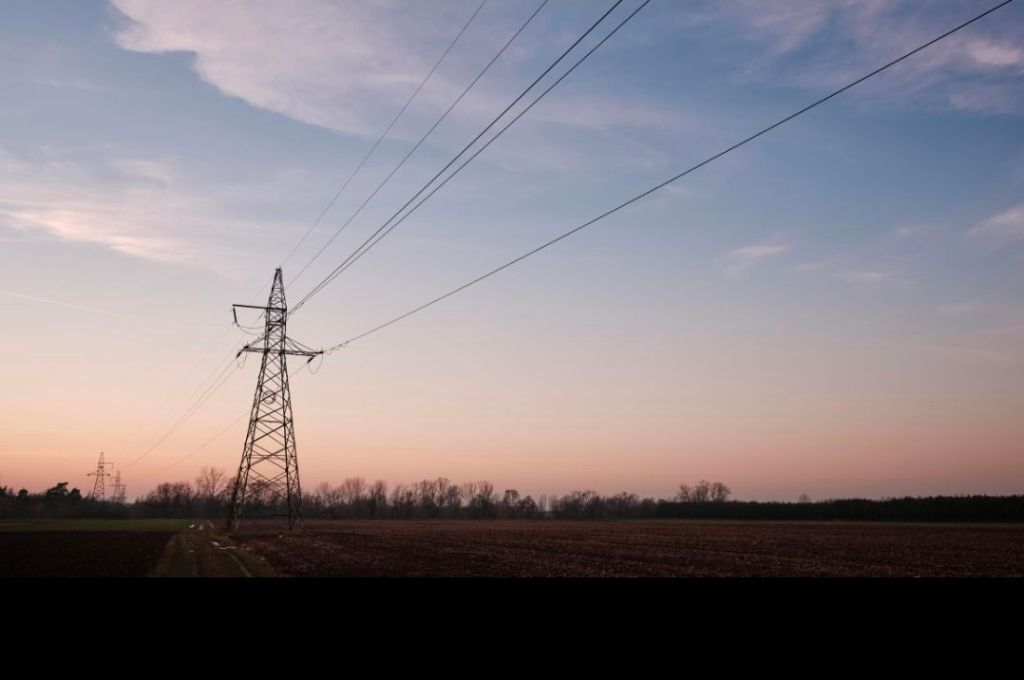
The geography of Rutland and the Stamford corridor makes this outcome unsurprising. Power from this area feeds into routes already heavily burdened by solar and battery proposals heading toward Eaton Socon, Corby, Peterborough and Staythorpe. These corridors appear repeatedly in constraint data as locations where generation has outpaced the transmission infrastructure required to carry it. Reinforcement projects for these routes are scheduled many years into the future. In simple terms, there is nowhere for the electricity to go.
What makes Kilnside important is not the withdrawal itself, but what it reveals about a growing contradiction. Planning authorities continue to assess solar farms on landscape, ecology and local impact, often assuming that grid capacity exists somewhere beyond the horizon. Meanwhile, the system operator is increasingly clear that, in many regions, it does not.
Kilnside appears to be one of the first visible examples where that contradiction has forced a developer to step back. The issue was not local opposition, visual impact, or biodiversity. It was the hard physical limit of the network.
This is likely to become a pattern seen across England during 2026 and beyond. Dozens of schemes currently moving through planning only hold Gate 1 positions. Many will struggle to pass Gate 2. Without a viable grid connection, they cannot export power. Without the ability to export power, they are not commercially viable. Yet they are still being considered for approval.
The phrase “No Grid = No Approval” is not a slogan but an emerging reality. If a project cannot demonstrate a deliverable connection within a realistic timeframe, the planning system is being asked to consent to infrastructure that cannot function as intended.
Kilnside is significant because it shows the first crack where this reality has surfaced publicly. Residents saw a planning issue. What actually stopped the project was physics.
As more developers encounter the same barrier, similar language will begin to appear elsewhere: reviews, pauses, reassessments, and quiet withdrawals. Each one will signal the same underlying problem. The grid has reached its limit long before the planning system has realised it.
Kilnside may prove to be the first domino to fall.
Footnotes
1. National Energy System Operator, Gate reform documentation and connection queue restructuring guidance.
2. Public project material from Kilnside Energy Park confirming Gate 1 status prior to withdrawal.
3. Constraint and reinforcement timelines for the East Midlands and East of England transmission corridors published in National Grid and NESO planning data (2024–2026 updates).
Shane Oxer. Campaigner for fairer and affordable energy
 SAY NO TO THE DESTRUCTION OF OUR LAND
Leave a comment