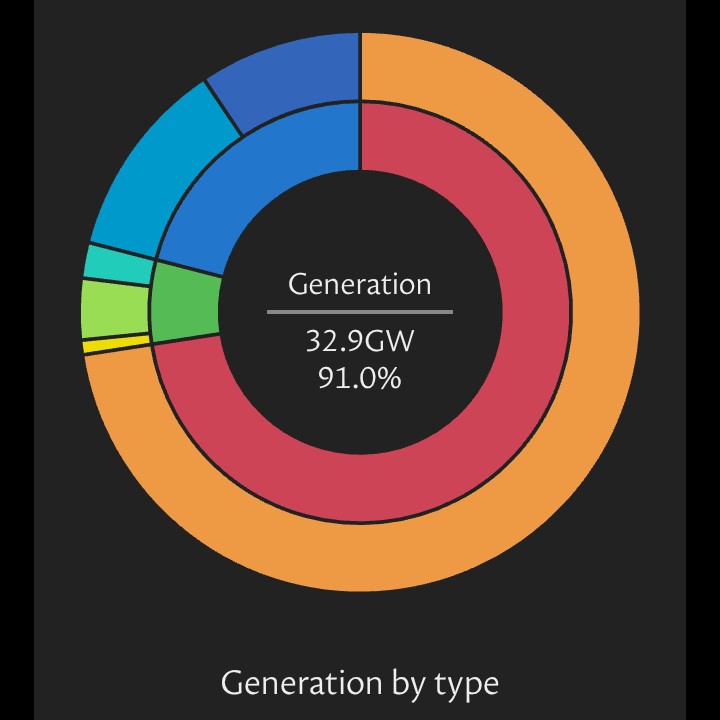
For years we were told high energy bills were “Putin’s fault”. That once gas prices fell, electricity would become cheap again.
Gas prices have fallen.
Bills haven’t.
Now the chief executive of Centrica , owner of British Gas , has shattered the narrative.
Chris O’Shea says electricity prices in 2030 will be higher than at the peak of the Ukraine crisis. And only one-third of the bill will be wholesale energy. The other two-thirds? “System costs.”
That means pylons. Grid expansion. Backup payments. Constraint payments. Balancing weather-dependent supply.
Infrastructure debt locked into bills for decades.
This is not a temporary spike.
It is structural.
For years campaigners warned that replacing reliable generation with intermittent supply , while electrifying transport, heating and industry at speed , would not make electricity cheaper. It would shift the cost from fuel to infrastructure.
From markets to networks.
From volatility to permanent charges.
Now the industry itself is saying it.
The £300 bill reduction promise? Mathematically implausible unless the burden is simply shifted from energy bills to taxation. And taxpayers are the same people as billpayers.
This is no longer a fringe argument. It’s boardroom arithmetic.
Britain hasn’t just changed its energy mix. It has hardwired higher system costs into the future.
Build Twice. Pay Twice.
Britain’s energy policy is rebuilding the system twice , once for new intermittent generation, and again for the infrastructure required to support it. New wind and solar capacity. Expanded transmission lines. Reinforced local networks. Backup gas plants. Constraint payments when the wind blows too hard. Balancing costs when it doesn’t blow at all.
That duplication is embedded into regulated charges for decades.
When you build twice, consumers pay twice.
And that means permanent upward pressure on energy bills.
Shane Oxer. Campaigner for fairer and affordable energy
 SAY NO TO THE DESTRUCTION OF OUR LAND
Leave a comment