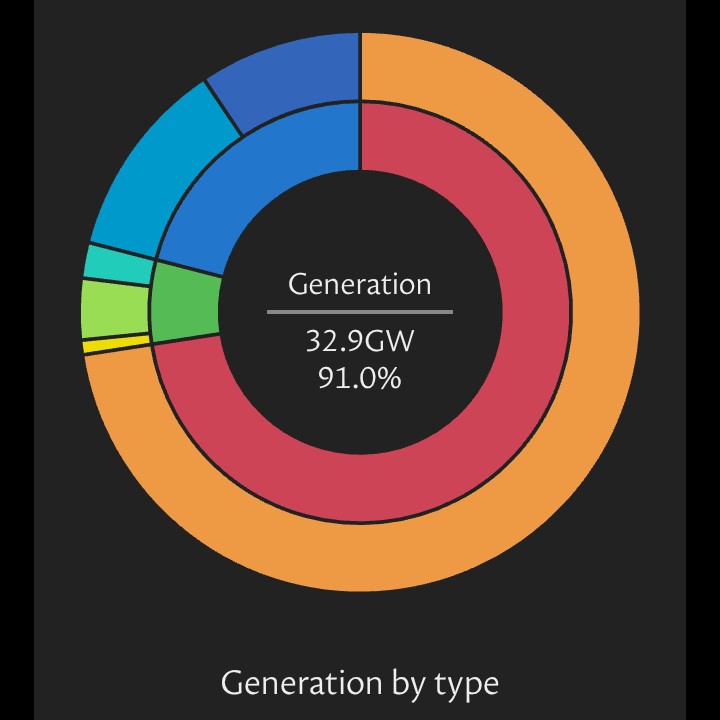
As Britain doubles down on intermittent generation, consumers face the mounting cost of a grid designed to chase the weather rather than deliver reliable power
Ministers talk endlessly about investment, growth and green ambition. But beneath the rhetoric lies a far simpler question: are we building an electricity system that actually works , or one that permanently drives up costs?
The question nobody is asking
Britain is in the middle of the largest transformation of its energy system since the dawn of electrification, yet the most important question is barely discussed. Not how fast we build, nor how much we spend, but whether the architecture itself makes sense. Strip away the targets and glossy forecasts and the reality is stark: we are constructing a power system that must constantly compensate for its own instability and the costs are only just beginning to emerge.
We are building a power system that must constantly compensate for its own instability and consumers are paying the price.
There is a peculiar ritual at the heart of Britain’s energy debate. Ministers announce grand plans. Consultants publish glossy reports. Economists model billions in “economic uplift”. And somewhere in the noise, the one thing that actually determines whether the lights stay on , physics , is quietly ignored.
A system built to chase the weather
Take the latest claims that tens of billions spent on the grid will unlock vast economic growth. Perhaps it will. Infrastructure spending often does. But this misses the fundamental question: are we expanding the grid because demand requires it , or because we have chosen an energy system that cannot function without ever-larger networks?
Because once you strip away the politics, what remains is brutally simple. Modern economies require firm, reliable power , continuously, predictably, through cold winter evenings when demand peaks and renewable output collapses.
For more than a century, electricity systems were designed around this reality. Coal, gas, hydro and nuclear provided constant output. Networks were built to distribute power, not chase it across continents depending on the weather. The result was stability, affordability and resilience.
Today, Britain is dismantling that architecture and replacing it with something far more complex and far more expensive.
The rising cost of complexity
We are building a system dominated by intermittent generation, then constructing vast transmission corridors and balancing mechanisms to compensate for its variability. When the wind drops, we scramble for backup. When output surges, we pay generators to switch off. When neither cooperate, we import power at whatever price the market demands.
Constraint payments to wind farms , paying generators to curtail output because the grid cannot absorb it , have run into hundreds of millions annually in recent years, while system balancing costs have risen sharply as operators work harder to keep supply and demand aligned.
The grid is becoming less a network and more a giant weather-management machine.
Solar in Britain produces only a fraction of its theoretical capacity over a year and far less in winter, while wind output can swing dramatically over days. Neither provides the steady inertia that keeps a grid stable.
To compensate, the system must overbuild generation, networks and backup capacity , all paid for by consumers.
Grid expansion is the symptom, not the solution
The scale of grid expansion tells its own story. Multi-billion-pound reinforcement programmes across the East Coast and northern England are being built not simply because demand is rising, but because generation is increasingly located far from where electricity is needed.
Of course spending tens of billions on infrastructure will create jobs. So would building a motorway to nowhere. The real test of infrastructure is not whether it boosts GDP in the short term but whether it delivers the lowest long-term cost and highest reliability for the economy it serves.
On that measure, Britain’s trajectory looks increasingly questionable.
The alternative hiding in plain sight
Firm, synchronous generation , particularly nuclear , fundamentally changes system economics. High capacity factors mean far less overbuild.
Predictable output reduces balancing costs. Localised generation reduces the need for sprawling transmission expansion. System stability improves because large turbines provide inertia naturally rather than through expensive electronic substitutes.
A firm-power system is simpler and simplicity is almost always cheaper.
But Britain has drifted into a framework that treats intermittent generation as the backbone of the system, with nuclear as an occasional supplement rather than the foundation. The result is a strategy that assumes ever-growing complexity and ever-rising costs , as unavoidable.
Winter exposes the risk
The risks become most apparent during winter, when demand peaks but solar output collapses and wind generation can fall sharply during periods of high pressure. In recent winters, system operators have warned about tight capacity margins, relying on imports and reserve generation to ensure supply.
None of this is an argument against renewables altogether. Wind and solar have roles to play where they complement firm generation rather than replace it. But building a national system around intermittent power is like designing a transport network around bicycles and then wondering why you need so many lorries to keep it running.
The real choice
The uncomfortable truth is that Britain is not facing an energy crisis because of a lack of investment. We are facing it because of a lack of clarity about what kind of system we are trying to build.
Do we want the cheapest reliable electricity possible , or do we want to maximise renewable deployment and manage the consequences? Those are not the same objective.
Because in the end, electricity systems are not governed by political ambition or economic modelling. They are governed by engineering reality.
Britain can ignore the laws of economics for a while , but it cannot ignore the laws of physics, and the bill is already in the post
References
1. National Grid ESO — Balancing and constraint cost data
2. Ofgem system operation reports
DESNZ electricity generation statistics
3. National Grid Great Grid Upgrade programme
4. National Grid Winter Outlook reports
Shane Oxer. Campaigner for fairer and affordable energy
 SAY NO TO THE DESTRUCTION OF OUR LAND
Leave a comment