Why the Net Zero Delivery Model Fails and the Alternative Pathway
The economic debate around energy and climate policy is often framed as a choice between environmental responsibility and economic growth. But this framing is misleading. The real issue is not whether climate risks exist. It is whether the policy model adopted by Western governments is economically rational, technologically realistic, and capable of sustaining industrial prosperity.
Across Europe and the United Kingdom, the delivery model for Net Zero has evolved into a high-cost, high-complexity system that is driving structural inflation, weakening industrial competitiveness, and increasing reliance on imports. This phenomenon , often described as “greenflation” is no longer theoretical. It is visible in energy bills, industrial closures, and declining investment.
The core problem is not the objective of reducing emissions. It is the method chosen to achieve it.
The Rise of Greenflation
Greenflation refers to persistent inflationary pressure caused by the cost of decarbonisation policies and infrastructure. Unlike traditional inflation driven by demand or supply shocks, greenflation is policy-driven cost inflation embedded into the structure of the economy.
It emerges through four primary mechanisms.
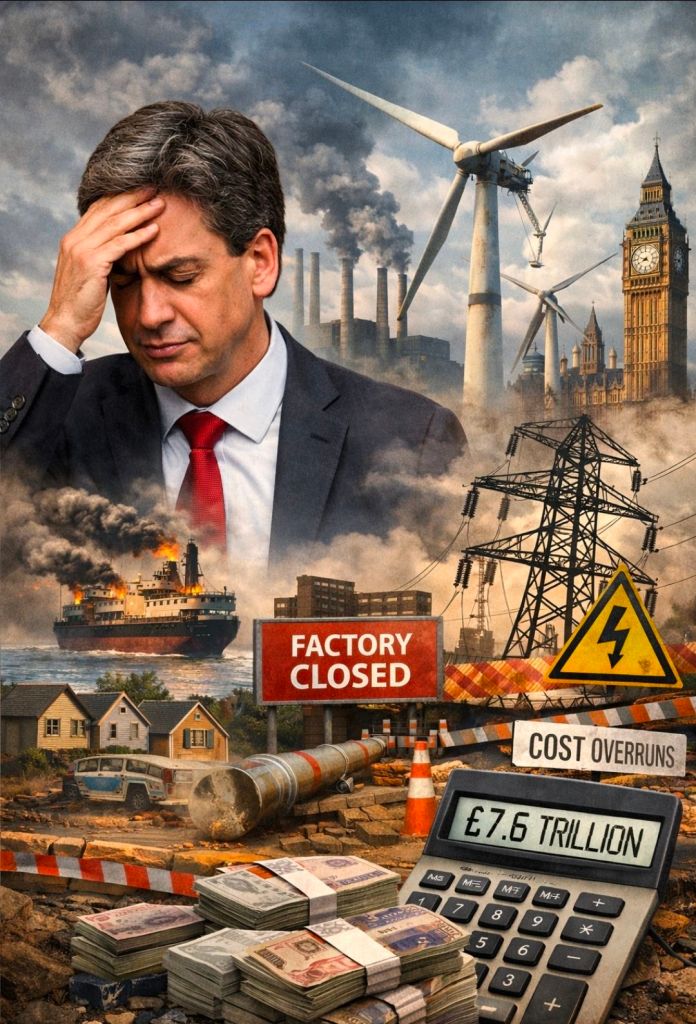
First, carbon pricing raises the marginal cost of energy. Emissions trading schemes and carbon taxes increase the cost of electricity generation where fossil fuels remain on the margin, feeding directly into industrial and consumer prices.
Second, large-scale infrastructure expansion , particularly grid reinforcement and electrification , requires enormous capital investment. These costs are ultimately recovered through network charges, taxes, or public borrowing, creating a long-term upward pressure on bills.
Third, supply chain constraints for critical materials such as copper, transformers, and specialist electrical components have created a scarcity premium. As electrification accelerates globally, competition for these inputs increases costs across the system.
Fourth, policy uncertainty raises the cost of capital. Investors price regulatory risk into infrastructure and industrial projects, increasing financing costs and slowing deployment.
Together, these forces create a structural inflationary environment that is difficult to reverse once embedded.
Why the Current Net Zero Delivery Model Is Economically Destabilising
The current policy framework relies heavily on rapid electrification combined with large-scale deployment of intermittent renewable generation. This model assumes that grid expansion, storage technologies, and backup generation will scale smoothly to maintain system reliability.
In reality, this assumption is proving increasingly fragile.
Grid infrastructure projects are facing delays, cost overruns, and local opposition. Transmission and distribution networks require deep reinforcement to accommodate new demand and generation patterns, pushing large portions of planned upgrades into the 2030s and beyond.
At the same time, the intermittency of wind and solar generation increases system balancing costs, constraint payments, and the need for backup capacity. These system costs are rarely visible in headline policy announcements but are recovered through bills and taxes.
The result is a highly complex electricity system with rising operating costs and declining predictability , a poor foundation for industrial competitiveness.
The Impact on Industry and Investment
Energy is a foundational input into the economy. When electricity and gas prices rise relative to competitor economies, the effects ripple across manufacturing, chemicals, steel, food production, and engineering.
Higher energy costs compress industrial margins, reduce incentives for capital investment, and accelerate offshoring of production. Over time, this leads to lower productivity growth, weaker real wage growth, and a shrinking industrial base.
The United Kingdom already faces some of the highest industrial electricity prices among advanced economies. This gap acts as a structural disadvantage in attracting manufacturing investment.
When combined with higher interest rates driven by persistent inflation, the result is a negative feedback loop: higher costs reduce investment, lower investment weakens growth, and weaker growth limits fiscal capacity.
The Fiscal and Monetary Consequences
Greenflation does not only affect households and businesses. It also places pressure on public finances and monetary policy.
Higher energy and infrastructure costs contribute to higher inflation, forcing central banks to maintain tighter monetary conditions for longer. Higher interest rates increase the cost of government borrowing, crowding out productive public investment.
Meanwhile, large subsidy programmes and infrastructure spending commitments increase fiscal exposure, particularly if projected cost reductions fail to materialise.
This creates a situation where governments are simultaneously trying to stimulate growth while implementing policies that increase the cost base of the economy.
Why the Model Persists
Despite these economic pressures, the current model persists due to a combination of political commitments, institutional momentum, and industrial strategy considerations.
Climate targets embedded in legislation create legal obligations that shape policy decisions. Regulatory institutions and funding programmes reinforce the direction of travel. And governments seek to position themselves within emerging global clean technology markets.
However, these motivations do not eliminate the need for economic realism.
The Alternative Pathway: A Supply-Focused Energy Strategy
An alternative approach does not require abandoning emissions reduction altogether. It requires prioritising affordability, reliability, and industrial competitiveness.
The core principles of an alternative pathway are straightforward.
First, prioritise firm and dispatchable generation to stabilise electricity markets and reduce system costs. Reliable baseload power reduces balancing requirements, lowers constraint costs, and provides predictable pricing for industry.
Second, adopt a more selective and economically rational approach to grid expansion, focusing on projects that deliver clear reliability or security benefits rather than building ahead of uncertain demand projections.
Third, reassess carbon pricing mechanisms to ensure they do not impose disproportionate costs on domestic industry relative to international competitors.
Fourth, accelerate permitting and regulatory processes to reduce project timelines and lower financing costs for energy infrastructure and industrial investment.
Fifth, align energy policy with a broader industrial strategy that supports domestic production, supply chain resilience, and long-term productivity growth.
Economic Benefits of a Reset
A supply-focused energy strategy can deliver several economic advantages.
Lower and more stable energy prices reduce inflationary pressure and support real wage growth. Improved industrial competitiveness encourages investment and reshoring of production. Lower system complexity reduces long-term fiscal exposure. And greater energy security reduces vulnerability to external shocks.
Most importantly, a stable and affordable energy system provides the foundation for sustained economic growth.
Conclusion
The challenge facing Western economies is not the pursuit of environmental goals, but the economic consequences of the delivery model chosen to achieve them.
Greenflation and deindustrialisation are not inevitable outcomes of climate policy. They are the result of a strategy that prioritises rapid transformation without sufficient regard for system costs, infrastructure constraints, and industrial competitiveness.
The question is not whether to act, but how to act wisely.
A more balanced approach , grounded in supply security, economic realism, and technological pragmatism , offers a pathway to both environmental progress and economic resilience.
 SAY NO TO THE DESTRUCTION OF OUR LAND
Leave a comment