The greed of the speculator knows no bounds
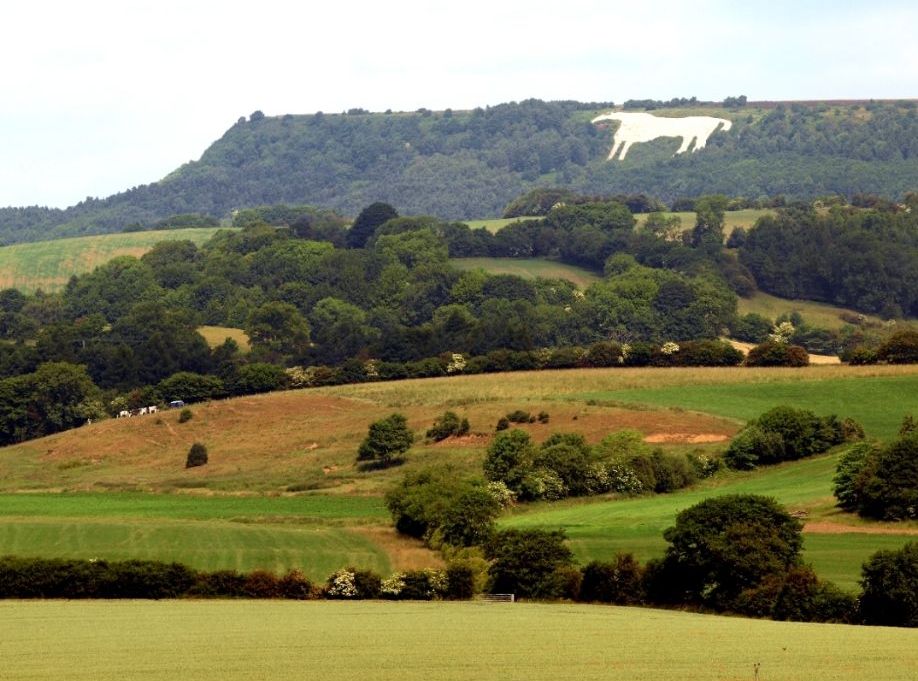
Stand beneath the escarpment of the Hambleton Hills and look up at the White Horse carved into the hillside.
The Kilburn White Horse has watched over the Vale of York for generations. It is not simply a tourist landmark. It is part of the identity of North Yorkshire , a symbol visible for miles, sitting just beyond the boundary of the North York Moors National Park.
Below that escarpment lies rolling farmland. Hedgerows. Ancient woodland. Working fields that have fed livestock and sustained rural communities for decades.
And now , 420 hectares of it are earmarked for industrial solar development.
This is the proposed Sedgeby Solar Farm, an enormous Nationally Significant Infrastructure Project near Little Sessay.
It would stretch across two vast land parcels , Briar Hill and Sessay Park , covering productive farmland with rows of steel frames and glass panels up to 3.5 metres high, alongside 350 megawatts of battery storage.
Forty years of industrialisation.
All in the name of energy transition.
But when you look beyond the glossy language of “renewables” and “net zero,” the question becomes unavoidable:
Is this really about energy security — or about land speculation dressed up as climate virtue?
The Scale They Don’t Want You to Visualise
Four hundred and twenty hectares.
That is not a field. It is not a small rural scheme tucked discreetly behind hedgerows.
It is a landscape transformation.
The development would:
Install up to 350MW of solar generation.
Add a further 350MW of Battery Energy Storage Systems (BESS).
Fence the land with 2-metre deer fencing and CCTV.
Operate for 40 years , until 2073.
Enclose areas around listed buildings.
Extend to the edge of sensitive ecological sites.
This is not “temporary.”
It is an industrial estate in the countryside.
And it sits adjacent to Pilmoor SSSI , a Site of Special Scientific Interest. It lies within view corridors that form the wider landscape setting of the Hambleton escarpment. It is near conservation areas and listed heritage assets.
The view from the White Horse will not include tidy hedgerows and grazing cattle.
It will include steel, glass, fencing, transformers, substations and battery compounds.
A Weak Energy System Disguised as Progress
Solar generation in North Yorkshire is profoundly seasonal.
In summer, panels overproduce when national demand is relatively low.
In winter , when electricity demand peaks , output collapses.
That is not opinion. It is physics. The UK sits at a latitude where winter solar generation is minimal. December and January output is a fraction of summer levels.
So what does that mean?
It means that a 350MW solar farm does not provide 350MW of firm, dispatchable winter power.
It provides intermittent generation that must be balanced elsewhere , usually by gas, imports, or curtailment.
And so batteries are added.
Another 350MW of BESS is proposed on site.
But batteries do not generate energy.
They store excess generation for a few hours , typically 2 to 4 hours , before they are depleted. They are not seasonal storage. They cannot carry the system through prolonged winter lulls.
This is not energy resilience.
It is system patchwork.
The Grid Question They Can’t Yet Answer
Perhaps the most telling detail of all is this:
The off-site grid connection is not defined.
The project has only a preliminary “Gate 1” status under the reformed connection process.
That means no confirmed configuration, no confirmed cost, no confirmed programme, and no finalised point of connection.
The proposed 400kV substation location near Thormanby is still under review.
In other words:
The countryside footprint is known.
The fencing layout is known.
The battery compound is known.
The lifespan is known.
But the grid solution , the critical infrastructure that determines whether the project can even export reliably , is not yet fixed.
We are being asked to industrialise 420 hectares of North Yorkshire countryside before the full electrical consequences are understood.
That is not careful planning.
That is speculative positioning.
The Speculator’s Model
Let’s be clear about how this works.
Large-scale solar NSIPs are often promoted by development arms backed by international capital. Land is secured under option agreements. Grid positions are pursued. Projects are taken through planning and DCO processes.
Once consented, the asset value increases dramatically.
It may then be:
Sold.
Partially sold.
Re-financed.
Or retained for subsidy-backed revenue.
The landscape is permanent.
The investor may not be.
And this is where the phrase matters:
The greed of the speculator knows no bounds.
When grid reform opens windows of opportunity, speculative projects flood in. When subsidy regimes change, development surges. When land values can be leveraged through energy branding, farmland becomes a financial instrument.
The narrative becomes climate urgency.
The driver becomes asset appreciation.
What Happens to Rural Character?
Planning documents speak of buffers.
They speak of mitigation planting.
They speak of “landscape and ecological enhancement.”
But what cannot be mitigated is scale.
A 420-hectare array changes how land feels. It changes openness. It changes horizon lines. It changes the relationship between villages and fields.
Little Sessay and Sessay Conservation Area sit within this setting. Listed buildings lie nearby. Public rights of way cross the parcels.
For forty years, walkers will not traverse agricultural countryside.
They will walk beside industrial fencing.
You cannot plant a hedge high enough to disguise a solar estate of this size from elevated land.
And from the slopes of the Hambleton Hills, that transformation will be visible.
The National Context
This is not an isolated proposal.
Across Yorkshire, large solar NSIPs are proliferating. Thousands of acres are under option or in scoping.
All justified under national targets.
All framed as essential.
Yet the structural problems remain:
Grid constraints across northern regions.
Curtailment payments when generation exceeds transmission capacity.
Winter shortfalls.
Rising standing charges.
Increasing reliance on gas during low-renewable periods.
If this is energy strategy, it is an inefficient one.
If this is environmental protection, it is a contradictory one.
We are sacrificing high-quality farmland and historic landscape character for infrastructure that does not deliver firm winter resilience.
A Better Question
What if we asked a different question?
Instead of:
“How quickly can we cover land with panels?”
What if we asked:
“How do we rebuild a resilient grid before we industrialise more countryside?”
What if we prioritised:
Grid reinforcement first.
Dispatchable generation.
Rooftop and brownfield solar.
Genuine seasonal storage solutions.
Demand-side management reform.
What if we recognised that energy sovereignty does not require the sacrifice of heritage landscapes at this scale?
The View That Matters
Look again at the White Horse.
That hillside figure has endured because people valued landscape enough to protect it.
It represents continuity , something bigger than short-term financial cycles.
When you stand in the Vale of York and see that bright white outline against the green escarpment, you are looking at cultural memory.
The question facing North Yorkshire is simple:
Do we treat that setting as expendable?
Or do we recognise that some landscapes are worth defending , not because they resist progress, but because they define who we are?
Final Thought
Energy reform is necessary.
Grid improvement is necessary.
Lower bills are necessary.
But the industrialisation of 420 hectares of historic countryside , for a system that cannot guarantee winter resilience and does not yet have a defined grid solution , is not inevitability.
It is choice.
And when speculation begins to dictate landscape change, when international capital sees rural England as an opportunity rather than a heritage, when planning is asked to accommodate uncertainty rather than clarity.
Then yes, we are entitled to say:
The greed of the speculator knows no bounds.
North Yorkshire deserves better than becoming collateral in a weak energy experiment.
And the White Horse deserves to look out over fields , not fencing.
Shane Oxer. Campaigner for fairer and affordable energy
 SAY NO TO THE DESTRUCTION OF OUR LAND
Leave a comment