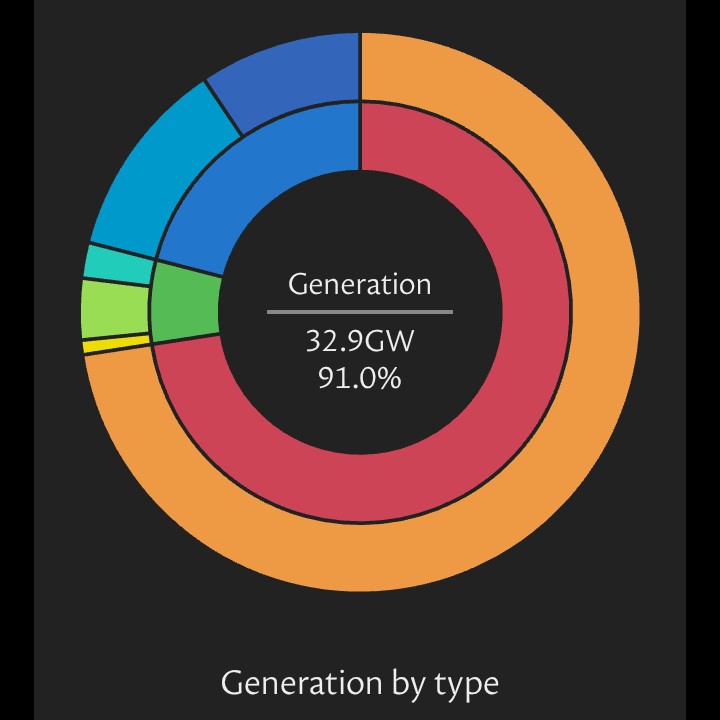
The Government says Britain must go “further and faster” in its pursuit of energy security. In a press release on 15 March 2026, Energy Secretary Ed Miliband and the Department for Energy Security and Net Zero unveiled a package of measures designed to accelerate the country’s transition to so-called clean power.
The announcement includes another rapid renewables auction, the rollout of small “plug-in” solar panels for homes and balconies, and additional support for heat pumps and home energy upgrades. The tone of the statement is confident and urgent.
The message is clear:
Britain must move quickly to secure its energy future.
Yet beneath the rhetoric lies an uncomfortable truth. Britain’s electricity grid is already struggling to cope with the renewable projects that have been approved. The infrastructure needed to carry new power across the country is years behind where it needs to be.
Put simply, the Government is accelerating the construction of new power sources without ensuring the network can actually connect them.
Britain’s electricity system was originally designed around large, predictable power stations. Coal, gas and nuclear plants supplied stable alternating current to the grid, allowing engineers to balance supply and demand with remarkable reliability.
That model is now being rapidly replaced by wind farms and solar installations spread across the country and offshore. These technologies depend entirely on weather conditions. Wind output rises and falls with the wind speed. Solar production collapses in winter and disappears entirely at night.
As a result, the grid must now cope with sudden surges of electricity during windy or sunny periods, followed by sharp drops in generation when conditions change. Managing such a system requires vast upgrades to transmission lines, substations and transformers.
Those upgrades, however, are not keeping pace.
Across the UK hundreds of generation projects are currently waiting in the grid connection queue. Many have connection dates stretching into the mid-2030s. The system operator – formerly National Grid ESO and now the National Energy System Operator – has repeatedly warned that grid constraints are becoming one of the biggest obstacles to delivering government energy policy.
In several parts of the country the network is already effectively full.
Despite this, ministers are pressing ahead with another round of renewable energy auctions. These auctions invite developers to build new wind and solar projects backed by long-term government contracts.
Officials claim previous auctions have secured enough “clean power” to supply 23 million homes. It is a figure frequently repeated in press releases.
But it is also highly misleading.
Such numbers refer to theoretical generating capacity averaged over a year. They do not represent the electricity actually available to households at the moment it is needed.
Wind and solar power do not operate continuously. Offshore wind typically delivers around 40–50 per cent of its potential output over a year, while onshore wind performs closer to 25–35 per cent. Solar generation is lower still, averaging roughly 10–12 per cent in the UK climate.
More importantly, solar production drops dramatically during winter – precisely when electricity demand is at its highest.
Energy systems must meet demand every second of every day. Annual averages are of little comfort on a cold January evening when the sun has set and the wind is not blowing.
The Government’s proposal to introduce plug-in balcony solar panels illustrates the wider problem. These small devices, already popular in parts of Europe, typically generate between 300 and 800 watts.
A typical British household consumes around 3,500 kilowatt-hours of electricity each year. At best, a balcony solar panel might produce a few hundred kilowatt-hours annually.
That may shave a small amount from summer electricity bills. It does nothing to solve Britain’s winter energy challenge.
The real test of any electricity system arrives during cold winter evenings. Demand peaks between four and seven o’clock, when homes require lighting, heating and appliances simultaneously.
At that moment solar generation is effectively zero. Wind output is unpredictable. The grid therefore relies heavily on dependable, dispatchable power sources such as gas or nuclear stations.
Without them the risk of blackouts increases sharply.
Yet the direction of policy continues to prioritise intermittent generation over reliable capacity. The contradiction is becoming increasingly difficult to ignore.
Perhaps the most revealing aspect of Britain’s energy transition is the growing grid connection queue. Hundreds of renewable projects have been approved but cannot connect because the transmission network lacks capacity.
Major reinforcements – new substations, upgraded transmission corridors and replacement transformers – must be built before those projects can operate. Many of these upgrades will not be completed until the 2030s.
Approving additional generation does not solve the problem. It simply lengthens the queue.
The deeper issue is that Britain’s energy policy has become driven by political targets rather than engineering realities.
Carbon budgets and renewable deployment goals have created enormous pressure to build generation quickly.
But electricity systems are among the most complex engineering networks ever constructed. They cannot be transformed overnight.
When policy moves faster than infrastructure, the consequences are predictable:
rising costs, wasted electricity and growing risks to system stability.
All three are already beginning to appear in the UK energy system.
The Government insists the country must move “further and faster”. But moving faster in the wrong direction does not bring us closer to energy security.
Without serious investment in grid infrastructure and reliable generation, Britain risks building an energy system that looks impressive on paper but struggles to function in practice.
Energy security is not achieved through slogans or press releases. It is achieved through engineering, infrastructure and reliability.
Until those fundamentals return to the centre of policy, Britain’s energy strategy will continue racing ahead – towards the wrong destination.
Britain doesn’t just have an energy problem , it has a reality problem, and Ed Miliband’s energy strategy is fast becoming the cause.
Shane Oxer. Campaigner for fairer and affordable energy
 SAY NO TO THE DESTRUCTION OF OUR LAND
Leave a comment