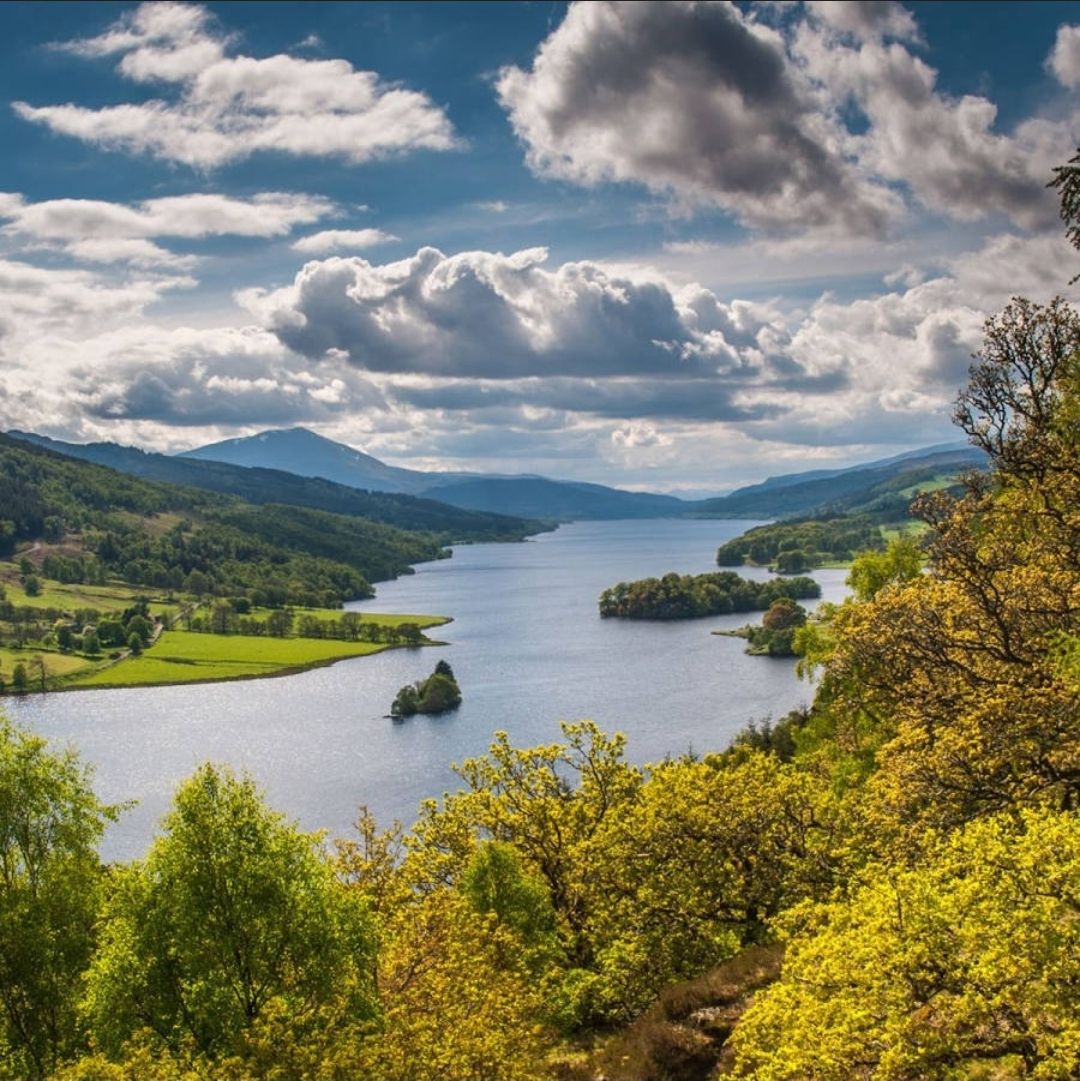
When you look out across scenery like this in Scotland, you are not looking at empty land.
You are looking at beauty that has stood there long before any of us and, if we have any sense, should still be there long after we are gone. You are looking at lochs, hills, woodland, open sky and silence that speak to the soul of a nation. Places like this are not just nice views for tourists. They are part of who we are. They are part of our history, our inheritance and our identity.
So why on earth would anyone want to put wind turbines, pylons, substations and grid infrastructure across somewhere so beautiful?
That is the question more and more ordinary people are now asking.
Because to most decent people, a landscape like this is something to admire, protect and pass on. But to governments, developers and net zero ideologues, it has become something else. It has become a site. A corridor. A connection point. A development zone. A place to exploit in the name of progress.
That is the real problem.
Once policy makers stop seeing beauty and start seeing only megawatts, the destruction begins. The hills become “capacity.” The glens become “opportunity.” The skyline becomes “suitable for infrastructure.” And the people expected to live with it are told to accept it for the greater good.
But what greater good destroys the very landscape people love?
Scotland is one of the most beautiful countries in the world. Its wild land, dramatic views and open spaces are not a burden to be managed. They are a gift. Yet more and more of it is being treated like some giant industrial platform for wind factories and transmission routes. Towering turbines dominate hills that should remain untouched. Pylons carve through open country. Access roads rip into fragile ground. Substations and cables spread the industrialisation even further.
And then we are expected to call this green.
There is nothing green about scarring a beautiful landscape with concrete, steel and cables. There is nothing environmentally noble about turning peaceful countryside into an industrial energy zone. And there is certainly nothing moral about telling local people they must sacrifice the places they love because someone in an office has decided the target matters more than the view, the habitat, the heritage or the peace.
This is where the whole argument has become twisted.
People who defend landscapes are too often smeared as selfish or anti-progress. But what is selfish is destroying a nation’s natural beauty for political vanity projects. What is backward is pretending that covering the countryside with industrial infrastructure is some enlightened vision of the future. What is reckless is treating Scotland’s most treasured scenery as expendable.
Some places should simply be left alone.
That should not be a controversial thing to say. In fact, it should be common sense. A civilised country should know that not every hill needs a turbine, not every valley needs cables, and not every beautiful skyline should be surrendered to industrial development. Once these places are scarred, they are not truly restored. The damage remains. The character is altered. The sense of wildness is lost. And what took centuries to shape can be ruined in a matter of months.
That is why this matters so much.
This is not only about planning policy. It is about values. It is about whether we still believe beauty has meaning beyond money and targets. It is about whether we think Scotland’s landscapes are worth more as living heritage than as hosts for another round of infrastructure. It is about whether we are prepared to say enough.
Because if we do not say it now, when do we say it?
When every horizon is lined with turbines?
When every peaceful route through the countryside is overshadowed by pylons?
When the lochs and glens that once inspired pride become just another part of the grid map?
By then it will be too late.
Scotland’s beauty is not renewable once it is industrialised. That is the truth politicians rarely admit. They talk endlessly about renewable energy, but almost never about the irreversible loss caused by the infrastructure built to support it. They measure output in power, but they never measure what it costs a nation to lose the character of its land.
And that cost is real.
It is felt by the people who live there. It is seen by the people who visit. It is carried by the generations who inherit less than what came before.
We should be protecting Scotland’s most beautiful places, not sacrificing them. We should be defending them with pride, not apologising for speaking up. We should be asking why policy always seems to demand destruction from the countryside while those making the decisions suffer none of the consequences themselves.
The beautiful scenery of Scotland is not something to be conquered by infrastructure.
It is something to be cherished.
And the scarring must stop.
Shane Oxer. Campaigner for fairer and affordable energy
 SAY NO TO THE DESTRUCTION OF OUR LAND
Leave a comment