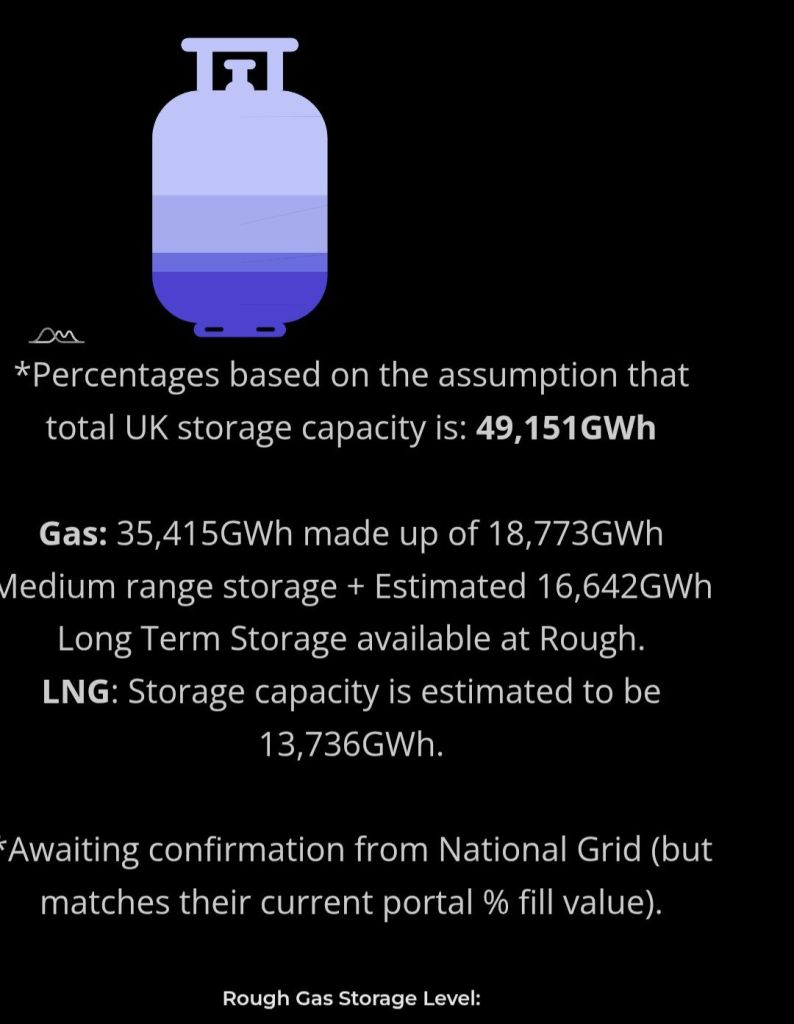
At the end of winter 2025/26, UK gas storage stood at around 9.45 TWh. Depending on the capacity measure used, that left the country with only around a fifth to a quarter of available storage filled. In practical terms, that is a very thin buffer for a country still heavily dependent on gas for heating, industrial use, and flexible power generation.
This should already have set alarm bells ringing across government. Instead, ministers continue to act as though this is manageable, normal, or somehow acceptable. It is none of those things. Britain remains scandalously exposed compared with many of its European neighbours because it has failed for years to invest properly in gas storage. We operate with a just-in-time mindset in an increasingly unstable world, as though global markets will always deliver exactly what we need, exactly when we need it, at a price the country can bear.
That illusion is now colliding with reality.
New reporting at the end of March 2026 made the position much worse. Norwegian pipeline maintenance, confirmed by Gassco and widely reported, will cut gas flows to the UK and Europe during crucial summer months. Initial reductions of around 50 million cubic metres a day are expected through April to June, with sharper short-term curtailments reaching as much as 180 million cubic metres a day. A second phase in August and September is expected to remove roughly 75 million cubic metres a day for much of that period. With normal daily flows to the UK and Europe sitting around 350 million cubic metres, these are not minor technical adjustments. They are serious supply constraints arriving exactly when Britain most needs to rebuild its reserves.
That matters because summer is not a quiet irrelevance in the gas system. Summer is the refill season. It is the period when storage sites are supposed to be replenished in preparation for the next winter. If Norwegian flows are reduced during that injection window, Britain and Europe will be forced to rely more heavily on LNG cargoes in a global market that is already tense and politically exposed.
In other words, we are entering the refill season weak, and the refill season itself is being compromised.
This is how crises are created.
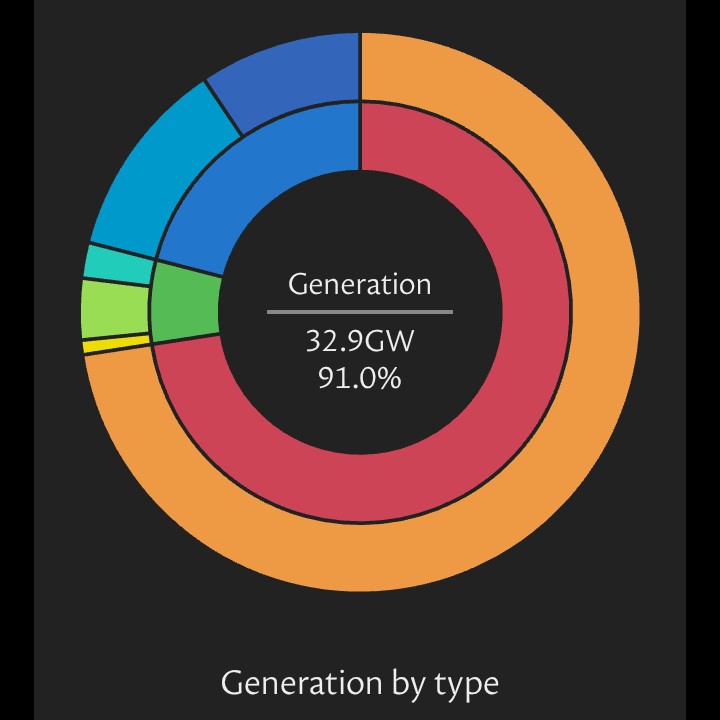
The British public has repeatedly been told that renewables are making us more secure. That claim now looks increasingly detached from physical reality. Solar power does not solve this problem. It cannot solve this problem. British solar output is weakest in the very months when gas demand is highest. Winter evenings, when demand peaks and pressure on the system is greatest, are precisely when solar contributes next to nothing. Batteries do not solve it either. Batteries can help smooth short-term fluctuations over a matter of hours, but they do not provide seasonal energy storage. They do not heat homes in a prolonged cold spell. They do not replace weeks or months of secure gas supply.
This is the central lie at the heart of Miliband’s energy posture. He acts as though intermittent generation can substitute for firm supply. It cannot. It can only operate alongside firm supply. Strip out or weaken the reliable backbone, and the whole system becomes fragile.
Gas still dominates domestic heating. Gas still underpins industrial energy use. Gas still provides essential flexible generation when wind and solar underperform. That is not ideology. That is system reality.
Meanwhile, domestic production is moving in the wrong direction. The North Sea Transition Authority projected UK Continental Shelf production falling from 24.6 bcm in 2025 to 21.3 bcm in 2026, with steeper decline thereafter. Britain is therefore becoming more import dependent at exactly the same time as one of its most important external supply routes is facing significant maintenance-related disruption. This is not a resilient transition. It is a managed weakening of national capability.
And yet DESNZ and NESO still present overly comfortable narratives about “sufficient margins” and market flexibility. Time and again, the public is reassured that interconnectors, batteries, imported LNG, and average weather assumptions will somehow keep everything in balance. But average-case assumptions are not energy security. Security exists to withstand stress, not merely to function in favourable conditions.
A genuinely serious government would stress-test the system against bad outcomes. It would ask what happens if storage starts low, Norwegian flows are reduced, LNG is diverted by geopolitical tensions, and Britain experiences a colder-than-average winter. It would ask what happens if these events overlap, because that is precisely how real energy emergencies develop.
Instead, official modelling too often smooths over exactly the dangers that matter most. Low-probability but high-impact events are treated as peripheral. Yet those same events are the ones that leave households facing unaffordable bills, industries shutting production, and the grid operator scrambling to maintain system stability.
Britain already had a warning in early March 2026, when storage fell to roughly 7 TWh. That was a deeply uncomfortable position, close to the sort of level that exposes how little slack remains in the system. A modest recovery followed as price signals pulled in LNG, but that recovery was hardly reassuring. It merely demonstrated how dependent Britain has become on expensive external rescue.
That is not strategy. That is vulnerability disguised as flexibility.
The uncomfortable truth is that Ed Miliband and those around him have spent far too long treating decarbonisation targets as though they override the laws of physics, infrastructure limits, and geopolitical risk. They have elevated targets over resilience. Optics over preparedness. Ideology over engineering.
You can see the consequences everywhere.
Britain has insufficient storage. Britain has declining domestic production. Britain has growing import dependence. Britain is vulnerable to international LNG price shocks. Britain is overconfident about intermittent renewables. Britain is underprepared for firm winter demand.
Put all of that together, and winter 2026/27 begins to look far more dangerous than ministers are willing to admit.
The likely consequences of entering next winter underfilled are severe. Price volatility would intensify quickly. The spread between UK and European gas prices could widen. LNG cargoes would become more expensive and less certain. National Gas and NESO could face tighter balancing conditions. Margins Notices could become more likely. Demand-side response might be needed more aggressively. In the worst case, physical shortages could no longer be dismissed as an impossibility.
That means pain would not be abstract. It would be felt in household bills, in industrial costs, in business confidence, and in national anxiety about whether the country still possesses a serious energy policy at all.
And it would be wholly avoidable.
The response required now is not complicated, but it does require honesty. First, DESNZ and NESO should be forced to publish a revised and genuinely stress-tested outlook for winter 2026/27, taking full account of the Norwegian maintenance schedule, low storage starting point, domestic production decline, and LNG disruption risk. The public deserves a realistic assessment, not another polished reassurance exercise.
Second, Britain urgently needs a serious gas storage policy. That means refill incentives, clearer market signals, and acceleration of new medium- and long-duration storage capacity. A country that still relies heavily on gas cannot continue behaving as though storage is an optional extra.
Third, domestic gas production must be treated as a strategic asset, not an embarrassment. Slowing the collapse of North Sea output is not anti-environmental lunacy. It is a basic question of national resilience. Replacing domestic production with higher-risk imports is not moral superiority. It is policy stupidity.
Fourth, firm power must once again be recognised as the foundation of any credible energy system. That means dispatchable gas generation, serious nuclear expansion, and a planning and market framework that values reliability as highly as carbon accounting. Wind and solar may have a role, but they are not substitutes for secure winter energy.
Finally, the government must stop pretending that public dashboards, slogans, and green press releases amount to preparedness. Britain needs transparent, real-time visibility of storage, import exposure, maintenance risk, and system margins. Energy security should be discussed with the seriousness of defence, because in a modern nation it is a form of defence.
The deeper issue here is political. Miliband’s worldview has always been shaped by ideological certainty rather than operational realism. That is dangerous in any portfolio, but in energy it is potentially catastrophic. An energy secretary who fails to understand storage, firmness, seasonal demand, and infrastructure vulnerability is not merely mistaken. He is a threat to national resilience.
If winter 2026/27 turns tight, ministers will no doubt blame markets, Putin, the weather, or “unexpected pressures.” But the truth will be much simpler. Britain will have been failed by a governing class that chose fashionable decarbonisation narratives over the hard work of securing supply.
No responsible government should leave the country this exposed.
No responsible energy secretary should allow Britain to enter a critical refill season with low storage and then shrug as Norwegian maintenance constrains replenishment.
No responsible policymaker should continue to imply that solar panels and short-duration batteries can stand in for firm winter fuel.
This is the price of ideological ignorance. Not only higher bills, but heightened national risk.
The warning is here now. Gas storage is weak. Supply flexibility is under pressure. Norwegian maintenance will bite during the very months Britain needs to rebuild reserves. LNG markets remain uncertain. Domestic output is falling. And yet Westminster still behaves as though everything is broadly under control.
It is not under control.
Britain needs an energy policy rooted in realism, not fantasy. Secure firm supply first. Build resilience before rhetoric. Put engineering before ideology. Anything less risks severe disruption and pain throughout 2026 and 2027.
Shane Oxer. Campaigner for fairer and affordable energy
 SAY NO TO THE DESTRUCTION OF OUR LAND
Leave a comment