They call it clean energy.
They call it progress.
They call it part of Britain’s green future.
But the proposed Calderdale Energy Park at Walshaw Moor is not a harmless environmental scheme.
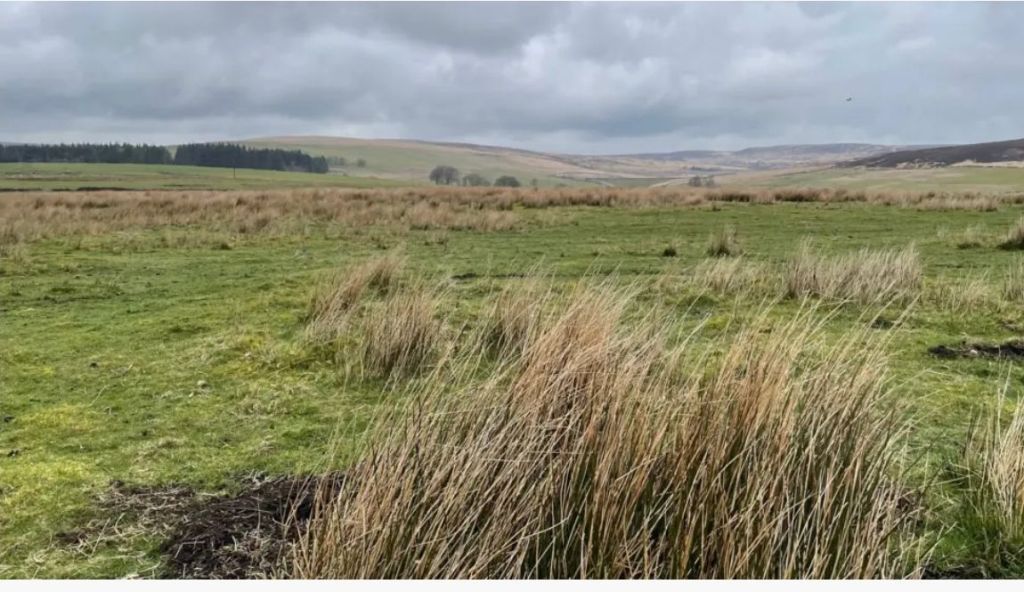
It is a vast industrial development planned for one of the most sensitive upland landscapes in England. A landscape of peat, blanket bog, protected moorland habitat and deep hydrological fragility.
The current public proposal is for 34 turbines with a generating capacity of around 240MW, and the consultation is open until 10 June 2026.
Behind the glossy language lies a far more serious reality.
This scheme threatens to rip into land that already performs one of the most important environmental functions in the country:
Storing carbon naturally.
They are proposing to damage a carbon store in the name of saving carbon
That is the central absurdity.
Walshaw Moor is not a blank slate.
Earlier project consultation material described the site as lying within the South Pennine Moors SSSI, SPA and SAC, and stated that the site is “predominantly covered by peat” and includes blanket bog habitat.
Peat is not just mud. It is one of Britain’s most valuable natural assets.
As set out in the formal appendix submitted with the objection, UK peatlands store around 3 billion tonnes of carbon, and blanket bog is the largest terrestrial carbon store in the UK. Once disturbed by excavation, drainage or drying, peat begins to oxidise and release that stored carbon back into the atmosphere, often over decades.
https://docs.google.com/document/d/1kCLgnfBR5hZghTT_p14NJyeflHXrkwg9mlsV5D2lUc8/edit?usp=drivesdk
So let us be plain about this.
A development sold to the public as a climate solution could in reality turn a natural carbon sink into a long-term carbon source. That is not green policy. That is environmental vandalism dressed up in Net Zero language.
Wind turbines on peat are not just turbines , they bring an entire industrial footprint
The public is too often invited to imagine wind energy as elegant towers turning harmlessly in the breeze.
That is not how these developments are built.
They require turbine foundations, crane pads, access roads, cable trenches, drainage works, compounds, watercourse crossings, substations, and export infrastructure. The Calderdale Energy Park proposals themselves refer to foundations, tracks, underground cabling, drainage, borrow pits, temporary construction compounds, and an export cable connection to Bradford West Substation.
On peatland, every one of those interventions matters.
The objection appendix already submitted states that peat excavation for wind development can release hundreds to thousands of tonnes of CO2 per turbine, depending on peat depth, while access tracks and drainage create additional indirect emissions.
It also notes that carbon payback periods on peat can extend to 10 to 30 years or more and, in some cases, may never truly be achieved if degradation continues. �
APPENDIX A – PEATLAND, CARBON, AND POLICY EVIDENCE.pdf
So where is the honest accounting?
Where is the full carbon balance?
Where is the proof that this project delivers a real climate benefit once the damage to peat is fully counted?
Without that, the climate case is incomplete at best and deeply misleading at worst.
Once you damage peatland hydrology, the consequences spread
One of the biggest dangers in projects like this is that the damage does not stop neatly at the edge of a turbine base or track.
Peatland is a living hydrological system. It depends on high, stable water tables. Disturb that water balance, and you do not just affect one patch of ground. You alter the wider system. Drying spreads. Cracking increases. Erosion accelerates. The peat body begins to degrade.
That is exactly why hydrology is central to this fight.
The submitted appendix warns that tracks, foundations, and cable trenches can lower water tables and trigger drying, cracking, erosion, and runoff well beyond the immediate construction footprint. �
APPENDIX A – PEATLAND, CARBON, AND POLICY EVIDENCE.pdf
Yorkshire Wildlife Trust has publicly echoed that concern, warning that peat on Walshaw Moor reaches up to three metres deep in places and that turbine bases, access tracks and associated infrastructure would massively disrupt the hydrology of the site, both during construction and through the life of the wind farm.
The Trust says it has a strong objection to the principle of the development in this location.
That should be a red flag to everyone.
Because when organisations that support appropriate renewable energy say this is the wrong scheme in the wrong place, people should listen.
Blanket bog is not replaceable , and it can not be wished away with mitigation jargon
One of the great tricks of modern development language is to pretend that everything can be “mitigated”, “offset”, “enhanced” or “compensated”.
But some habitats do not work like that.
Blanket bog is widely recognised as an irreplaceable habitat. The appendix submitted with the objection explains that it is a priority habitat and that Natural England recognises irreplaceable habitats as those that are technically very difficult , or impossible , to restore, recreate or replace.
That means the old formula of “damage here, promise something somewhere else” is not good enough.
You cannot destroy ancient peat systems built over centuries or millennia and then pretend a habitat management promise balances the books.
If the habitat is irreplaceable, the planning system should start from one clear principle: avoid the harm.
And if the harm cannot be avoided, the project should not go ahead in its current form.
This consultation should not be treated as a formality
There are already reasons to worry that this process is being driven forward before the public has the full picture.
The January 2026 programme document shows the design changed following Phase 2 peat probing in late 2025, with the scheme revised from an earlier 41-turbine concept to the current 34-turbine proposal.
Public reporting in March 2026 said Calderdale Council had raised concerns about consultation timing, access to sufficient environmental information and unresolved issues from the earlier scoping stage after substantial changes to the scheme.
That matters because a consultation is only meaningful if people are given enough reliable information to understand what is really being proposed and what damage may follow.
This is not a box-ticking exercise. It is a fight over the future of a protected upland landscape.
National energy policy is not a licence to destroy protected peatland
Of course Britain needs energy infrastructure. Of course energy security matters.
But national policy is not a blank cheque.
Our appendix points to the importance of EN-1 and the requirement to recognise and protect carbon-rich soils including peat, and to avoid significant environmental harm. It also highlights the need under the EIA framework for robust peat surveys, carbon balance calculations and hydrological modelling.
In other words, it is not enough for a developer to say “this is renewable, therefore it is good”.
That is lazy thinking, and it is dangerous thinking.
A project on peatland must prove that it will not cause unacceptable carbon loss, habitat destruction and hydrological damage.
The burden should be on the applicant , not on the public, to disprove an optimistic sales pitch.
The public should now demand answers
Before any Development Consent Order application is submitted, the developer should be required to publish clear, detailed and independently scrutinised evidence on five points:
A full peat depth survey across the site.
A transparent carbon balance assessment, including payback period.
Comprehensive hydrological modelling.
Evidence that peatland impacts can genuinely be avoided.
A proper alternatives assessment showing whether less damaging sites or layouts were considered.
These are not extreme demands. They are the minimum any responsible public consultation should produce for a scheme of this magnitude on such sensitive land.
This is the line that must be drawn
Walshaw Moor is not waste ground. It is not disposable land. It is not a convenient sacrifice zone for political targets.
It is a protected moorland landscape with deep peat, blanket bog, fragile hydrology and enormous environmental importance.
If this scheme goes ahead without rigorous scrutiny, it will set a dangerous precedent: that even carbon-rich peatland can be industrialised, so long as the right buzzwords are attached to the press release.
That is the real scandal here.
Not just the threat to one moor, but the wider lie that any project can be called “green” no matter what it destroys.
The truth is simple.
Destroying peatland is not climate action.
Damaging blanket bog is not environmental progress.
Industrialising Walshaw Moor is not a victory for nature.
It is the sacrifice of a living carbon store in exchange for a headline.
And the public should say no.
Shane Oxer. Campaigner for fairer and affordable energy
 SAY NO TO THE DESTRUCTION OF OUR LAND
Leave a comment