Britain is sleepwalking into an energy crisis of its own making.
Not because we lack generation, nor because demand is spiralling beyond control, but because the physical infrastructure underpinning the entire system is being built , and expanded , in the wrong places, with the wrong priorities, and with a dangerous disregard for environmental reality.
A recent study has now exposed what many in the energy and planning sectors have long suspected:
Thousands of electricity substations across the United Kingdom are vulnerable to flooding, and many can fail in as little as 20 centimetres of water.[1]
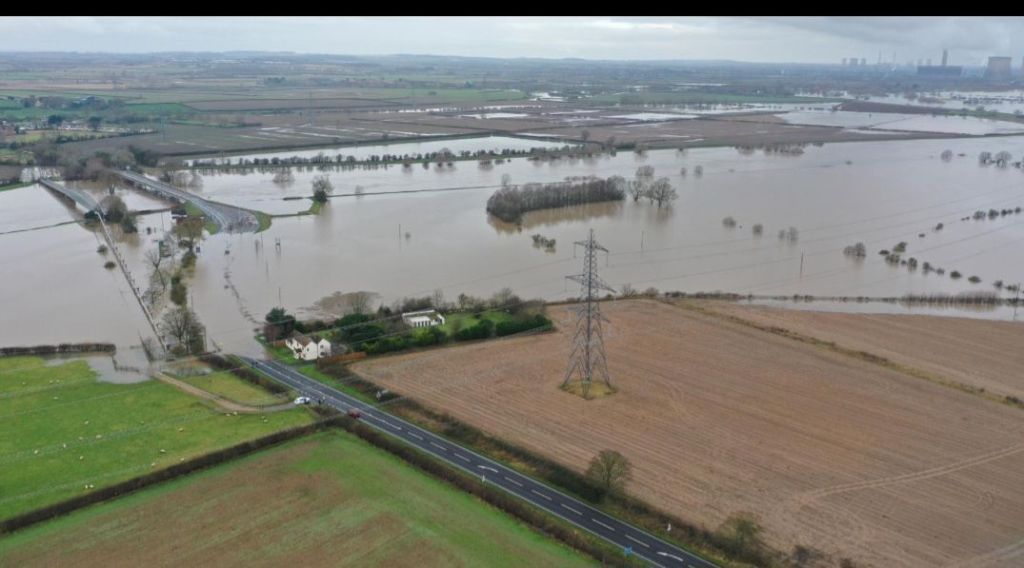
This is not a marginal technical issue. It is a structural flaw embedded deep within the national grid. Substations are not optional components of the system; they are its critical junctions , the final step in converting high-voltage transmission into usable electricity for homes, businesses, hospitals and transport networks.
When they fail, everything downstream goes dark. It does not matter how much power is being generated upstream. It does not matter whether the wind is blowing or the sun is shining. Without functioning substations, there is no electricity supply.
The research, conducted by the University of Oxford in conjunction with infrastructure analysts, suggests that approximately 4,000 substations are currently exposed to flood risk.[2]
More than 27,000 businesses depend on these vulnerable nodes, with potential economic losses estimated at £90 million per day during major outage events.[3] Critically, many of these businesses are not themselves located in flood zones. Their buildings may remain dry, their staff unaffected , yet their operations can still be paralysed instantly by the failure of distant infrastructure.
This is what experts describe as a “systemic blind spot”: a failure to understand how interconnected systems behave under stress.
Yet at the very moment this vulnerability is being exposed, the United Kingdom is accelerating a form of energy development that intensifies it.
Across England, vast solar farms and battery energy storage systems are being constructed on flat, low-cost land. land that is, by definition, often located within flood zones 2 and 3. These developments do not exist in isolation. They require new substations, grid connection compounds, and cable routes, all of which are typically sited within the same geographical footprint. In effect, the system is concentrating its most critical infrastructure into the very areas most exposed to environmental risk.
Nowhere is this more evident than in South Yorkshire, where a cluster of developments illustrates the problem in stark terms. The Thorpe Marsh corridor, historically part of the Don Valley floodplain, is being repurposed into a major hub for solar generation and battery storage.
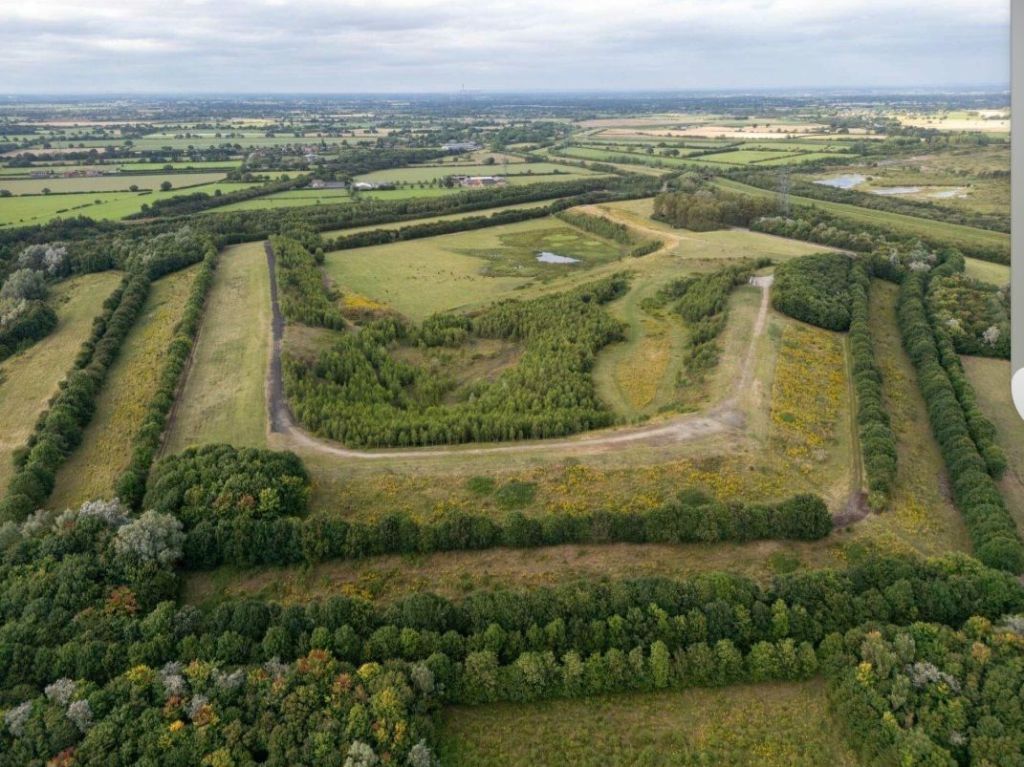
Surrounding by flood zones area 3
Nearby, the Fenwick Solar Farm proposal occupies agricultural land already subject to drainage concerns. The proposed substation at Brinsworth (Long Lane) is intended to serve multiple incoming developments, further intensifying reliance on a single node. Meanwhile, the vast Whitestone Solar scheme threatens to industrialise thousands of acres within a sensitive landscape that is intrinsically linked to regional water movement and flood management.
Individually, each of these projects is presented as a contribution to energy security. Collectively, they represent something far more troubling:
The aggregation of risk within a single, vulnerable corridor. This is not resilience. It is systemic fragility.
The consequences of this approach are not theoretical. When flooding occurs, failures do not remain localised. They cascade. A substation inundated by water will shut down or trip, instantly disconnecting all assets linked to it. Solar farms feeding into that node cease exporting power. Battery systems, reliant on grid stability, also disconnect. The grid loses both supply and distribution capacity simultaneously.
In periods of already elevated stress , such as winter demand peaks or storm conditions , this can push the system towards instability far more rapidly than conventional planning assumptions allow.
What makes this situation particularly alarming is the absence of meaningful oversight within the planning framework.
Current assessments focus narrowly on whether a development site itself is at risk of flooding. They do not adequately consider whether the infrastructure serving that site , or the wider network it connects to , is vulnerable. Nor do they account for cumulative impacts, where multiple developments in the same area amplify systemic risk.
There is no integrated assessment of how solar farms, battery storage systems, substations and floodplains interact as a unified system.
This omission is not a minor technicality.
It represents a fundamental failure of governance.
Infrastructure planning in a modern energy system must account for interdependence. It must recognise that resilience is not determined by individual assets, but by the strength of the network as a whole. Yet current policy continues to treat each development in isolation, approving projects based on narrow criteria while ignoring their combined effect.
The long-term implications are stark.
Climate projections suggest that flood risk across the UK will increase significantly in the coming decades, with the number of exposed businesses expected to more than double by the 2050s.[4]
At the same time, the expansion of decentralised renewable generation will require ever greater numbers of substations and connection points, many of which will be sited in the same low-lying areas. Without a fundamental shift in approach, the system is not being strengthened , it is being scaled in its vulnerability.
This raises an unavoidable question.
Can a system truly be described as secure if it can be disabled by eight inches of water?
The answer, increasingly, appears to be no. What is being constructed is not a resilient energy network, but an inherently unstable one , dependent on weather conditions, reliant on fragile infrastructure, and exposed to risks that are neither fully understood nor adequately mitigated. The rhetoric of energy security has obscured a more uncomfortable reality: that the United Kingdom is building an electricity system that may fail precisely when it is needed most.
A more rational approach would begin by acknowledging these physical constraints. It would prioritise infrastructure in locations that are demonstrably resilient. It would reassess the suitability of large-scale solar developments on flood-prone land. It would ensure that grid expansion is aligned with environmental realities, not ideological targets. And above all, it would recognise that energy policy must be grounded in engineering, not aspiration.
Because the laws governing electricity networks are not political. They are physical. And they cannot be negotiated.
If current trends continue, the warning signs are clear. The issue is no longer whether failures will occur, but when , and how widespread they will be.
When that moment comes, the consequences will not be abstract. They will be immediate, visible, and disruptive, affecting businesses, communities and critical services alike.
Britain is not facing an energy shortage. It is facing a planning failure.
And unless that failure is addressed, the lights will go out , not for lack of power, but because the system delivering it was never designed to withstand the conditions it now faces.
Footnotes
[1] University of Oxford Environmental Change Institute, infrastructure flood risk analysis (2026)
[2] Ibid. Estimated number of substations at risk based on national overlay mapping
[3] Rebalance Earth / Oxford analysis, estimated economic loss from substation-related outages
[4] UK climate flood risk projections, Environment Agency and associated modelling data (referenced in Oxford study)
Shane Oxer. Campaigner for fairer and affordable energy
 SAY NO TO THE DESTRUCTION OF OUR LAND
Leave a comment