Category: The fight against the destruction of our farms and greenbelt
-
HOPE – A National Countryside Campaign
HOPE – Protecting Britain’s Countryside HOPEHope to Save Our CountrysideA grassroots campaign supporting communities defending farmland, peatlands and rural landscapes from inappropriate large-scale energy developments. The HOPE PrinciplesH — Hope to Save Our CountrysideProtecting farmland, Green Belt and rural landscapes from industrial development that permanently changes the character of our countryside.O — Objecting to Prevent…
-
Britain Could Be Hours from Blackouts — The Dangerous Reality of Our Energy System
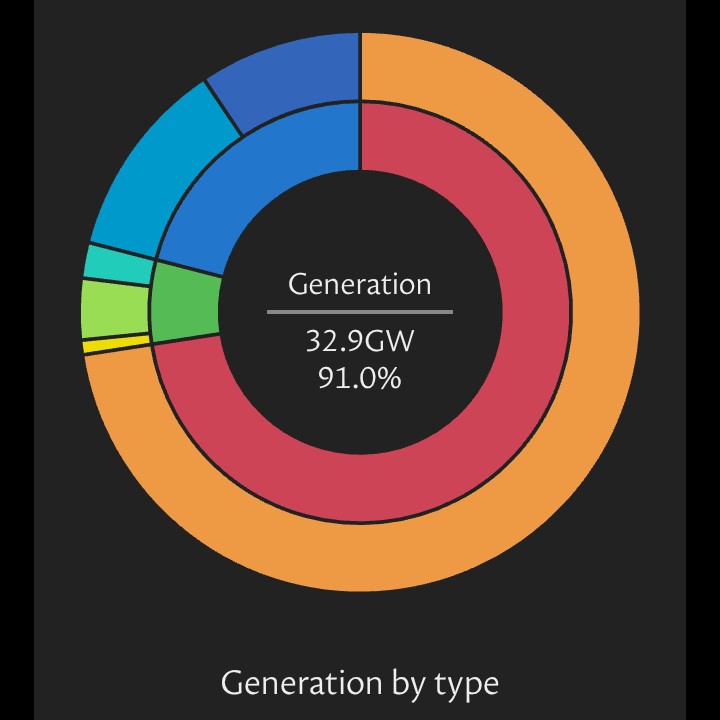
Across Britain this evening the numbers tell a story that few politicians are willing to admit. Beneath the slogans of “clean power” and “net zero progress”, the electricity system is operating on a knife edge. With wind output collapsing and gas reserves at critically low levels, the uncomfortable truth is this: Britain could be only…
-
When Legal Fear Overrides the Countryside – The Marr Solar Farm Case
The Marr Solar Farm saga in Doncaster has taken a troubling turn. In December 2025, Doncaster Council’s Planning Committee refused a large ground-mounted solar farm proposed on agricultural land near Marr village. The refusal was not a close call or a technicality. Councillors rejected the scheme for clear planning reasons that many residents recognised immediately.…
-
When a “Reduction” Isn’t a Reduction.
WHITESTONE 1. 2. AND 3 Miles of Cable Corridors, the Loss of Valleys, and a Connection to Nowhere Across South Yorkshire a familiar pattern is emerging. Solar developers announce that they have “reduced” their schemes after listening to local concerns. Press releases talk about removing panels near homes, creating buffers, or improving biodiversity.It sounds reassuring.But…
-
Why Britain Is Losing Its Countryside – and Why Energy Resilience Matters More Than Ever
For generations the British countryside has been part of our national identity. It feeds us, sustains wildlife, shapes our landscapes and communities, and provides millions of people with a sense of peace and belonging that modern life often struggles to offer. But across the country something profound is happening. Large areas of farmland and open…
-
Why Britain Is Losing Its Countryside – and Why Energy Resilience Matters More Than Ever
For generations the British countryside has been part of our national identity. It feeds us, sustains wildlife, shapes our landscapes and communities, and provides millions of people with a sense of peace and belonging that modern life often struggles to offer. But across the country something profound is happening. Large areas of farmland and open…
-
How to Destroy Historic Beautiful Countryside for a Weak Energy System
The greed of the speculator knows no bounds Stand beneath the escarpment of the Hambleton Hills and look up at the White Horse carved into the hillside.The Kilburn White Horse has watched over the Vale of York for generations. It is not simply a tourist landmark. It is part of the identity of North Yorkshire…
-
Carbon Is Not the Environment
For seventeen years Britain’s energy policy has been governed by a single, legally entrenched objective: carbon reduction. When Parliament passed the Climate Change Act 2008, it did something unprecedented. It transformed emissions targets from political aspirations into binding law.[1] From that moment, every major decision in power generation, grid design and industrial policy has been…
-
Britain’s Energy Illusion: After 17 Years of Net Zero, Gas Still Keeps the Lights On
A simple map has been circulating this week showing the largest source of electricity generation in each European country in 2025. For Britain, the answer is not wind. It is not solar. It is natural gas. After 17 years of climate legislation, subsidy schemes and renewable expansion, gas remains the single biggest source of UK…
-
Net Zero by Speculation: Britain Is Approving Power Projects the Grid Cannot Deliver
There is a growing disconnect between the confident rhetoric surrounding Britain’s energy transition and the hard physical limits of the electricity system. Ministers speak of acceleration, reform, and clean power targets, yet across large parts of the country nowhere more clearly than in Doncaster , projects are advancing long before the infrastructure exists to support…
-
The Thorpe Marsh Bottleneck
Evidence that the wires can’t match the rhetoric Executive summaryOn a floodplain near Doncaster, the reality of the UK’s energy transition becomes a physical question: can the electricity actually move through the network?In the Thorpe Marsh corridor, official network data indicates the answer is not yet.Northern Powergrid’s Appendix G shows the West Melton / Thorpe…
-
The 2030 Energy Fantasy – Why the Electrification Pathway Will Fail
The UK’s Clean Power 2030 pathway is not just optimistic , it is fundamentally detached from engineering reality. Behind the slogans and targets lies a simple truth that policymakers are reluctant to admit: The current electrification strategy will not deliver as planned. Not because ambition is wrong, but because the physical energy system cannot be…
-
Repeal Net Zero and the Climate Change Act Now The True Cost of Britain’s Energy Policy
The Future Must Be Built on RealityAffordable energy drives growth. Reliable energy underpins security.A sustainable future requires both , not one at the expense of the other. https://petition.parliament.uk/petitions/756685 Britain Is Paying the PriceAcross the country, households and businesses are feeling the consequences of decisions made years ago under very different assumptions.Energy bills have surged. Standing…
-
Consent Without Capacity. Fenwick Proves Miliband’s Net Zero Ideology Is Driving Britain’s Energy Into Fantasy
A solar farm approved into a grid known to be constrained , because targets now matter more than truth. 🧨 Opening anecdoteTalk to any grid engineer not a politician, not a policy adviser and they’ll tell you the same thing: electricity systems don’t run on slogans. They run on physics. They watch flows, frequency, constraints,…
-
Greenflation and Deindustrialisation
Why the Net Zero Delivery Model Fails and the Alternative Pathway The economic debate around energy and climate policy is often framed as a choice between environmental responsibility and economic growth. But this framing is misleading. The real issue is not whether climate risks exist. It is whether the policy model adopted by Western governments…
-
The Grid Reality Check: Why Britain Is Being Forced Into Energy “Open-Heart Surgery”
Ambition has collided with engineering reality For years, Britain’s energy debate has been framed in terms of ambition. Targets, timelines, and the speed of transition. Yet increasingly, the conversation is shifting away from political aspiration toward something far more fundamental: whether the physical system can keep up. Across regulators, industry briefings, and infrastructure planning, a…
-
The Great Solar Land Grab: Why Britain Is Sacrificing Its Farmland
As ministers accelerate the largest expansion of solar farms in British history, a deeper question is emerging: can a country that already imports nearly half its food afford to industrialise its farmland for power that is weakest when demand is highest? Britain’s energy transition is quietly becoming a land-use revolution and the trade-offs are no…
-
The £Trillion Energy Gamble Nobody Wants to Debate
As Britain doubles down on intermittent generation, consumers face the mounting cost of a grid designed to chase the weather rather than deliver reliable power Ministers talk endlessly about investment, growth and green ambition. But beneath the rhetoric lies a far simpler question: are we building an electricity system that actually works , or one…
-
When the Grid Meets Reality: Britain’s Energy Queue Was Never Real
For years, Britain’s energy debate has been conducted as if ambition alone could power the country. Targets were set, contracts signed, announcements made — and politicians reassured the public that a green transition was not only inevitable but imminent. But beneath the rhetoric, a quieter story has been unfolding inside the machinery of the electricity…
 SAY NO TO THE DESTRUCTION OF OUR LAND