At the Whitestone 1 consultation held at the Ivanhoe Centre in Conisbrough, residents made their feelings unmistakably clear. What was billed as a public engagement event quickly became a showcase of frustration, anger, and outright rejection.
Glossy brochures were handed out, filled with promises of “green energy,” “biodiversity gain,” and “community benefits.” But local people weren’t buying it. In a powerful moment of defiance, one resident ripped the consultation booklet apart at the table, right in front of the developers. The symbolism was hard to miss: the community is tearing up these empty promises.
Consultation or Imposition?
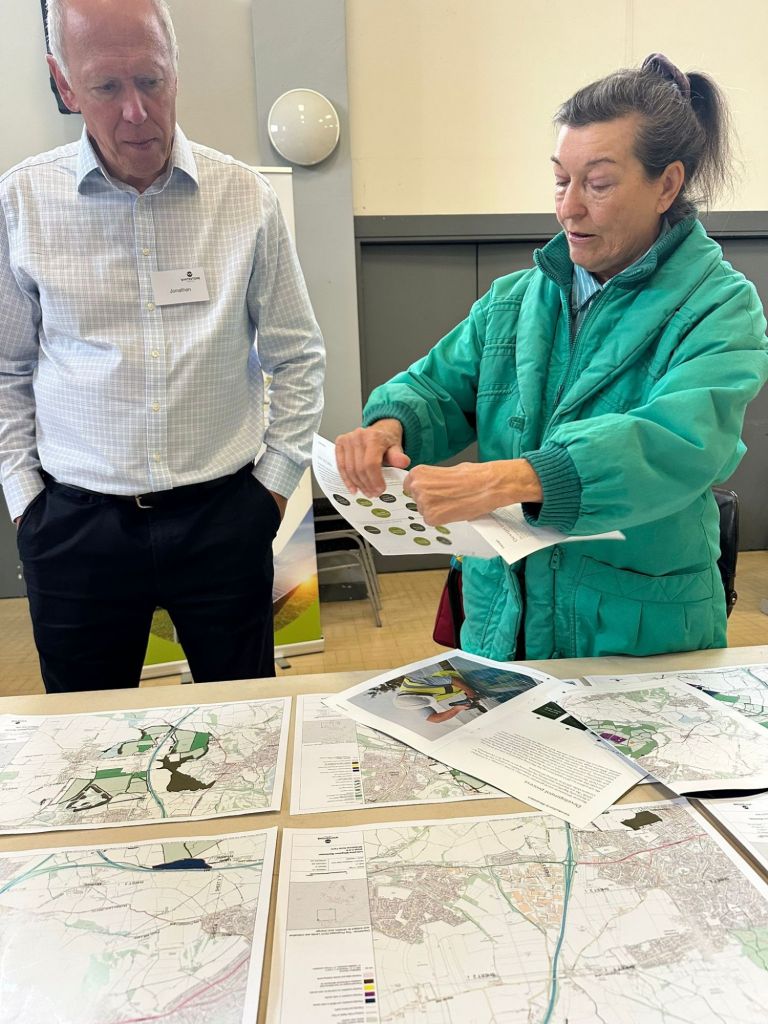
The event highlighted a truth many residents already suspected — this isn’t genuine consultation, it’s imposition. Maps were laid out across tables, showing vast swathes of green farmland earmarked for industrial-scale solar development. For people in Conisbrough, this wasn’t just lines on a plan — it was a direct threat to their countryside, their farmland, and their way of life.
Developers spoke in calm tones about “net zero commitments” and “national targets,” but residents spoke about what really matters:
Loss of productive farmland at a time when food security is more important than ever.
Landscape destruction across South Yorkshire, with hundreds of acres swallowed by panels and fencing.
Tokenistic engagement, where local voices are gathered but not listened to.A Pattern of Resistance
This meeting in Conisbrough is part of a growing pattern across Doncaster and South Yorkshire. From Thorpe Marsh to Fenwick, from Marr Farm to Whitestone, communities are uniting against the creeping sprawl of solar and battery projects that threaten to industrialise the countryside.
These consultations are presented as opportunities for residents to “have their say.” Yet time and again, people walk away feeling that decisions have already been made behind closed doors, and that these glossy events are nothing more than box-ticking exercises.
Conisbrough Speaks
What happened at the Ivanhoe Centre sends a clear message:
Conisbrough will not accept the covering of farmland with solar panels.
Residents are not fooled by corporate greenwashing.
Consultation must mean more than exhibition boards and polite conversations.
As one resident put it bluntly while gesturing at the maps: “You’re not consulting us. You’re telling us what you’ve already decided.”
Next Steps
The Whitestone 1 project is only in its consultation phase, but local opposition is growing louder. People across Doncaster are beginning to realise the scale of the threat — not just one solar farm, but an interconnected web of schemes that could transform the green heart of South Yorkshire into an industrial energy zone.
Conisbrough has lit the fuse. The message is spreading: our countryside is not for sale.
 SAY NO TO THE DESTRUCTION OF OUR LAND
Leave a reply to Beverley Smith Cancel reply