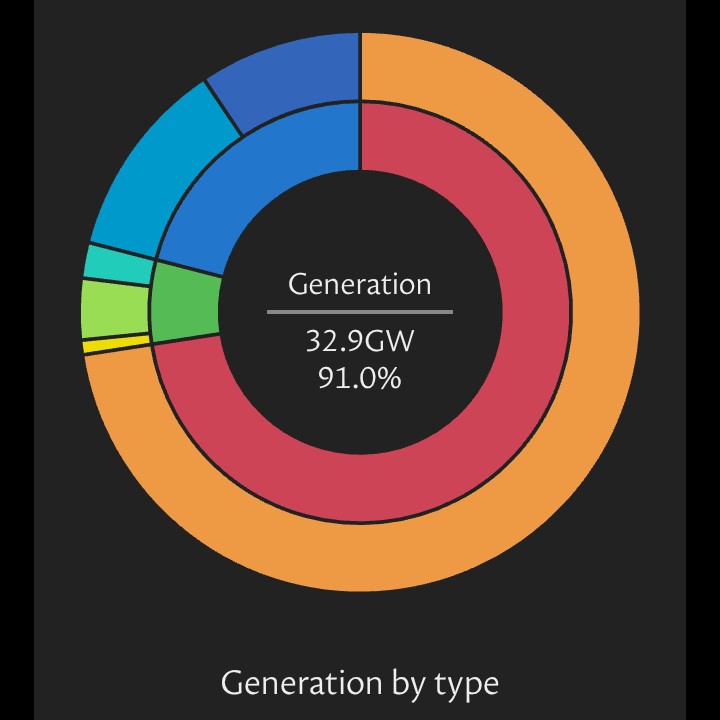
In December, the National Energy System Operator (NESO) and Ofgem announced that Britain’s grid connections crisis had been fixed. “Gate 2” had cleaned the queue. A readiness test had replaced the old free-for-all. A pipeline of 283 GW of generation and storage to 2035 had been “unlocked”.
But if you look at the maps , the ones planners are supposed to use , a different story emerges. One that explains why nothing materially improves before the mid-2030s, no matter how many projects are “prioritised”.
What the physical map shows
NESO’s own “North of England boundaries” diagram is not about wires but about where power hits a wall in system operation. The arrows converge on the same places: Humber, Teesside, Yorkshire , the exact corridor the physical map shows.
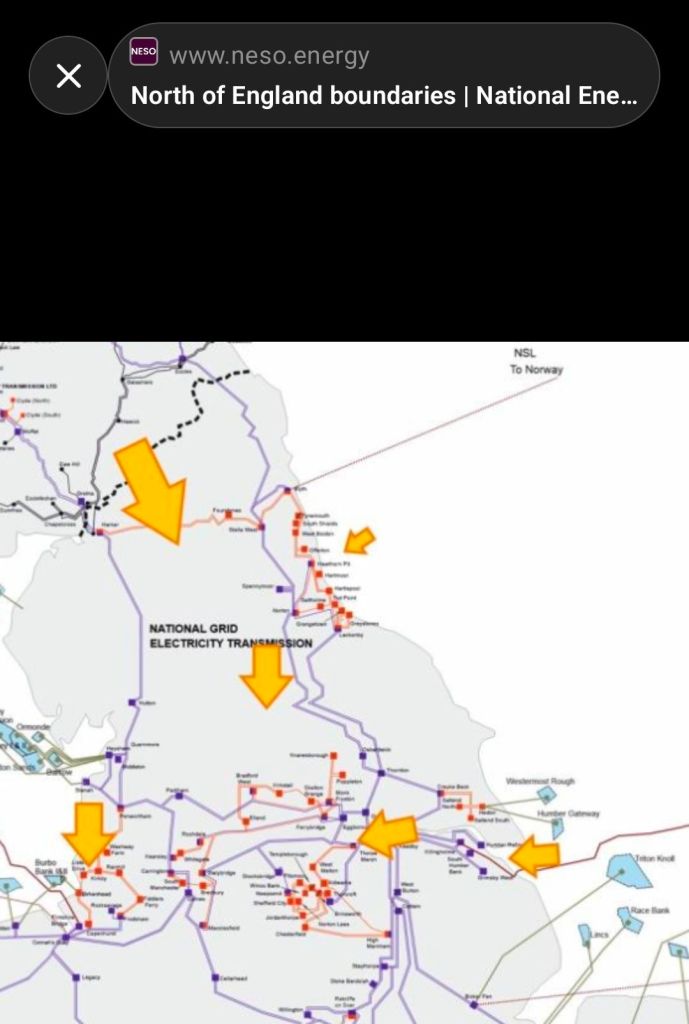
This is where the system is already subject to frequent constraint and curtailment. Not because the wires are “theoretically full”, but because the network cannot reliably move what is already connected without intervention.
The operational map (where the system struggles), the physical map (where the wires are), and the construction programme (where National Grid is rebuilding) all point to the same conclusion.
This is why the corridor is being rebuilt.
Why Gate 2 removed 150 GW of batteries
Gate 2’s most revealing statistic is what disappeared: more than 150 GW of battery projects deprioritised or removed.[3] That is not administrative tidying. It is recognition that the model had broken.
A Spanish market study recently showed that beyond about 32 GWh of cumulative battery capacity, price spreads collapse and additional storage becomes uneconomic. Storage cannibalises itself. The more you build, the less it earns. Gate 2’s battery cull reflects that reality.
Ofgem’s approval of CMP448, introducing a progression fee of up to £10,000/MW, further signals that regulators expect projects to stall or fall away without financial pressure. CMP446 simultaneously reduced the threshold at which small schemes must undergo Transmission Impact Assessment.
The system is being tightened because the previous one detached from engineering reality.
Why nothing improves before the mid-2030s
The projects that actually change this picture are not solar farms or batteries. They are:
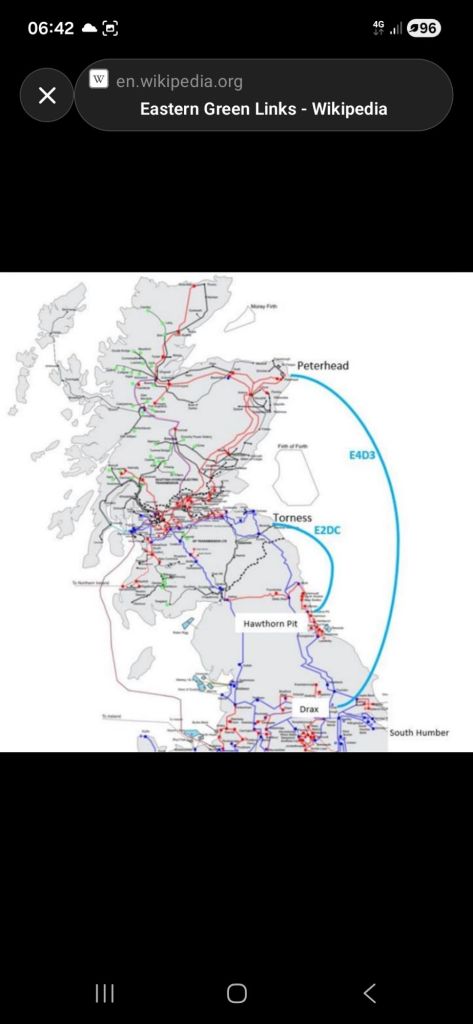
Eastern Green Link 3
Eastern Green Link 4
Grimsby to Walpole new connection
All now dated to 2033–2034.[7]
These are prerequisites for moving power from north to south at scale. Until they are built, the same corridor in South Yorkshire remains the bottleneck, no matter how many projects are “prioritised”.
A connection date is not a delivery date. It is often a placeholder for infrastructure that does not yet exist.
Why Tween Bridge walked away , and why others may follow
This is also why projects like Tween Bridge withdrew and are now being reconsidered under the reality of 2035 connection horizons. Developers can read the same maps. If the export path is constrained until the mid-2030s, the economics of building now collapse. A project can be “connected” on paper yet face years of curtailment in practice.
Gate 2 did not create this problem. It exposed it.
The uncomfortable truth
The grid in South Yorkshire is not being upgraded for future growth. It is being rebuilt because it cannot yet carry the power of the projects already approved. Yet planning permissions continue to be granted on the assumption that this constraint does not exist.
Policy has been prioritising megawatts on paper. The maps show where steel, transformers and cables have yet to catch up.
Until they do , in the mid-2030s the queue may be cleaner, but the bottleneck remains.
Footnotes
[1] National Energy System Operator, Gate 2 connections reform announcement, Dec 2025.
[2] Walker Morris, “New connections delivery pipeline explained”, 2025.
[3] Osborne Clarke, “Ofgem completes GB grid connections overhaul to 2035,” Dec 2025.
[4] ESS News, Spanish battery saturation study, Jan 2026.
[5] Ofgem, CMP448 decision.
[6] Ofgem, CMP446 decision.
[7] Ofgem updates on EGL3/4 and GWNC timelines.
[8] National Grid transmission GIS for land-use planning. �
Cable.xml None
Shane Oxer. Campaigner for fairer and affordable energy
 SAY NO TO THE DESTRUCTION OF OUR LAND
Leave a comment