Help protect our countryside


Britain’s Energy Reality Check: The Costly Gap Between Political Ambition and Grid Reality
For more than a decade, the British public has been told that the future of energy is simple: electrify everything. Replace gas boilers with heat pumps. Replace petrol cars with electric vehicles. Push industry away from fossil fuels and towards electricity. Under Ed Miliband, the message from the Department for Energy Security and Net Zero has become even more aggressive—move faster, build more renewables, and demand that households and businesses adapt. Yet away from the speeches, slogans and policy launches, Britain’s own electricity system tells a very different story.
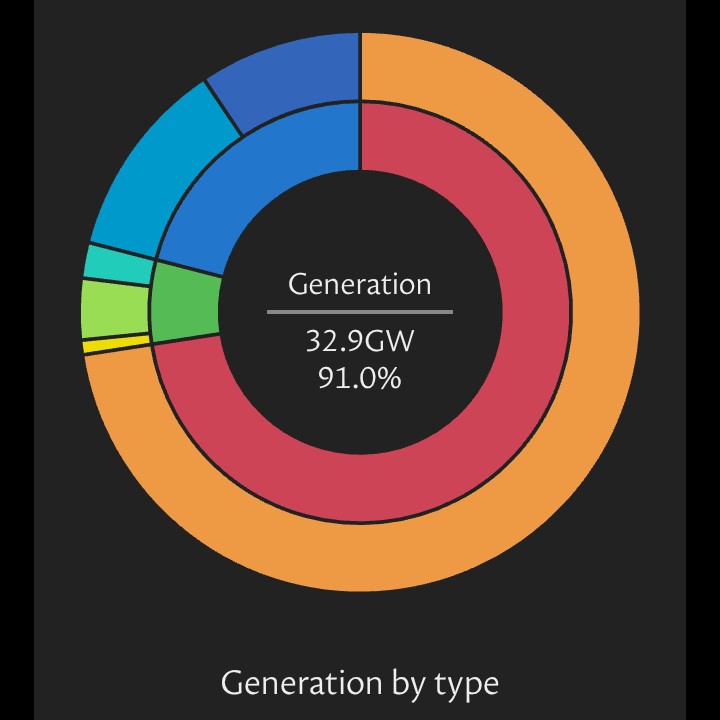
After monitoring the British grid over a full twelve-month period, the operational data paints a stark picture. Wind remains the largest renewable contributor, averaging roughly 35 per cent of annual generation. Gas, however, still provides around 26 per cent. Nuclear contributes approximately 13 per cent, biomass around 7 to 8 per cent, while solar—despite years of subsidies, planning reform, and political promotion—struggles to contribute much beyond 6 to 7 per cent over the course of a year.¹ This is not a grid powered predominantly by intermittent renewables. It is a grid still fundamentally reliant on firm, dispatchable generation.
That reality matters because the political promise made to the public was not simply decarbonisation—it was affordability. Britons were told that wind and solar would drive down bills, shield households from global gas volatility, and create a new era of energy independence. Instead, household electricity remains among the most politically sensitive costs in family budgets. Standing charges have risen. Industrial electricity prices remain internationally uncompetitive. Manufacturers continue to warn that energy costs undermine investment and accelerate offshoring.² For many families and businesses, the promise of cheap green electricity has simply not materialised.
Solar illustrates the problem with particular clarity. In political messaging, solar panels have become almost symbolic of the energy transition. Yet Britain is not southern Europe. It is a northern island with weak winter sunlight, short daylight hours, and peak electricity demand precisely when solar performs at its worst. Annual grid data confirms what engineers have long understood: solar contributes only a modest share of Britain’s electricity across the year, and its contribution is weakest during the months when demand is highest.³ Yet thousands of acres of productive agricultural land continue to be earmarked for large-scale solar deployment, often presented as if it were a core solution to winter energy security. It is not.
Wind performs better in annual volume terms, but wind introduces a different engineering problem: variability. When conditions are favourable, wind output can be substantial. But when the wind drops, the grid cannot simply hope demand falls with it. At those moments Britain still turns to gas turbines, nuclear reactors, hydro resources, biomass, and electricity imported through interconnectors from countries such as France and Norway.⁴ Wind can reduce fuel consumption when available, but it does not remove the need for firm generation. The system still depends on it.
This creates a growing political contradiction for Miliband’s electrification strategy. The Government wants millions of households to adopt electric vehicles, install heat pumps, and rely more heavily on electricity for transport and heating. Yet electrification only works when electricity is abundant, affordable, and reliable. Britain today is struggling on all three fronts. Per-capita electricity consumption has not risen in line with earlier government forecasts. Industrial demand has weakened, partly through the long decline of heavy industry, partly because electricity costs discourage expansion.⁵ Instead of an electrified industrial revival, Britain risks building a grid for demand that consumers and businesses are increasingly unwilling—or unable—to pay for.
The deeper concern is institutional. The Department for Energy Security and Net Zero continues to promote policy targets as though ambition alone can override engineering. But the grid does not respond to ideology. It responds to frequency, inertia, dispatchability, reserve margins, and weather conditions. No amount of ministerial optimism changes the reality that Britain still leans on gas for roughly a quarter of its electricity, depends on nuclear for system stability, and increasingly relies on foreign imports when domestic conditions weaken.⁶
This is the uncomfortable truth Westminster is reluctant to admit: after years of policy intervention, billions in subsidies, and relentless pressure on households to “go electric”, Britain still has not built an electricity system capable of replacing the firm generation it already has—let alone supporting the vast new demand politicians want to impose.
The public was promised cheaper energy, stronger energy independence, and a cleaner, more secure future. Instead, Britain has delivered rising system costs, continued dependence on gas, increasing import reliance, and a grid still struggling to align political ambition with physical reality.
At some point, the question is no longer whether the targets sound ambitious. The question is whether the policy is actually working.
Footnotes
1. Based on user-supplied year-long monitoring of Great Britain grid generation mix, cross-referenced with live grid dashboards such as National Grid ESO and public generation datasets.
2. UK industrial electricity price competitiveness has been repeatedly raised by energy-intensive industries and trade bodies over the past decade.
3. Solar generation in the UK is constrained by latitude, seasonality, cloud cover, and winter demand mismatch.
4. Great Britain regularly imports electricity through interconnectors with France, Norway, Belgium, and the Netherlands as part of balancing and security of supply.
5. UK per-capita electricity consumption trends and slower-than-forecast electrification have been widely discussed in recent energy policy analysis.
6. Grid balancing requirements continue to depend on firm dispatchable generation, synchronous generation, and reserve capacity.
 SAY NO TO THE DESTRUCTION OF OUR LAND
You must be logged in to post a comment.