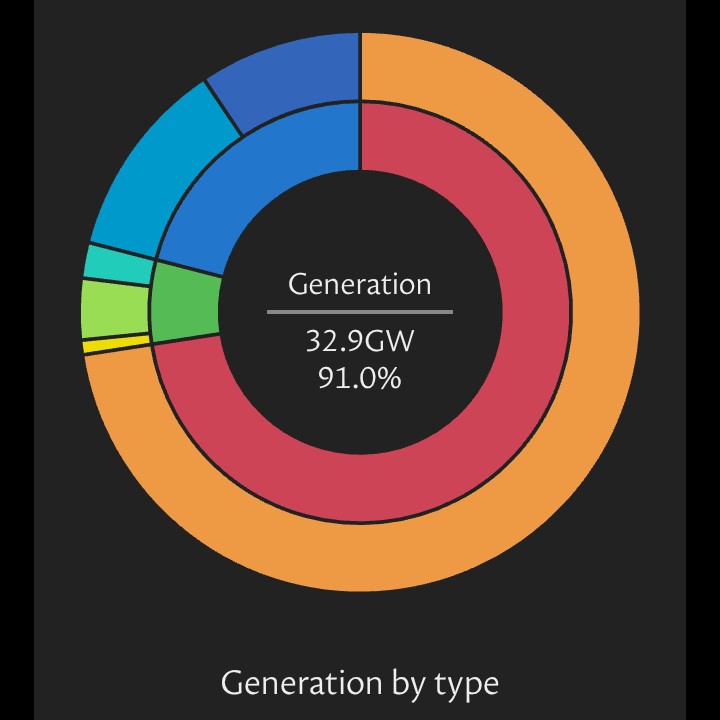
There is a quiet but growing realisation among serious thinkers that something has gone fundamentally wrong in Britain. Not just politically. Not just economically. But structurally , in how this country builds, plans, and powers itself.
One of those thinkers is Ben Southwood, editor of Works in Progress, who has spent years examining a simple but devastating truth: Britain has not run out of resources, talent, or ambition. It has simply lost the ability to build.
And nowhere is that failure more visible than in our energy system , and nowhere is it more painfully exposed than here in South Yorkshire.
A Country That No Longer Builds What It Needs
Southwood’s central argument is disarmingly simple: a functioning country builds what it needs. A failing system builds what its rules allow.
Britain today falls into the second category.
For decades, we have constructed a planning and regulatory system so complex, so slow, and so politically distorted that it no longer delivers coherent infrastructure. Instead, it produces fragments , disconnected projects approved in isolation, with little regard for whether they actually work together.
This is not just an abstract policy failure. It has real-world consequences.
We are not failing to build energy infrastructure because we lack money or technology. We are failing because the system itself is incapable of coordinating what gets built, where, and why.
The Energy Illusion
At first glance, Britain appears to be building more energy infrastructure than ever.
Solar farms are spreading across the countryside. Battery storage systems are appearing in clusters. Wind capacity continues to expand. Ministers speak confidently about “clean power” and “energy abundance.”
But this is an illusion.
Because the question is not how much infrastructure we build , it is whether that infrastructure actually works.
And increasingly, it does not.
South Yorkshire: A System in Breakdown
Nowhere is this clearer than in South Yorkshire.
Across Doncaster, Rotherham, and the surrounding areas, we are witnessing a surge in energy developments:
Large-scale solar farms covering hundreds, sometimes thousands, of acres of farmland
Battery Energy Storage Systems (BESS) clustered around already constrained substations
Proposed new grid connections that are years , in some cases decades , away from completion
On paper, it looks like progress.
In reality, it is a system in breakdown.
The Grid Constraint Reality
The fundamental problem is brutally simple: the grid cannot handle what is being built.
Substations such as Thorpe Marsh and West Melton are already operating under severe constraints. Connection queues stretch years into the future. Reinforcements , including critical upgrades like Super Grid Transformers , are delayed well into the 2030s in some regions.
Yet despite this, projects continue to be approved.
Solar farms are granted permission to connect to infrastructure that does not yet exist. Battery systems are installed where there is no meaningful capacity to export stored power. Entire clusters of generation are being concentrated in areas already flagged as overloaded.
This is not strategic planning. It is the opposite.
Building Without a System
Southwood’s work helps explain exactly what we are seeing.
Britain is no longer building infrastructure as part of a coordinated system. Instead, it is approving projects in isolation , driven by targets, incentives, and political pressure rather than engineering reality.
In a functioning energy system, generation, transmission, and storage are designed together.
In Britain today, they are not.
We are building generation without grid capacity.
We are deploying storage without a clear system need.
We are approving projects without asking the most basic question:
Can this energy actually be used?
Solar Sprawl and the Misallocation of Land
Take large-scale solar.
In theory, solar energy has a role to play. But in practice, the way it is being deployed in the UK , and particularly in South Yorkshire , raises serious questions.
Solar generation is highly seasonal. It produces most of its output in summer, and particularly around midday , precisely when demand is lowest.
In winter, when energy demand peaks, solar output collapses.
This mismatch is well understood. But it is being ignored.
Instead, vast areas of agricultural land are being covered with panels that:
Generate power when it is least needed
Struggle to export due to grid constraints
Contribute little to winter energy security
This is not energy strategy. It is misallocation on a national scale.
Batteries: The Patch, Not the Solution
The rapid expansion of Battery Energy Storage Systems is often presented as the answer to these problems.
But in reality, BESS is not solving the underlying issue. It is merely papering over it.
Batteries can store excess energy for short periods , typically a few hours. They cannot solve seasonal imbalance. They cannot replace firm generation. And critically, they cannot overcome fundamental grid constraints.
What they do instead is absorb surplus power when the system is overloaded and release it later , often into the same constrained network.
The proliferation of BESS across South Yorkshire is not a sign of a healthy energy system. It is a symptom of dysfunction.
The Planning System: The Root of the Problem
At the heart of all this lies Britain’s planning system.
Southwood identifies this as the central bottleneck , a system that blocks necessary infrastructure while allowing politically convenient projects to proceed.
The result is an inversion of priorities.
Projects that are genuinely needed , such as grid reinforcements, new dispatchable generation, and strategic infrastructure , face years of delay, regulatory hurdles, and uncertainty.
Meanwhile, projects that align with headline targets , such as solar farms and battery installations , are fast-tracked, even when they lack a coherent role within the wider system.
This is how you end up with a country that is simultaneously:
Overbuilding in the wrong places
Underbuilding where it matters
And failing to deliver a functioning energy network
Not a Lack of Investment A Failure of Direction
It is tempting to describe this as underinvestment. But that would be wrong.
Britain is investing billions into energy infrastructure.
The problem is not the quantity of investment. It is the direction of that investment.
We are not short of projects. We are short of useful projects.
We are not failing to build. We are failing to build what works.
South Yorkshire as a National Warning
What is happening in South Yorkshire is not unique. But it is particularly stark.
Here, the contradictions are impossible to ignore:
Multiple large-scale solar developments approved in close proximity
Grid infrastructure already operating at or beyond capacity
Reinforcements delayed years into the future
Agricultural land being permanently altered for projects with limited system value
This is not a transition. It is a warning.
Because if this is allowed to continue, the consequences will not be confined to one region.
They will be national.
The Cost of Getting It Wrong
The costs of this failure are already being felt.
Consumers face rising bills, not because energy is scarce, but because the system is inefficient.
Generators are paid to curtail output when the grid cannot absorb it. Infrastructure is built that cannot be fully utilised. Investment is locked into assets that deliver limited value.
And all the while, the core problems , grid capacity, system coordination, and reliable generation , remain unresolved.
A System That No Longer Makes Sense
Southwood’s analysis ultimately leads to a stark conclusion:
Britain’s infrastructure system no longer produces rational outcomes.
It does not optimise for efficiency.
It does not optimise for resilience.
It does not even reliably optimise for cost.
Instead, it produces what the system allows , a patchwork of projects driven by incentives, targets, and political convenience.
Time to Rebuild. Properly
If we are serious about energy security, affordability, and economic growth, this must change.
We need to return to first principles:
Build generation that matches demand
Expand grid capacity before approving new supply
Prioritise infrastructure that delivers system-wide value
Protect agricultural land from unnecessary industrialisation
And above all, restore coherence to how decisions are made
This is not about ideology. It is about engineering, economics, and common sense.
The Final Reality
South Yorkshire is not just experiencing a local planning issue.
It is exposing a national failure.
A failure to think systemically.
A failure to plan coherently.
A failure to build what actually works.
And until that changes, no amount of targets, subsidies, or political messaging will fix it.
Because the problem is not how much we are building.
It is that we are building the wrong things, in the wrong places, for the wrong reasons
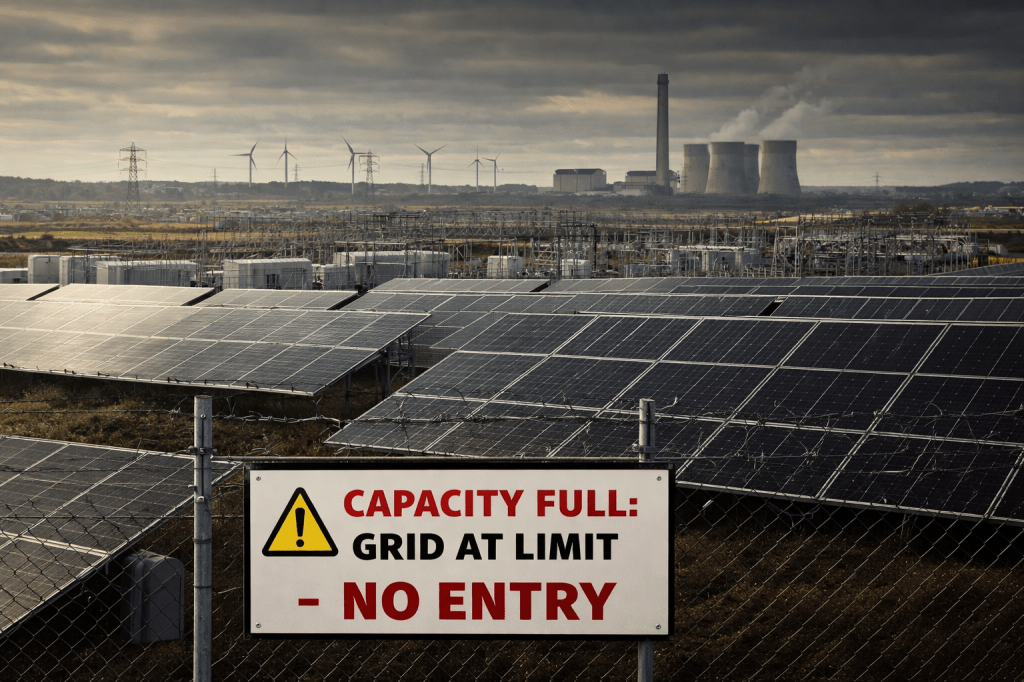
Shane Oxer. Campaigner for fairer and affordable energy
 SAY NO TO THE DESTRUCTION OF OUR LAND
Leave a comment