By Shane Oxer. Campaigner for fairer and affordable energy
So why are they panicking now?
Because the story they have told the public for years is no longer holding.
For over a decade, the explanation was simple: high energy bills were the result of global forces. Wars. Gas prices. International markets. Events beyond anyone’s control.
But that explanation is wearing thin.
Households know it. Businesses know it. They feel it every single month.
Because energy in Britain is not just expensive due to global pressures.
It is expensive because policy has made it so.
And now, that reality is catching up with politics.
The Narrative Is Breaking Down
For years, higher energy costs were tolerated as part of a broader transition.
Ministers could argue there was a trade-off , that decarbonisation came at a price, but that the public would accept it in return for a cleaner future.
That bargain is now collapsing.
Households are under sustained financial pressure. Industry is struggling to remain competitive. Inflation remains tightly linked to energy shocks. And the promise that costs would fall over time has not materialised in any meaningful way.
But the real problem for government is not just the cost itself.
It is the cause.
Because once you begin to examine what is driving those costs, the answer leads directly back to policy decisions , not external forces.
The System Was Designed This Way
The modern UK energy system did not evolve by accident.
It was shaped deliberately , through legislation, regulation, and long-term political commitment.
At the centre of that system sits the Climate Change Act 2008, reinforced by the 2019 amendment committing the UK to Net Zero by 2050.
That legal framework has driven policy in one direction for over a decade:
Away from conventional, dispatchable generation
Toward intermittent, weather-dependent sources
Supported by subsidy structures, carbon pricing, and market intervention
And critically , regardless of the economic friction this creates.
This is why ministers now sound nervous.
Because if they openly admit that policy itself has made electricity more expensive, the public inevitably asks a far bigger question:
Has the Net Zero model made Britain poorer?
The Decoupling Distraction
The current response from Westminster is what they call “decoupling”.
The argument is that if electricity prices can be separated from gas prices, households will be shielded from global gas volatility.
It sounds appealing.
But it risks becoming a distraction.
Because the issue is not simply that gas sets the price.
The issue is that policy has been making gas more expensive in the first place.
At current levels, carbon costs account for roughly one-third of the cost of gas-fired electricity.
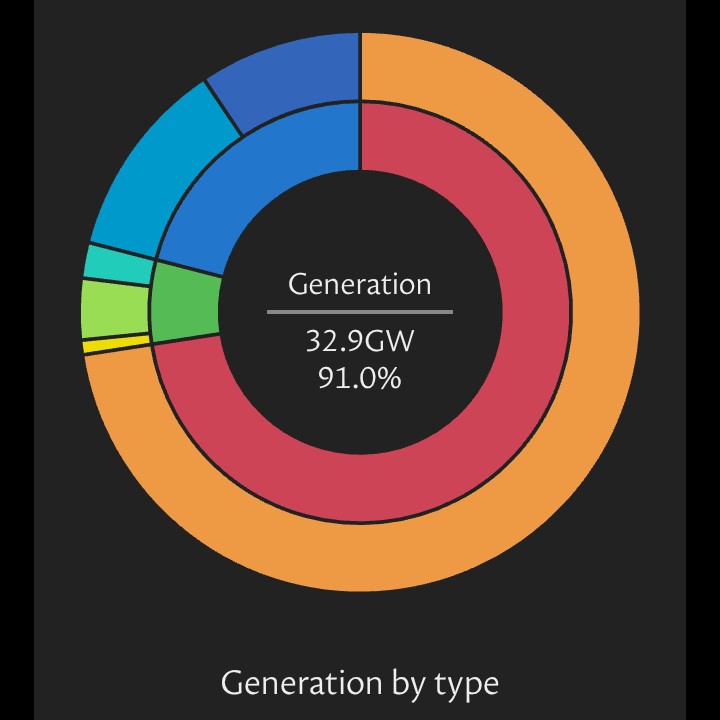
And gas still plays a crucial role , supplying around 28% of UK electricity and acting as the system’s primary balancing mechanism.
So when policy inflates the cost of gas, it doesn’t stay contained.
It flows through the entire electricity market.
The Public Already Understands
There is another problem for ministers.
The public is not as naïve as policymakers sometimes assume.
People may not follow every detail of market design or grid balancing.
But they understand outcomes.
They see:
Rising energy bills
Rising food prices
Struggling businesses
A cost-of-living crisis that never quite goes away
And increasingly, they understand something else:
These pressures are not purely the result of global events.
They are the result of choices.
The Cost Burden No One Talks About
Take the Carbon Price Support levy.
It adds around £1.3 billion per year to electricity costs.
Government has effectively acknowledged it is no longer fit for purpose , yet it will not be fully removed until 2028.
So even after recognising the problem, ministers are still leaving households and businesses to carry the cost for years.
This is not an isolated example.
It is part of a wider structure where policy costs are embedded throughout the system , often quietly, often indirectly, but always paid in the end by the consumer.
Why the Panic Matters
This is why the current shift in tone matters.
Because it shows government knows something fundamental:
The system is becoming politically unsustainable.
Industrial energy costs are damaging competitiveness
Household bills remain a major political fault line
Energy is feeding directly into broader inflation
And yet, ministers still cannot quite say the obvious.
That the transition has not just been affected by high costs ,
It has actively generated them.
The Line They Cannot Cross
The reason is simple.
Admitting the full truth threatens the entire political settlement around Net Zero.
Because once government concedes that:
Carbon pricing increases costs
Levy structures inflate bills
Market design driven by climate targets raises prices
…then the debate changes.
It is no longer about technical fixes.
It is no longer about “reforms” or “decoupling”.
It becomes a challenge to the underlying model itself.
The Question That Changes Everything
Ministers are now trying to manage the consequences of a system they designed , while avoiding the decisions that created it.
They talk about reform.
They talk about protecting households.
They talk about redesigning the market.
But they stop short of confronting the central issue.
Because once that line is crossed, the question becomes unavoidable:
If policy has made energy more expensive…
How much of the cost-of-living crisis was avoidable?
And once the public starts asking that question, the debate does not just reopen.
It changes completely.
Shane Oxer. Campaigner for fairer and affordable energy
 SAY NO TO THE DESTRUCTION OF OUR LAND
Leave a comment