There is something quietly taking shape across parts of England that, at first glance, appears entirely routine.
A new long-term development blueprint has emerged for the East Midlands , a 20-year plan setting out proposals for new towns, expanded villages, industrial zones and major infrastructure corridors across Derbyshire and Nottinghamshire. On its own, it looks like the sort of regional planning exercise that has become increasingly common as local authorities grapple with housing demand and economic growth.
But when viewed alongside a second set of documents , this time from National Grid , a more intriguing picture begins to emerge.
A Plan for Growth
The East Midlands framework identifies a number of strategic development zones, including areas described as a “Supercluster” near Newark, a “Trent Arc” running between Nottingham and Derby, and regeneration corridors around Chesterfield and Staveley.
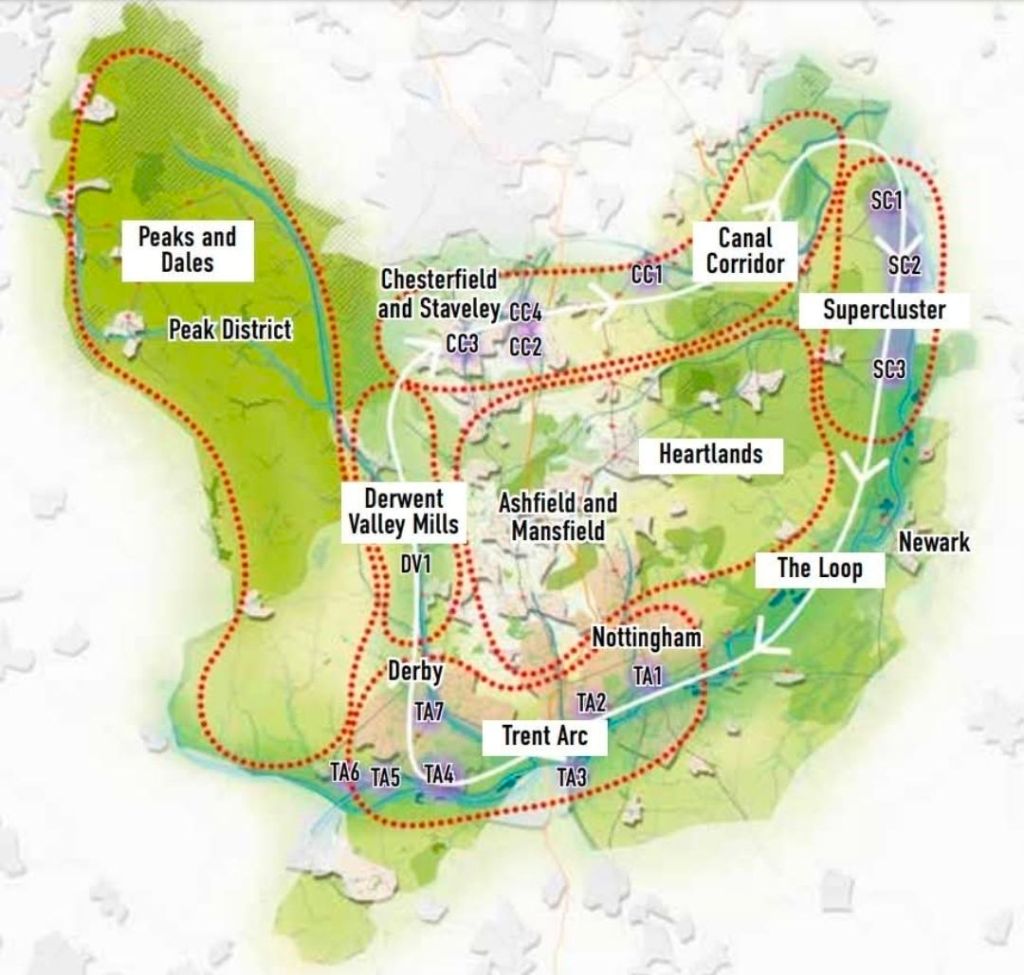
These are not small proposals. They represent long-term ambitions for housing expansion, employment land, transport infrastructure and new communities, stretching over two decades.
Locations such as High Marnham and West Burton , both former power station sites , feature prominently within this vision.
Again, none of this is unusual in isolation. Former industrial sites are often repurposed for redevelopment. Growth corridors tend to follow transport routes and existing urban centres.
But it is when these plans are set against the electricity network that the alignment becomes harder to ignore.
The Grid Beneath the Map
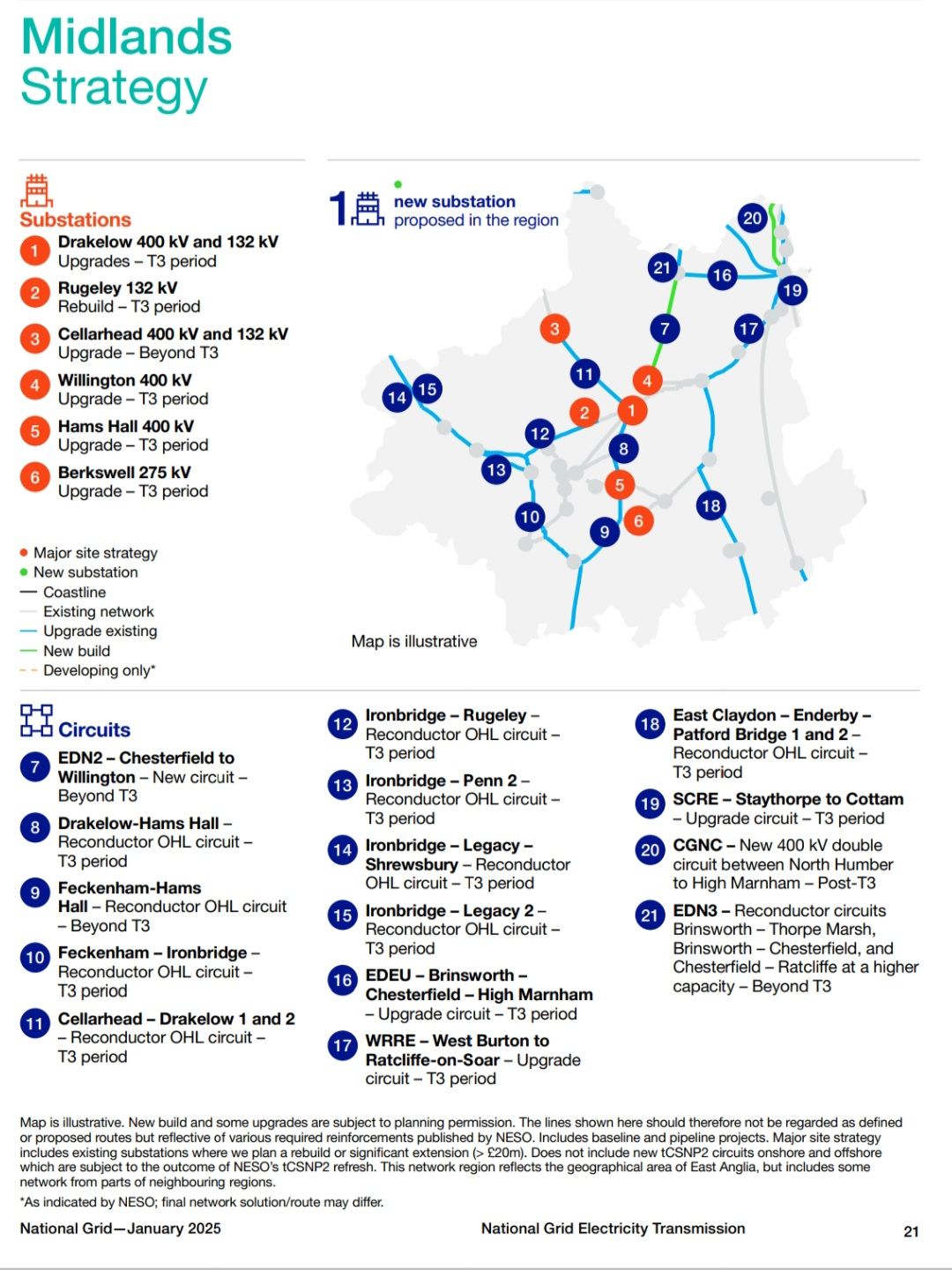
At the same time as these development plans are being advanced, National Grid is undertaking a series of major reinforcement projects across the Midlands.
These include upgrades and new high-voltage transmission routes linking key substations at locations such as Chesterfield, Willington, Drakelow and High Marnham. The works form part of a broader strategy to increase capacity within the network, particularly to accommodate new sources of generation entering the system from the east coast.
Individually, each scheme is presented as a necessary upgrade , a response to changing patterns of electricity supply and demand.
However, when the routes and substations are overlaid onto the regional development map, a consistent pattern appears.
The proposed growth zones , the “Supercluster”, the Trent Arc, and the Chesterfield corridor , all sit in close proximity to existing or upgraded high-capacity grid infrastructure.
Coincidence , or Something More Systematic?
It would be easy to dismiss this as coincidence. After all, large infrastructure tends to attract development. Businesses and housing naturally follow transport links, utilities and existing industrial land.
Yet the scale and consistency of the alignment raises a more fundamental question.
Are these developments simply making use of available infrastructure , or is the infrastructure itself shaping where development will occur?
In other words, is the grid following growth… or is growth following the grid?
A Wider Pattern Emerging
The East Midlands is unlikely to be unique.
Similar patterns are beginning to surface elsewhere, particularly across parts of Yorkshire, where major grid reinforcement projects are also underway alongside proposals for new industrial zones, energy developments and housing expansion.
In each case, the same ingredients appear:
Legacy energy sites
High-voltage substations
New or upgraded transmission corridors
Long-term development plans
Taken together, they begin to suggest a model in which electricity infrastructure plays a far more central role in shaping regional development than is often publicly acknowledged.
The Missing Piece
None of this is hidden. The plans exist, the grid upgrades are published, and the development frameworks are openly discussed.
What is missing is a single, joined-up picture.
Each element is assessed separately:
Grid projects as infrastructure upgrades
Development zones as planning policy
Energy strategy as national necessity
But nowhere are they presented together as part of a unified spatial strategy.
A Question Worth Asking
This may, in the end, amount to nothing more than good planning , infrastructure and development evolving in parallel, as they always have.
But it may also reflect something more deliberate: a shift towards an infrastructure-led model of growth, where access to electricity , not just transport or geography , determines where new communities and industries are built.
If that is the case, it raises an important question for the years ahead:
Who is really deciding where growth happens , local communities, or the infrastructure beneath their feet?
Shane Oxer. Campaigner for fairer and affordable energy
 SAY NO TO THE DESTRUCTION OF OUR LAND
Leave a comment