💥 Introduction:
High Risk, High Cost — All in the Name of Net ZeroAcross Wales and the rest of the UK, communities are waking up to a new and little-understood danger creeping into their countryside:
massive lithium-ion battery farms, also known as Battery Energy Storage Systems (BESS).There are currently 87 BESS applications in Wales alone, part of a nationwide gold rush to store surplus wind and solar energy. Developers promise flexibility, climate benefits, and cleaner air — but they rarely mention the explosive fire risk, the lack of UK supply chains, or the billions in hidden costs that taxpayers and billpayers will ultimately foot.
As Plaid Cymru MS Llyr Gruffydd warns, this is a “wild west” of speculative energy development, with no clear national strategy, no community protections, and no cost-benefit justification.
One of the most concerning cases is a 200 MW BESS proposal near Cefn Rhigos in Rhondda Cynon Taf — a site that, if approved, will be placed just a few hundred metres from people’s homes.
🔥 Safety Risk:
The Fire Next Time
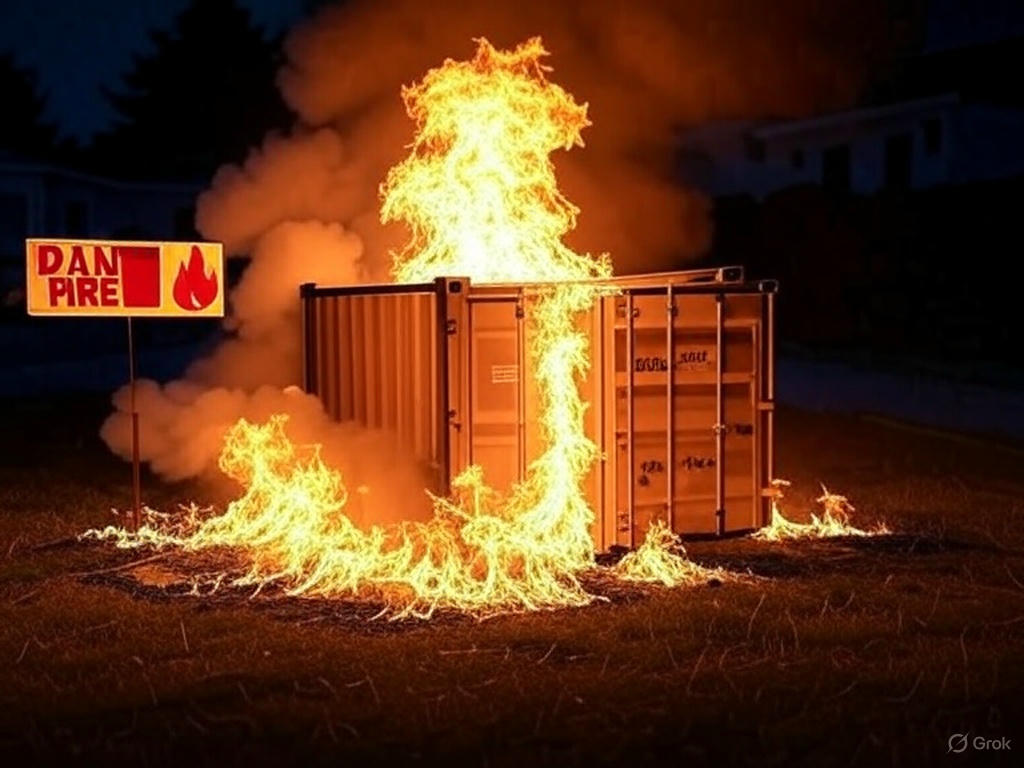
Lithium-ion batteries are inherently volatile. When they catch fire — often due to thermal runaway — the resulting blaze can burn for days, emit toxic smoke, and even cause explosions. And this isn’t theoretical:Liverpool, 2020: A battery fire caused a “significant blast” and took 59 hours to extinguish.
California, 2023: A major BESS fire led to mass evacuations and an investigation into the technology’s safety.
Arizona, 2019: A utility-scale battery site exploded, hospitalising eight firefighters.
Despite these precedents, the Cefn Rhigos site is being planned alarmingly close to residential areas. Local resident Clare Rees expressed her fears plainly:> “They say the risk is low, but the risk is there — and rules need to be in place to safeguard residents.”And yet, the developer declined to respond to BBC Newyddion when asked to address the community’s concerns.
💰 The Hidden Price Tag:
Who’s Really Paying for Battery Storage?
While safety dominates headlines, there’s another equally pressing issue:
cost.
BESS is not just risky — it’s expensive, heavily subsidised, and economically inefficient.
💸 1. Billpayer-Funded ProfitsDevelopers of BESS systems make money by:Storing cheap surplus wind/solar energy,Selling it back to the grid at peak prices, andTapping into generous government subsidies designed to encourage grid flexibility.In many cases, they also receive:Capacity Market payments (just for promising to be available),Balancing Services revenues from National Grid ESO,And potentially taxpayer-funded grid connection upgrades.All of this is paid for by you — through your energy bills, your taxes, and increasingly, through public debt.
🔌 2. Infrastructure Costs Passed to the Grid (i.e., You)A 200 MW BESS site like Cefn Rhigos requires:Reinforcement of local substations,New transformers and inverters,And grid infrastructure able to handle sudden power surges.These upgrades are paid for by National Grid and Distribution Network Operators — who then pass the costs on to consumers via standing charges, which have risen over 500% in the past decade.
🧯 3. Firefighting, Insurance, and LiabilityWhen fires break out — which they will — who pays for:Specialist fire crews and equipment?Environmental cleanup of contaminated soil and groundwater?Evacuations, temporary rehousing, and medical impacts?In many cases, local authorities and emergency services are not equipped or funded to deal with such events, and insurance markets are becoming increasingly wary of underwriting large lithium battery sites. This risk, again, may fall back onto the public purse.
🪦 4. Decommissioning and Waste DisposalUnlike wind turbines or solar panels, there is no national recycling scheme for industrial lithium-ion batteries. After 10–15 years of use:The batteries must be transported to specialist facilities (mostly overseas),Toxic components may end up in landfill,And decommissioning costs are rarely covered upfront by developers.Without ringfenced decommissioning bonds, the risk of abandoned toxic sites in our countryside is real.
🇨🇳 Dependency on China:
The Silent Energy Security CrisisProf Kathryn Toghill, a leading expert in sustainable electrochemistry, has warned that becoming overly reliant on lithium-ion battery storage sites poses a major energy security threat:> “We shouldn’t be putting everything into lithium-ion… it’s hard to compete with the cost, but we have no supply chain in the UK.”Indeed, over 70% of lithium battery components come from or pass through China — including:Lithium carbonate from China and South America,Cobalt from the Democratic Republic of Congo (often mined in unsafe or exploitative conditions),Graphite and electrolytes from Chinese-controlled supply chains.In pushing for mass deployment of BESS, the UK is replacing one form of energy dependency (fossil fuels) with another (foreign-controlled battery materials).
🕳 The Illusion of Flexibility:
A £30 Billion Stopgap?
Proponents claim BESS will “smooth out” intermittent wind and solar power. But here’s the truth:A 200 MW battery system can typically only store 2–4 hours of power.That’s not enough to cover a single winter evening surge, let alone a multi-day lull.And each site costs tens — or even hundreds — of millions of pounds.
According to a Cornwall Insight study, over £30 billion could be spent deploying large-scale BESS across the UK by 2035.
Yet:This won’t eliminate the need for gas backup or baseload generation.It will not provide energy security during seasonal demand spikes.And it will not protect the public from blackouts.
🚫 What Needs to Change: Strategy, Safety, and ScrutinyPlaid Cymru’s Gruffydd is right — what we are witnessing is not a planned transition, but a speculative gold rush. Battery farms are being approved:
Without national strategy,Without community consent,Without independent cost-benefit analysis, andWithout a full understanding of the long-term consequences.Meanwhile, Welsh ministers are being asked to “call in” the Cefn Rhigos application — but communities across the UK deserve better than case-by-case firefighting.
We need:
1. 🛑 A moratorium on new BESS applications until safety regulations are updated.
2. 🧾 A cost audit of public subsidies, grid costs, and long-term liabilities.
3. 📍 A national siting strategy that keeps dangerous facilities away from homes.
4. 🔄 A shift toward safe, British-made alternatives like:Rooftop solar film (e.g., Power Roll),Domestic SMRs for reliable baseload,And diversified battery chemistries with lower fire risk.
🗣️ Conclusion:
Don’t Let Safety and Cost Be Ignored in the Net Zero RushBESS might be politically fashionable — but that doesn’t make it right.Communities like Cefn Rhigos are right to ask:> “Is this safe? Is this necessary? And who’s going to pay for it?”Until those questions are answered with transparency and honesty, battery storage at this scale has no place in our towns or our countryside.
📢 Get Involved
If you’re concerned about the unchecked spread of dangerous, expensive battery sites:💬 Speak to your MS, MP, or councillor
📎 Submit formal objections to planning authorities
🔁 Share this blog post to raise awareness
🧭 Demand a national strategy for clean, safe, and affordable energyBatteries are not the answer. Safety, sovereignty, and common sense are.
🔥 Green Gamble, Real Danger: The Explosive Truth About Battery Storage Farms — and Who’s Really Paying for It
 SAY NO TO THE DESTRUCTION OF OUR LAND
Leave a comment