Prove it is safe first , then deploy it. Do not deploy it first and study the consequences later
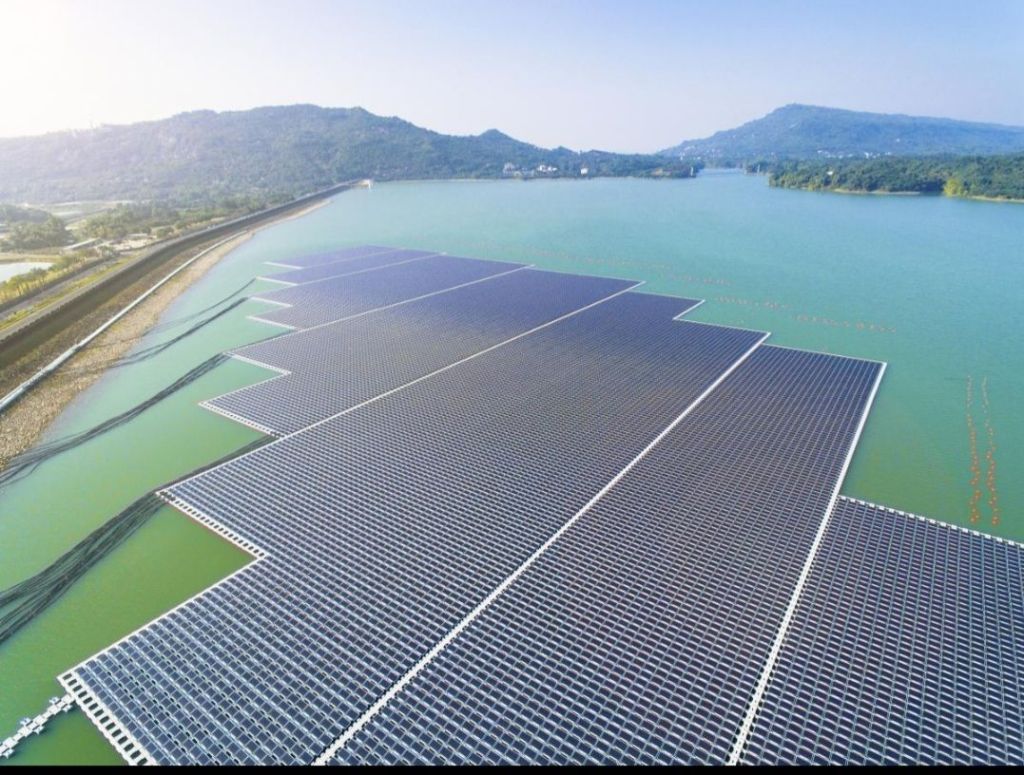
That should be the basic principle behind any government policy that seeks to industrialise Britain’s reservoirs, lakes and freshwater environments with floating solar panels. These are not empty spaces waiting to be exploited. They are living ecosystems, working water bodies, wildlife habitats and, in many cases, part of the infrastructure that helps supply drinking water to the public.
If ministers are prepared to push floating solar onto Britain’s reservoirs before decades of independent ecological and water-quality evidence exist, then they are asking the public to accept unknown long-term risks. Those risks may not be limited to scenery or amenity value. They could involve freshwater ecosystems, fish habitats, biodiversity, aquatic food chains, oxygen levels, algae balance and even the long-term integrity of drinking-water infrastructure itself.
Supporters of floating solar will argue that it saves farmland, reduces evaporation and makes use of unused water surfaces. But that argument is far too simplistic. Reservoirs and lakes are not dead surfaces. They are complex natural systems. Covering significant areas of water with industrial panels changes light, temperature, oxygen exchange and biological activity beneath the surface. The question is not whether floating solar can work technically. The question is whether it can be proven safe ecologically over the long term.
If even a credible possibility exists of disrupting oxygen levels, algae balance, aquatic food chains or fish behaviour, then caution should come before deployment. If there is a credible possibility of microplastic degradation, chemical leaching, corrosion, fire risk, storm damage or long-term contamination from industrial materials placed directly above freshwater, then the burden of proof should sit with government and developers , not with the public after the damage is done.
This is where the current direction of policy becomes deeply concerning. Critics argue that the Government, led by Ed Miliband, is prioritising political speed and Net Zero targets over ecological caution. Having already encouraged the industrialisation of farmland through vast solar schemes, ministers now appear willing to move the same logic onto freshwater environments. First the countryside, then the reservoirs. One ecosystem after another is being treated as available space for energy infrastructure.
That is not real environmentalism.
Real environmentalism protects land, water, wildlife and people. It does not sacrifice farmland to solar panels, then sacrifice lakes and reservoirs because the land sacrifice has become politically inconvenient. It does not present every natural space as an industrial opportunity. And it does not tell the public that concern for freshwater ecology is somehow anti-green.
The precautionary principle should apply. Before large-scale floating solar is deployed on reservoirs, there should be long-term, independent, UK-specific evidence on water quality, biodiversity, fish habitats, aquatic insects, algae behaviour, oxygen levels, sediment disturbance, panel degradation, microplastics and chemical exposure. There should also be full transparency over who monitors these sites, who pays for remediation if damage occurs, and who carries legal responsibility if drinking-water infrastructure is affected.
The public should not be expected to accept vague assurances from ministers, developers or consultants with a financial interest in deployment. Nor should local communities be told after the event that impacts will be “monitored” once the panels are already installed. Monitoring after deployment is not the same as proving safety beforehand.
Britain’s reservoirs are not experimental laboratories for political deadlines. They are part of our natural and public infrastructure. Once ecological damage occurs in a freshwater environment, it may not be easily reversed. Once public trust in drinking-water safety is damaged, it may not be easily restored.
The principle is simple.
Prove floating solar is safe first.
Prove it with independent evidence.
Prove it over time.
Prove it before large-scale deployment.
Because if ministers cannot prove that industrialising Britain’s reservoirs and lakes is safe, then they have no right to gamble with our water, our wildlife or our future.
Shane Oxer. Campaigner for fairer and affordable energy
 SAY NO TO THE DESTRUCTION OF OUR LAND
Leave a comment