The Pennine Way Generation
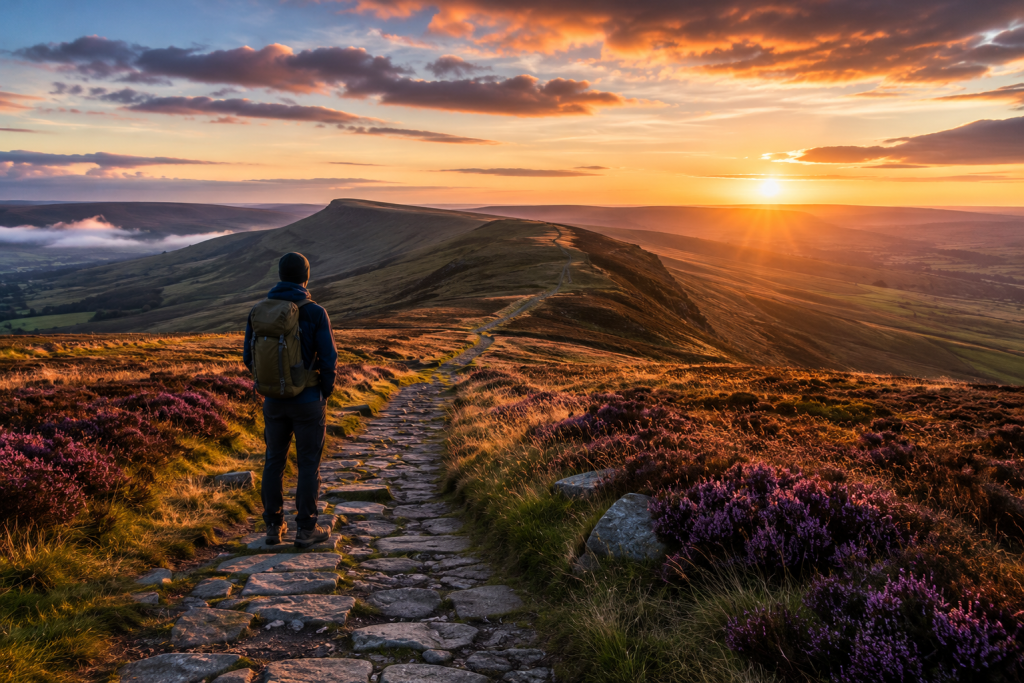
Long before planners, developers, consultants, or ministers ever looked at maps of Hope Moor and saw “renewable energy potential,” other people walked these hills and saw something entirely different.
They saw freedom.
They saw open country stretching to the horizon. They saw dry-stone walls climbing impossible gradients, curlew rising from the bog, red grouse lifting from the heather, and the unmistakable silence that only Britain’s uplands can still offer.
For millions of people, the moors of northern England are not simply landscapes.
They are part of our national memory.
Every year, walkers from across Britain , and from all over the world , set out along the Pennine Way, Britain’s first official National Trail, opened in the mid-twentieth century after decades of campaigning for public access to the uplands.
That story matters.
Because the Pennine Way did not appear by accident. It was born from one of the most important countryside movements in modern British history. It came from a generation who believed that the hills, moors, and open landscapes of England should not belong exclusively to landowners, industrial interests, or institutions.
They believed the countryside belonged to everyone.
That belief helped shape the modern walking movement, inspired generations of ramblers, and transformed how Britain saw its upland landscapes.
Today, more than half a century later, those same landscapes face a very different kind of challenge.
Not enclosure.
Not exclusion.
Industrialisation.
Because when people stand on Hope Moor today, they are not looking at abstract planning zones or carbon spreadsheets. They are standing in one of the landscapes that helped define Britain’s relationship with the countryside.
That is why this fight is about so much more than energy.
The proposed wind development at Hope Moor would not simply introduce turbines to a skyline. It would introduce crane pads, access roads, cable corridors, construction compounds, service routes, lighting, heavy transport movements, maintenance infrastructure, and the permanent engineering footprint required to keep such developments operational for decades.
Developers understandably talk about clean energy.
But walkers understand something else.
They understand what happens when a landscape loses its sense of wildness.
Once roads are cut across peat.
Once machinery tracks divide open moorland.
Once service infrastructure replaces open skylines.
Something changes.
And it rarely changes back.
That is why organisations like The Ramblers, local access groups, natural history societies, and countless countryside volunteers have such an important role to play in what happens next.
Because this is not merely a local planning dispute.
This is about the future of Britain’s walking heritage.
It is about the generation that fought for access , and whether the generation that inherited it is prepared to defend it.
Hope Moor is not just a site on a developer’s map.
It is part of the same living upland story that inspired the access movement, shaped the Pennine Way, and gave millions of ordinary people a connection to the land that no policy document can ever quantify.
And if landscapes like this are gradually industrialised under the banner of progress, then future generations may still be able to walk these hills.
but they will never walk them as we knew them.
That is why this campaign matters.
Not because people oppose energy.
Not because people oppose progress.
But because some places shape who we are.
And once those places are fundamentally changed-
part of that inheritance is lost forever.
Tomorrow: Part IV :-
The View Westminster Forgot.
Why Parliament is finally starting to ask what rural Britain has been saying for years.
Shane Oxer. Campaigner for fairer and affordable energy
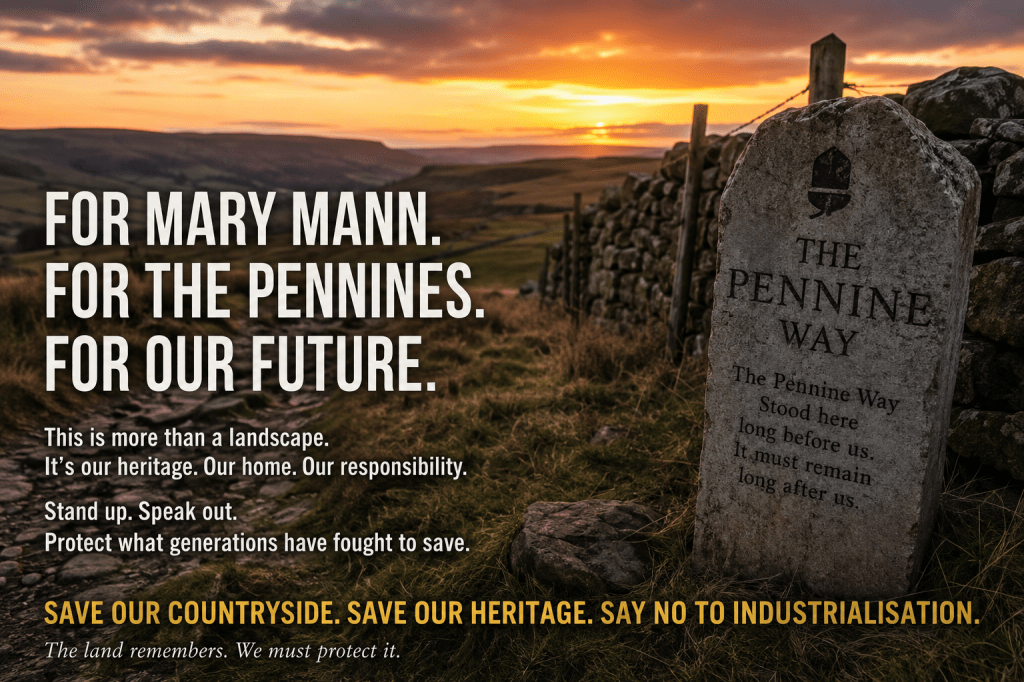
 SAY NO TO THE DESTRUCTION OF OUR LAND
Leave a comment