Walking from Withens Clough Reservoir to Stoodley Pike left me with an unexpected question.
Not about wind turbines.
Not about forestry.
Not even about climate policy.
Instead, I found myself asking:
Where are the real ecologists?
The South Pennines are often described as a landscape in need of management. Every organisation appears to have a plan for it.
Some want more trees.
Some want more wind turbines.
Some want more peatland restoration.
Some want rewilding.
Some want increased public access.
Others want greater biodiversity intervention.
Yet after spending a day walking through the landscape itself, I was struck by something far more fundamental.
The landscape already knows what it wants to be.
The peatlands reveal themselves through wet flushes, bog pools and sphagnum moss. Water emerges from the ground wherever conditions allow. The moorland stretches across the ridges as it has for centuries. The valleys remain shaped by geology, water and time rather than by policy documents.
Human beings, however, repeatedly seek to impose their own vision upon it.
The conifer plantations near Withens Clough are one example.
Walking through them, they felt strangely disconnected from the wider landscape. The trees appeared largely uniform in species and age. Many showed signs of instability. Root systems were visible. Fallen trees lay across the forest floor. Wet ground remained evident beneath the canopy.
The plantation did not feel like a natural woodland. It felt like an industrial solution applied to a landscape that never entirely accepted it.
The same question arises with energy infrastructure.
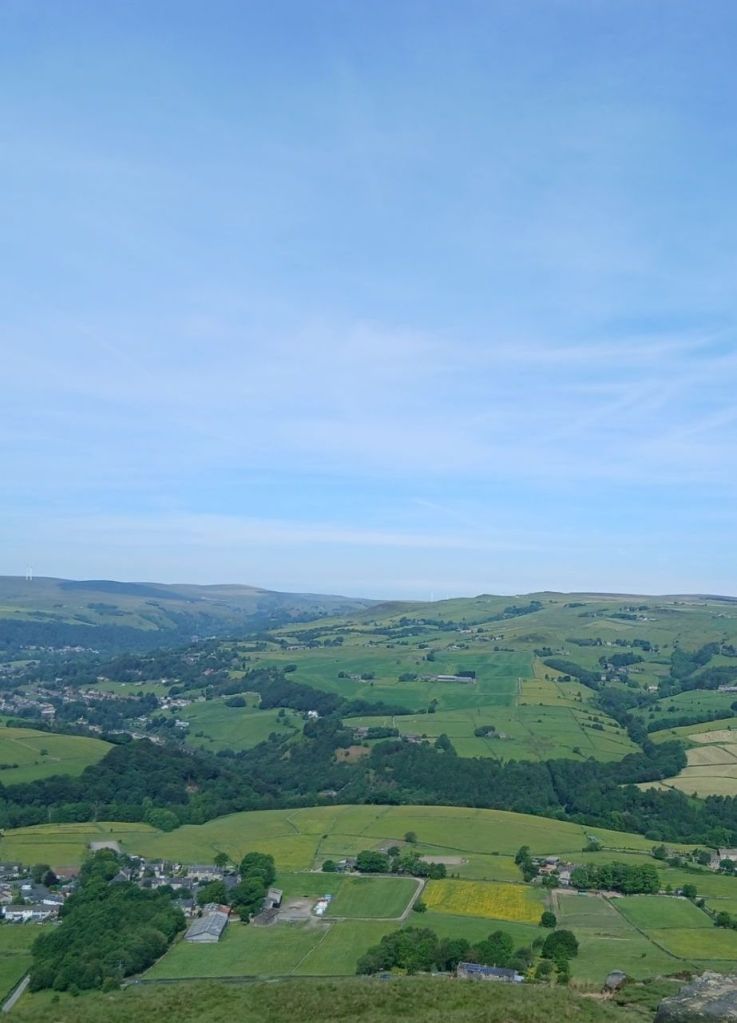
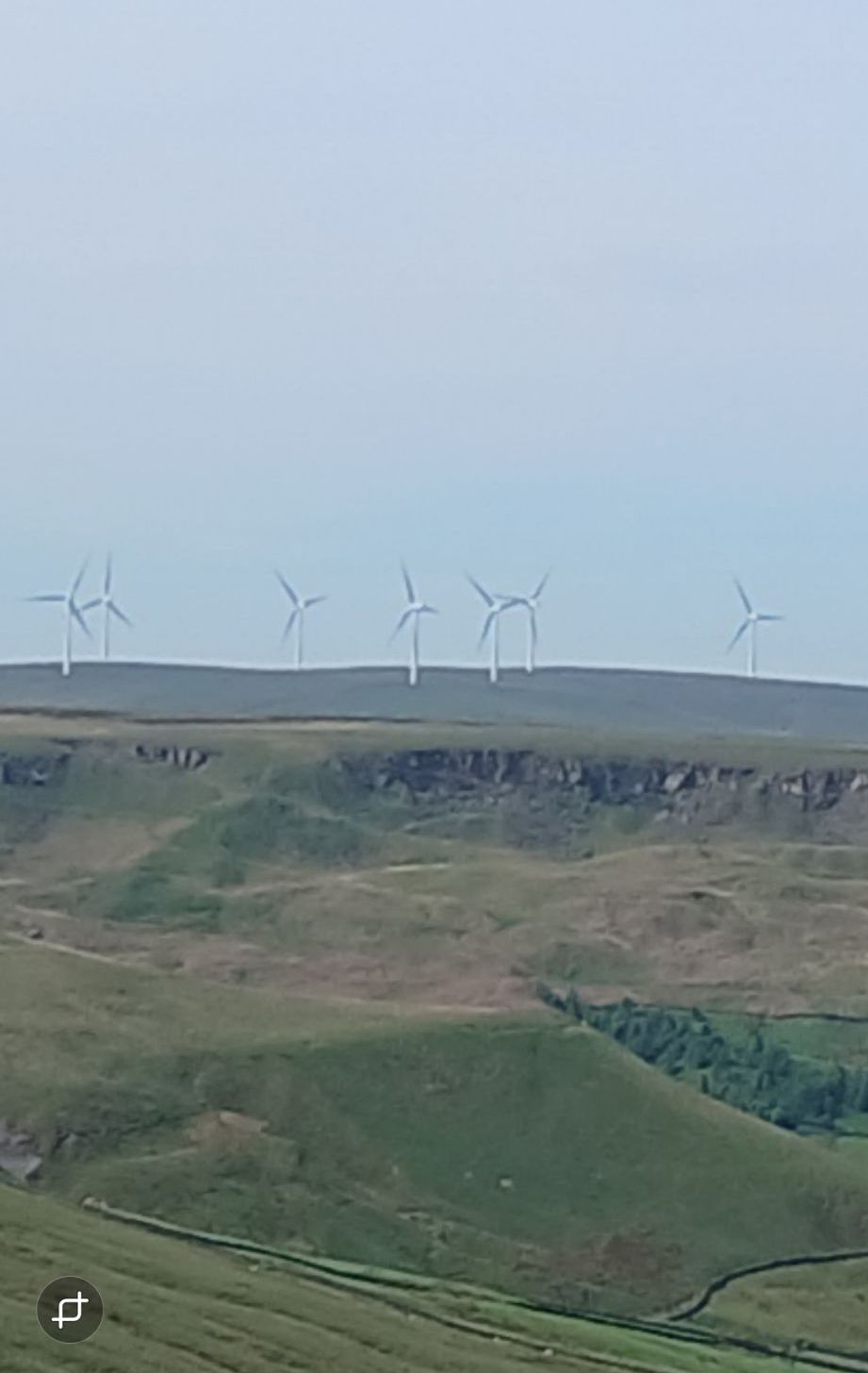
Standing at Stoodley Pike, I was confronted by wind turbines visible across distant ridges. They were not hidden. They were not difficult to spot. They immediately attracted attention within an otherwise open Pennine panorama.
This is not an argument against renewable energy.
Rather, it is a question about ecology itself.
Should ecology begin with what humans want from a landscape?
Or should it begin with understanding what the landscape is naturally capable of sustaining?
There was a time when ecology focused heavily on observation. Ecologists spent long periods in the field. They studied species, soils, hydrology, vegetation communities and landscape processes. They asked what was already present and how those systems interacted.
Today, much environmental policy can appear to start from a desired outcome and work backwards.
A target is set.
A technology is chosen.
A planting scheme is designed.
A management plan is written.
The landscape is then expected to accommodate the objective.
Yet the South Pennines tell a different story.
They remind us that landscapes are not blank canvases.
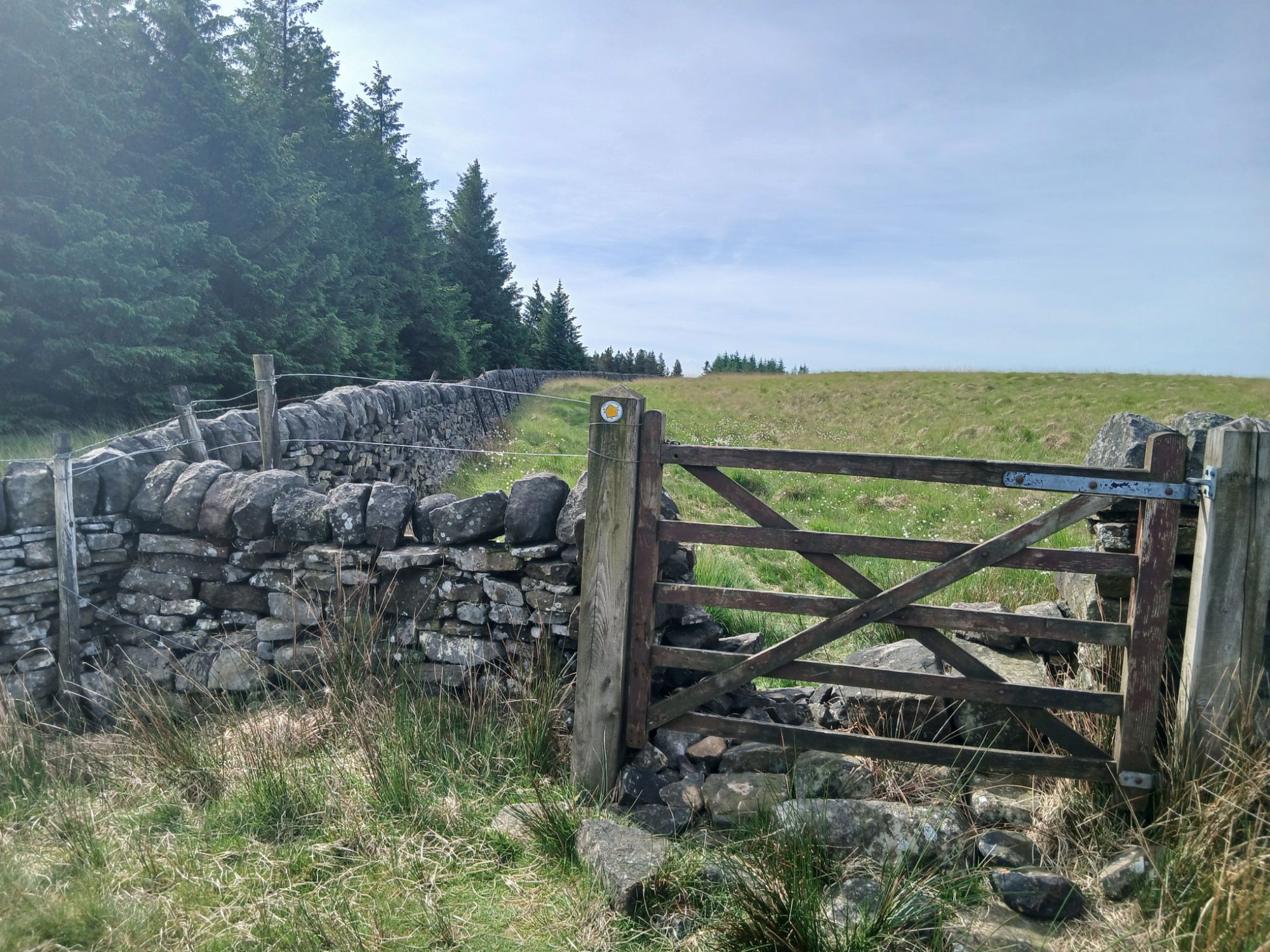
Peatlands store carbon because of thousands of years of waterlogged conditions. Moorlands support distinctive habitats because of their climate, soils and elevation. Historic routes such as those leading to Stoodley Pike carry cultural significance because people have walked them for generations.
Real ecology may therefore require a degree of humility.
It may require accepting that not every landscape should be optimised for a particular human objective.
Sometimes the most ecological question is not:
“What should we put here?”
but:
“What naturally belongs here?”
My walk through the South Pennines suggested that this question is becoming increasingly important.
Both forestry plantations and wind energy developments demonstrate how successive generations have sought to reshape the uplands for economic or policy objectives. Yet the underlying character of the landscape , its peatlands, moorland hydrology, open skylines and cultural heritage , remains evident.
The tension between natural landscape processes and human interventions continues to define the character of the area.
Perhaps the role of the real ecologist is not to decide what the landscape should become.
Perhaps it is to understand what the landscape is already trying to tell us.
Shane Oxer. Campaigner for fairer and affordable energy
 SAY NO TO THE DESTRUCTION OF OUR LAND
Leave a comment